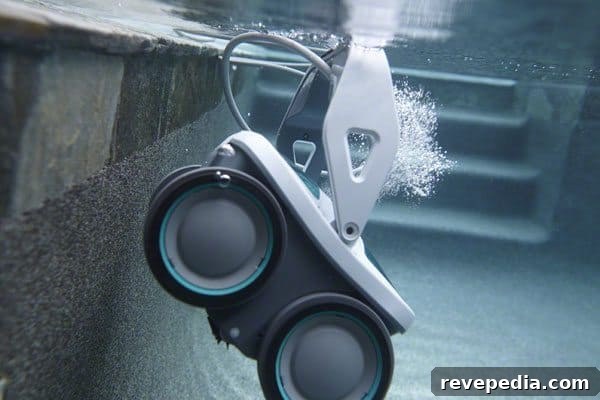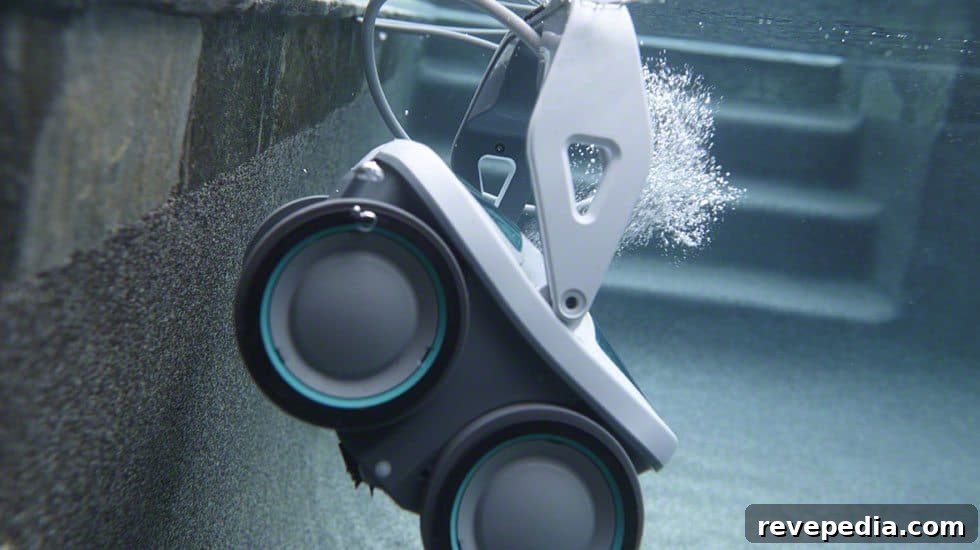
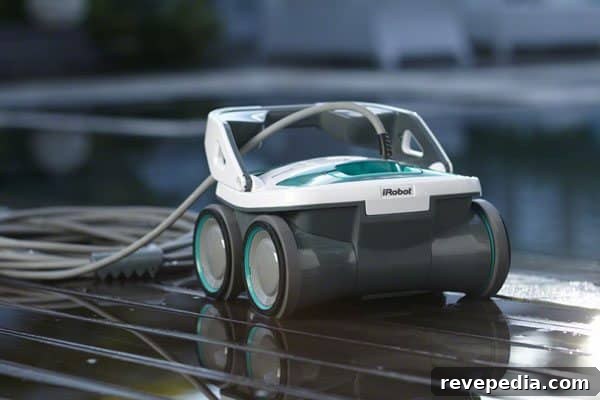
This past summer was my first living in a new house with an in-ground pool. I handled the chemicals but decided to outsource the repetitive chore of cleaning to the iRobot Mirra. After several weeks of use, here’s a clear, practical assessment of how it performed.
Highlights: The Mirra is straightforward to operate and an effective cleaner. It’s fully self-contained with its own pump and filter, so there’s no need for a booster pump or complex hookups. Its onboard navigation systematically covers the pool’s surfaces.
Limitations: Although the filter canisters are simple to remove, getting them totally clean can be awkward because debris sometimes hides in small crevices. The robot also struggled to remove sand trapped in the textured treads of pool steps.
Best for: Any in-ground pool within reach of its 60-foot floating cable.
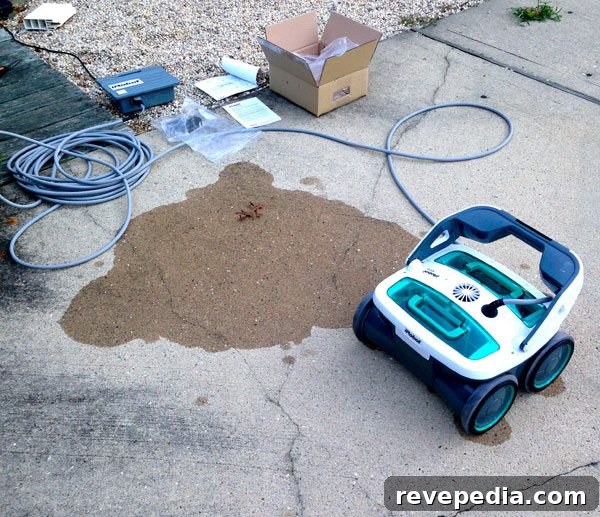
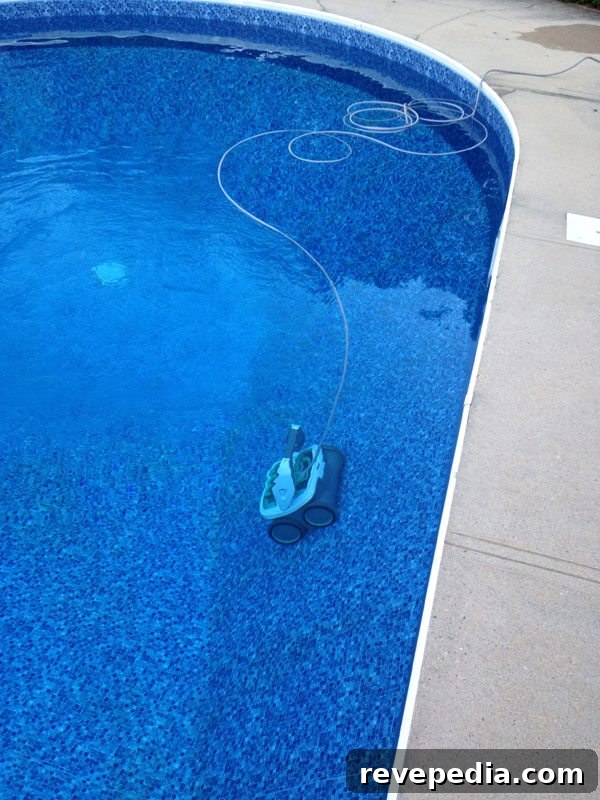
Out of the box, setup is quick. For textured surfaces such as gunite you should plan to buy the optional rubber wheels; I installed four PVA wheels and let the robot sit on a shallow step for 15 minutes before its first run so the wheels soaked and gained traction on my vinyl liner. The transformer contains the unit’s only button and the robot’s cable plugs into it. One minor annoyance: the connector between the transformer and the robot requires carefully aligning a plug and four pins and performing a push-and-twist lock — it’s not immediately intuitive. After that there’s no programming or scheduling required: press the power button and the Mirra starts crawling along the pool floor.
The Mirra uses iRobot’s iAdapt Nautiq Responsive Cleaning Technology to map the pool, track its position, and determine which areas still need attention. It filters roughly 70 gallons per minute and has a rotating PVC brush beneath to scrub the pool liner. During cycles it covers the pool floor, walls, and the waterline where algae often accumulates.
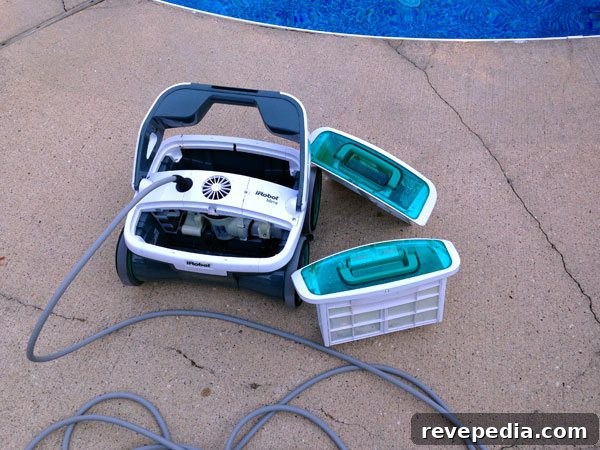
My pool sits near a French drain lined with small pebbles that sometimes wash into the water. To test Mirra’s ability to pick up heavier debris, I scattered a dozen stones around the pool. After the Mirra’s three-hour initial cleaning cycle, all the stones were trapped in the filter canisters. Compared with the manual pool vacuum I inherited — which required a booster pump and a complex tie-in to a return jet — the Mirra was far simpler and consistently captured everything from large evergreen leaves to sand.
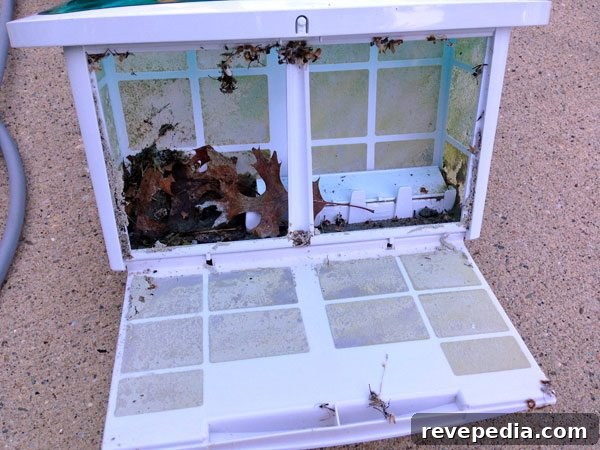
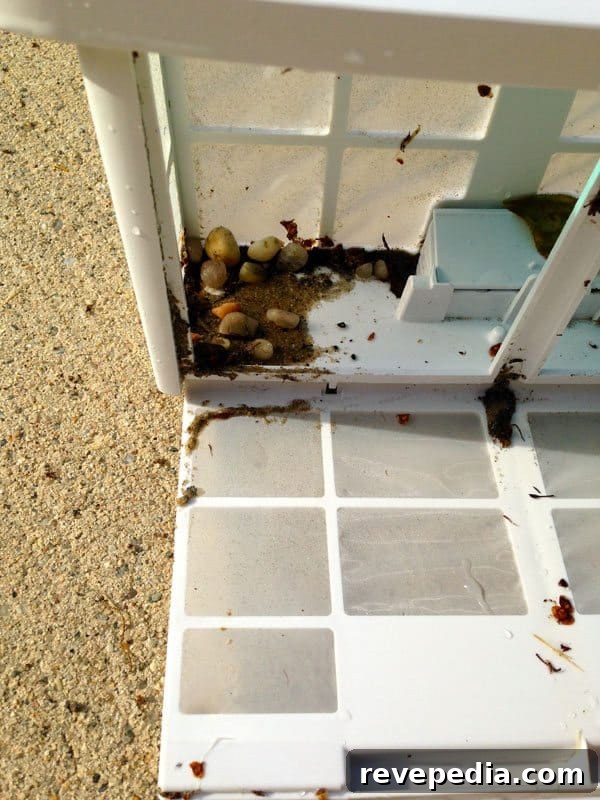
At one point I noticed the rotating brush beneath the unit did not appear to be making contact while the robot climbed the stair treads. iRobot explained that the Mirra’s sponge-like wheels compress as they soak, improving traction and also allowing the brush to make contact. On unusual contours — steep curves, stairs, or when crossing filters — the wheels’ geometry can cause the brush to lift momentarily, so it may not be scrubbing 100 percent of the time in those brief moments. In normal operation, with the sponge wheels saturated, the scrub brush should contact the pool surface most of the time and provide effective scrubbing.
Performance note: The primary area where the Mirra fell short was removing sand collected in the textured, anti-slip pockets of stair treads. The stair texture traps fine particles, and the Mirra couldn’t fully dislodge all of that sand. Also, the two removable filter canisters are easy to pull out and rinse, but their plastic housings include small ledges and crevices near the top where leaves and debris can hide. A quick hose spray clears most material, but fine particles and stuck leaves sometimes require extra attention with a brush or pick to get completely clean.
Final assessment: Don’t be fooled by the Mirra’s simple operation — it’s a capable machine with thoughtful engineering inside. It saves hours of manual scrubbing, skimming, and diving to pick up debris. During my testing it never became entangled in its floating power cord. Removing the robot from the pool needs a little effort, but rubber drain gaskets on the bottom help the unit shed water quickly. For pool owners who want a hands-off cleaning solution, the Mirra is a convenient and effective option. The unit retails for about $1,000 from iRobot.
Below is a demonstration video showing the iRobot Mirra in action.