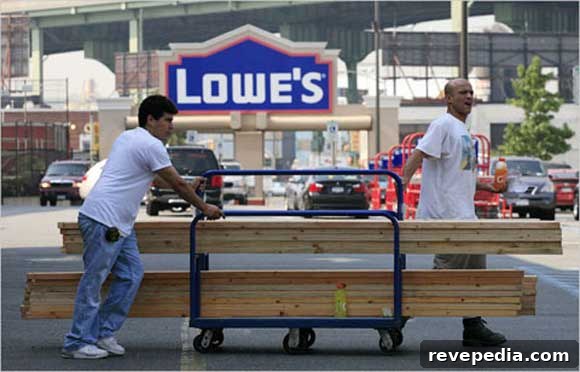
One of the nation’s best-known home improvement chains, Lowe’s, recently announced plans to close 20 U.S. stores and reduce its workforce by roughly 2,000 employees as part of a broader effort to improve profitability and streamline operations. While any store closure affects local customers and employees, this move appears to be a strategic response to changing market conditions and the company’s drive to allocate resources more efficiently.
With around 1,700 Lowe’s locations across the United States, the announced closures represent a small percentage of the overall footprint, but they are significant for the communities directly affected. The company has already closed 10 stores and expects another 10 to shut their doors within the next month. These targeted closures are part of a larger realignment that includes evaluating underperforming locations and adjusting the store network to better match demand.
Despite the closures and job reductions, Lowe’s is not halting all expansion. The company has indicated plans to open between 10 and 15 new stores over the next year, focusing on markets where it sees growth potential. This selective growth strategy suggests Lowe’s is concentrating investment in higher-performing sites and formats while exiting areas that no longer meet performance expectations.
Customers who frequently shop at Lowe’s may notice changes in product availability or staffing levels at certain locations as the company implements its plan. For communities losing a store, customers will likely turn to nearby Lowe’s locations, independent hardware stores, or competing big-box retailers to meet their home improvement needs. Some shoppers may find liquidation or clearance sales at closing stores, offering opportunities for discounted prices on tools, appliances, fixtures, and seasonal merchandise. However, the timing and depth of any discounts vary by location and inventory levels, so it’s best to contact the specific store for details.
Employees affected by closures may be offered transfers to nearby Lowe’s stores when possible, or they may receive severance and outplacement support depending on individual circumstances and local policies. The company typically communicates directly with impacted workers to outline available options and any assistance programs.
For homeowners, renters, and contractors who rely on Lowe’s, it’s a good idea to check whether your local store is on the closure list. If your nearby location is closing, consider these practical steps:
- Call the store or visit the Lowe’s website to confirm closure timing and any planned clearance events.
- Shop early for essential items that may become harder to source locally, especially specialty tools or replacement parts.
- Compare prices and availability with other retailers and local independent hardware stores.
- If you’re an employee, speak with management about transfer opportunities, severance terms, and any available job-placement assistance.
Even in regions where closures are occurring, Lowe’s aims to balance contraction with selective expansion to serve growing markets. For example, the company’s recent openings include modernized store formats and updates that improve the shopping experience—an approach that suggests future new locations will emphasize convenience, product selection, and services tailored to local needs. This past summer, visitors praised a newly opened store in Honolulu for its attractive layout and updated offerings, showing that Lowe’s remains committed to investing where it sees opportunity.
Store closures at large retailers are always challenging for communities, but they also create short-term opportunities for bargain hunters and long-term shifts in how consumers source home improvement goods. If Lowe’s is closing a location near you, check directly with the retailer for the most current information about closure dates, sales, and support for affected employees. And if you’re curious whether there are deals to be had, visiting closing stores early is the best way to find marked-down items before inventory runs out.