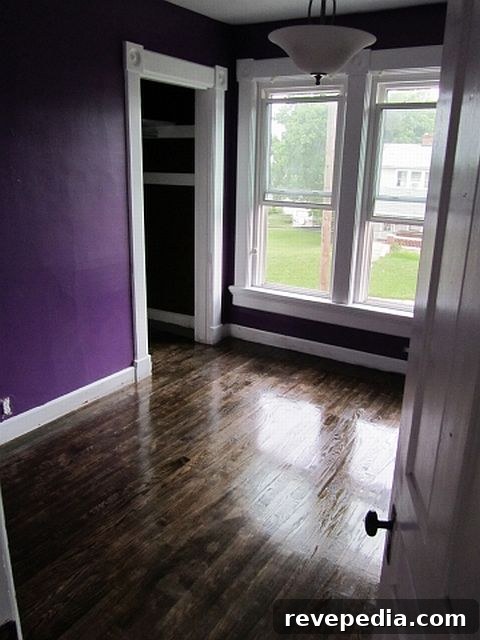
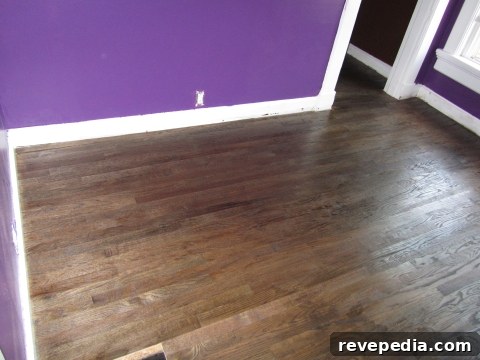
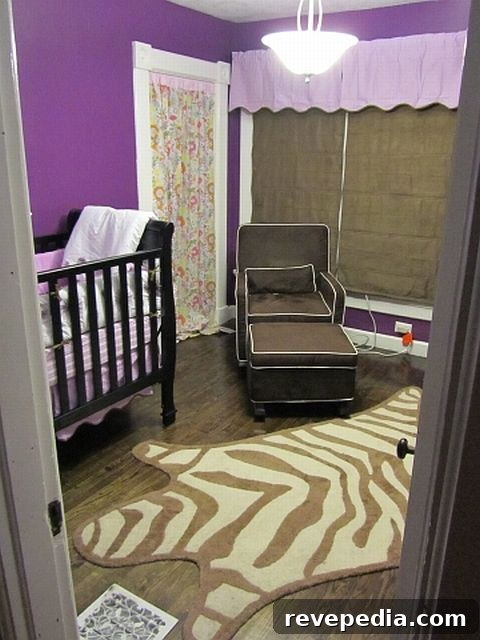
Recently my husband and I tackled a big home renovation project: we installed a hardwood floor in our soon-to-be daughter’s nursery. Because I was nine months pregnant, the heavy lifting was done by my husband, Kyle, and a friend, but I want to share how the project went and what we learned so others can feel confident taking on a similar job.
The room originally had wall-to-wall carpet we replaced three years ago, but our five cats turned it into a mess. We removed everything down to the original subfloor — thankfully the particleboard underneath held up — and prepared the space for new hardwood. I’m usually the handy one in our household, but this time I had to let Kyle and his friend run the show. Despite their limited experience, they completed the job in roughly four days, and the results were beautiful.
Below are Kyle’s practical tips for first-timers, with a few of my observations mixed in.
Tip #1: Get a Friend to Help You
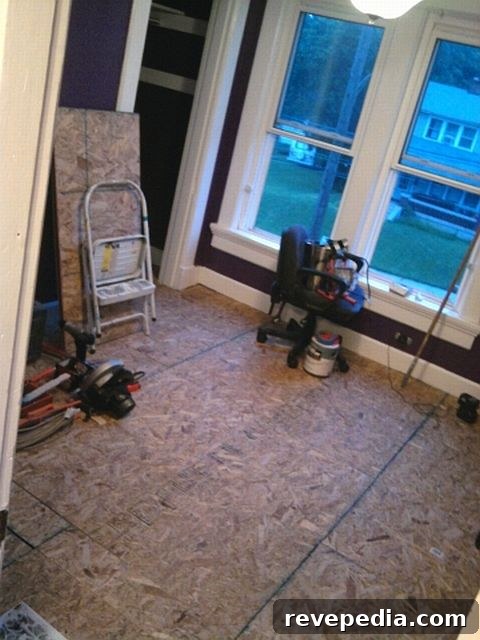
Teamwork made the work faster and more enjoyable. Kyle’s friend had some subfloor experience, which proved useful for the trickier parts. With two people cutting, fitting, and installing, the process moved smoothly. They played to each other’s strengths and developed an efficient rhythm, turning what could be an overwhelming task into a manageable one.
Tip #2: Don’t Be Easily Intimidated
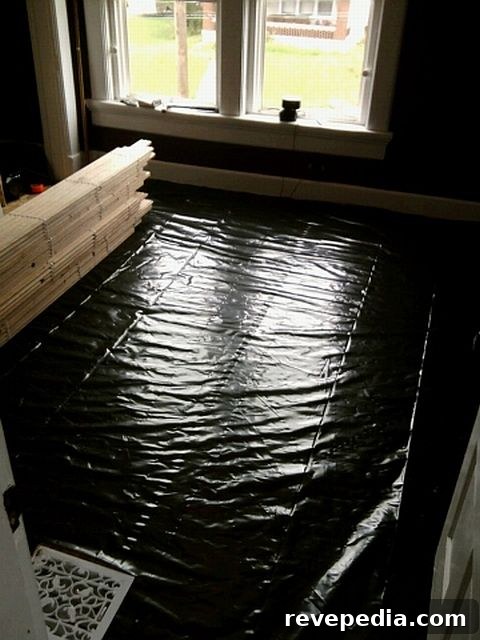
Many parts of a hardwood installation can seem intimidating: choosing wood, gathering tools, and selecting finishes. Kyle recommends breaking the job into smaller tasks and taking a break after completing each one. For buying materials, comparison shopping pays off. We compared prices at big-box stores and saved about $200 on a 10×10 room by finding the best deal.
For tools, you don’t need every specialty item. A circular or table saw, a drill, a hammer, and the correct nails are enough for most first-time jobs. Avoid renting advanced tools you don’t know how to use — inexperience with powerful, unfamiliar tools can lead to mistakes or injury. Using basic tools gives you a better feel for the process and can also save on rental fees.
When choosing finishes, weigh your options. We chose stain over paint because you can always paint later if you want a change. Many stains can be mixed to create custom tones, so you don’t have to rely only on premixed colors. For finishing, you won’t need every professional refinement tool — a lambswool applicator and a few clean t-shirts can work well for applying stain and sealer if you take your time.
Tip #3: Take Your Time
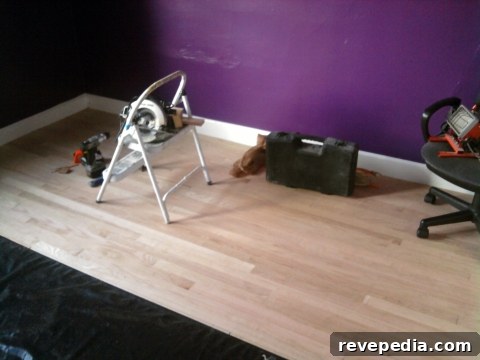
Patience matters. Measure twice and cut once. Kyle suggested laying three or four rows of planks without nailing them down at first so you can see how the layout looks and how pieces match up. Starting at the wall that requires the most cutting helps avoid awkward gaps later — think of the installation like putting together a puzzle.
Use as much of your material as possible, including cut pieces, to minimize waste. Bent or odd planks aren’t necessarily worthless: you can trim or adapt them, or use extra nails to flatten them as needed. When staining, apply thin, even coats and allow proper drying time between coats. Rushing the finish can cause bubbles, uneven color, or other issues. Expect obstacles, but give yourself time to think and solve problems rather than panicking.
Tip #4: You Will Get Dirty, And That’s Okay
This is a messy job. Sawdust, splinters, stain, polyurethane, and solvents are part of the process. Wear durable clothing and closed-toe shoes you don’t mind ruining. Use gloves and eye protection when needed, and a respirator or mask when applying finishes. Ventilate the space thoroughly — the fumes from stains and poly can be strong. We moved our son and pets away from the workroom until the smell dissipated to keep everyone safe and comfortable.
At the end of the project, Kyle felt proud of completing a hardwood floor from start to finish, despite being a novice. Our daughter will have a beautiful nursery, and the effort was worth it. If you’re considering taking on the job yourself, know that with planning, patience, teamwork, and attention to detail, you can achieve professional-looking results.
Have you installed hardwood floors yourself? Share your tips and stories — comparing experiences can help others tackle their own projects with confidence.