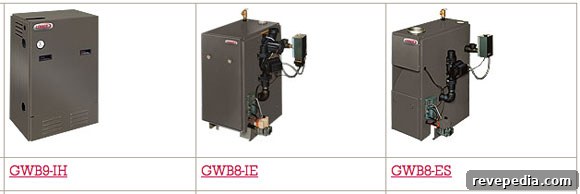
We recently received this reader question and hope some of our readers can help.
Any direction you can send me to make heads or tails of quotes for new natural gas boiler installation? Munchkin or Buderus? 95% efficiency vs. less efficiency? Hot water tanks that feed off the heat of the boiler? Estimates within a grand of each other so (gulp) the price must be in the ball park.
The following is a clearer, user-friendly guide to help you compare quotes for a new natural gas boiler installation and to decide between brands, efficiency ratings, and indirect hot water tanks. This overview focuses on what matters for performance, cost, reliability, and long-term value so you can ask the right questions of contractors and make a confident choice.
Understand the basics: boiler types and how they differ
There are two main styles of residential gas boilers: condensing boilers and conventional (non-condensing) boilers. Condensing boilers can reach efficiency ratings around 90–98% by extracting extra heat from combustion gases and condensing the steam back into water. Conventional boilers are typically less efficient—often in the 80–88% range—because they release exhaust gases at higher temperatures.
Brands like Buderus (a well-known European manufacturer) produce both high-quality condensing and conventional models, while other brands often offer compact condensing units under different names. “Munchkin” likely refers to high-efficiency condensing boiler products known for compact design. The brand matters, but the specific model, component quality, control features, and proper sizing and installation are equally or more important.
Efficiency: is 95% worth the extra cost?
Efficiency ratings (AFUE or Annual Fuel Utilization Efficiency) tell you how much of the fuel’s energy becomes usable heat. A 95% AFUE boiler converts 95% of the gas energy into heat for your home, while a lower-efficiency unit might convert 85–88%. The higher number means lower fuel bills over time.
Deciding whether to pay more for 95% efficiency depends on:
- Fuel cost in your area—if natural gas is expensive, higher efficiency saves more money.
- How long you plan to stay in the house—higher efficiency pays back over years; if you’ll move soon, the payback period may exceed your ownership time.
- Installation complexity and venting—condensing boilers require corrosion-resistant venting and a condensate drain, which can increase installation cost.
- Available incentives—some regions offer rebates or tax credits for high-efficiency equipment, which reduce the effective price.
Indirect hot water tanks vs. direct water heaters
An indirect hot water tank uses the boiler’s heat to warm domestic hot water. Instead of a separate gas water heater, the boiler circulates hot water through a heat exchanger in the storage tank. Advantages include:
- Efficient use of the boiler’s heat, especially when the boiler runs regularly for heating.
- Potentially higher hot-water recovery and larger storage capacity for peak demand.
- Simplified fuel source—one boiler serves both space heating and domestic hot water.
Considerations:
- When the boiler is off (during summer), some systems need an electrical backup or a small dedicated coil/auxiliary heat to maintain hot water supply.
- Installing an indirect tank adds cost and space requirements. If you already have a separate, efficient tankless or on-demand water heater, combining systems may be unnecessary.
How to compare contractor quotes
When estimates are within about a grand of each other, the differences often come down to details. Ask each contractor to provide a written breakdown that includes:
- Exact boiler make and model, AFUE rating, and output capacity (Btu/h).
- Scope of work: removal and disposal of old equipment, new venting, condensate piping, expansion tanks, pumps, valves, controls, and thermostat integration.
- Labor hours and warranty details (both manufacturer and installer warranties).
- Any necessary upgrades to your gas line or electrical service and the cost for those items.
- Venting type—stainless steel, PVC, or other—and whether the quote includes vent routing and roof/chimney work.
- Whether the quote includes pressure testing, system flushing, and balancing to ensure efficient operation.
Sizing matters more than brand
A common mistake is oversizing the boiler “to be safe.” Oversized boilers cycle frequently, reducing efficiency, increasing wear, and shortening equipment life. Proper load calculation (Manual J for heat loss) should determine the right boiler size for your home. Ask each contractor if they performed a heat-loss calculation and request the results; a professional quote includes sizing based on your home’s characteristics.
Reliability, serviceability, and parts availability
Brand reputation is important for long-term reliability and service. Buderus has a long history, parts availability, and well-established service networks in many areas. Other brands may be perfectly reliable but check local service support, availability of replacement parts, and whether technicians in your area are familiar with the brand.
Controls and zoning
Modern boilers often include advanced controls, modulating burners, and multiple heating zones. Modulating-condensing (mod-con) boilers adjust output to match heating demand, improving comfort and efficiency. If your home has multiple zones or plans for radiant flooring or hydronic baseboards, ask about zoning controls, smart thermostats, and compatibility with your existing systems.
Questions to ask before deciding
- Did you perform a heat loss calculation? Can I see it?
- What is the exact model and AFUE rating? Is the quoted price for the model listed?
- What warranty terms come from the manufacturer and from the installer?
- What venting materials and condensate disposal options are included?
- Does the quote include system startup, testing, and documentation of settings?
- Do you recommend an indirect hot water tank in my situation? Why or why not?
Final considerations
If the quotes are close in price, favor the installer who provides the clearest written scope, demonstrates that they performed a proper load calculation, and offers solid warranty and local service support. If you plan to stay in the house long term and natural gas costs are significant where you live, investing in a high-efficiency (around 95% AFUE) condensing boiler is usually worth it. If budget constraints are tighter or installation complexity greatly increases cost, a high-quality non-condensing unit may still be a sensible choice.
Getting multiple written bids, checking references, and confirming that the quoted equipment and installation details match your needs will help you make the best decision between Munchkin, Buderus, or other reputable brands, and whether to include an indirect hot water tank.