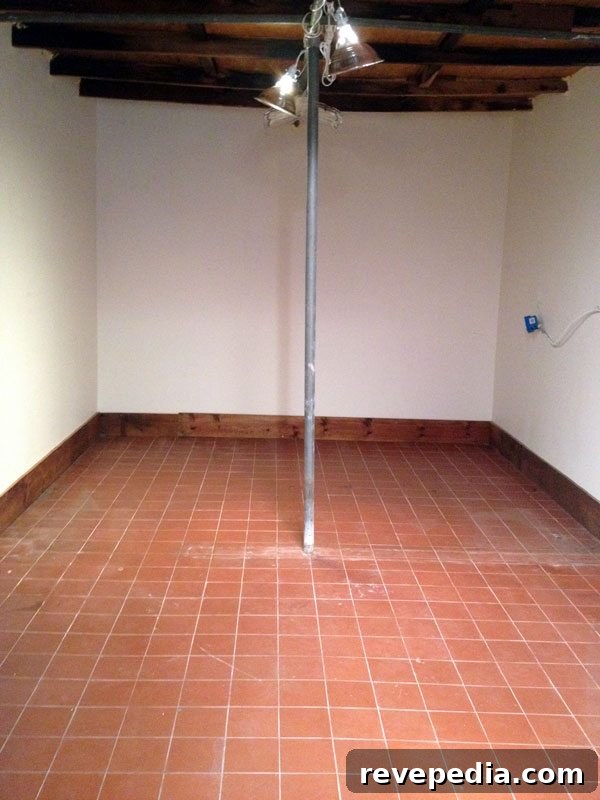
We had a lot of fun redoing our laundry room last year, but the attached storage area quickly became the ugliest room in the house. It was time to epoxy the floor to give the space a fresh, durable finish.
The room is roughly 20×10 with no windows, and it had become the perfect place to keep Laura’s inventory, store baby gear, and serve as an overflow area for items that wouldn’t fit in our garage or closets.
Over two years with our little one, we’ve accumulated a few more things. We try to keep the room sparse, but each year we need more storage for seasonal clothing and holiday decorations, so making this area functional and attractive was a priority.
After moving many boxes out, we decided to make the room usable again so it could act as storage or convert into a spare bedroom when needed. Clearing the space and starting fresh made it the perfect time to repaint the floor.
We loved the white painted floors in our laundry room that had covered ugly tiles, and the same tiles were in this storage area. However, the paint started to chip. Even though it was floor paint, it wasn’t as durable as we wanted for a storage and utility space subjected to rolling racks, heavy boxes, and frequent use.
Epoxy felt like the logical upgrade. We’d mostly seen it used on garage floors, but it makes sense for any high-traffic utility area. As an Ace Blogger, we received materials for a weekend project that fit perfectly into a two-to-three day plan: clean, prep, and apply epoxy paint.
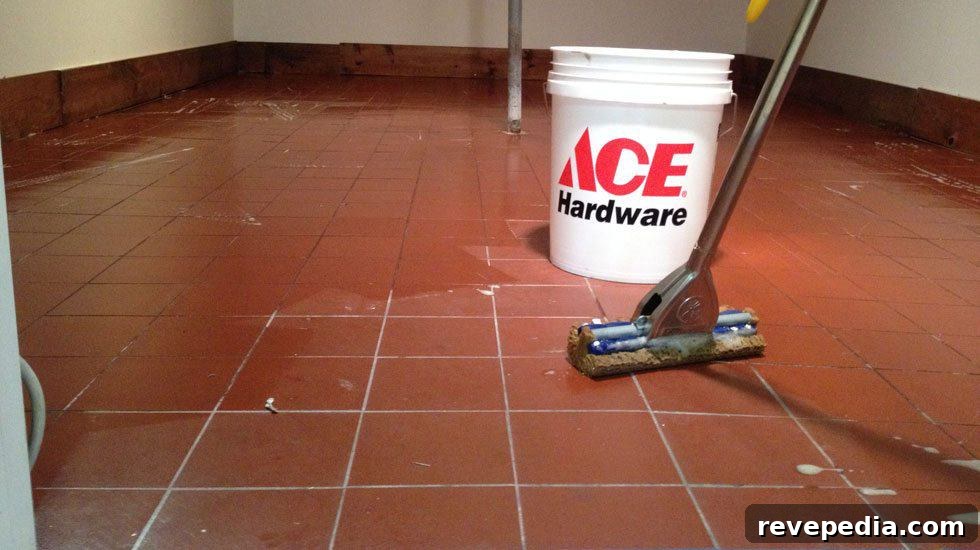
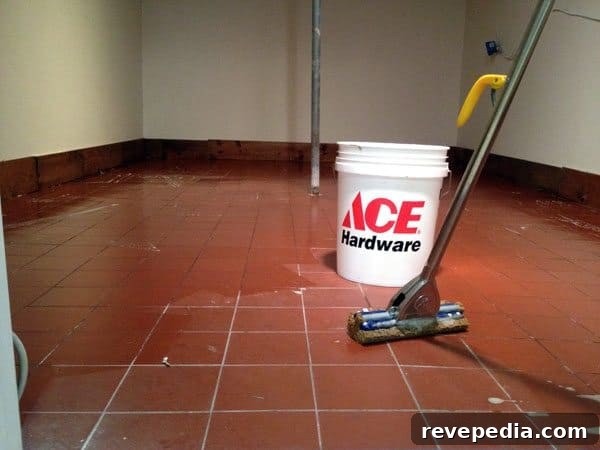
The first step was a thorough cleaning. We used TSP to remove dirt, grease, and grime, applying it with a sponge mop and allowing the floor to dry completely. Proper cleaning is essential for good adhesion and a long-lasting finish.
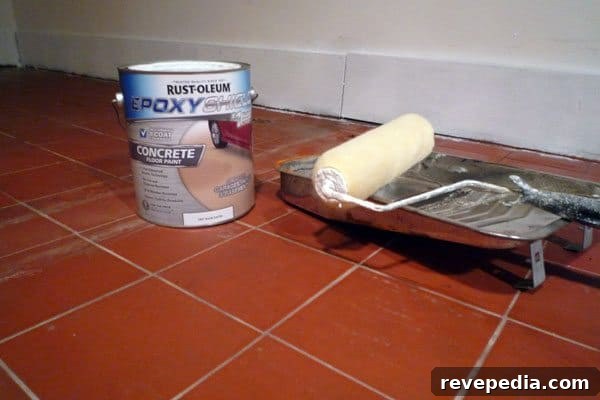
We chose Rust-Oleum EpoxyShield concrete floor paint in white. The product is tintable, but we opted for straightforward white to match our other area. It’s also available in gray, which is a common garage choice and looks great when combined with decorative flakes.
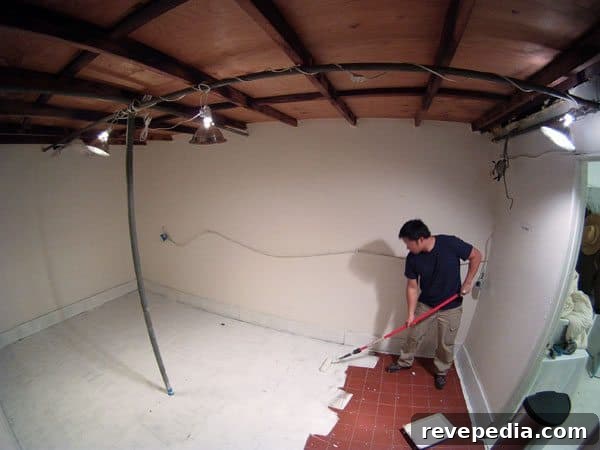
The epoxy was low-odor, which was important for a windowless room with limited ventilation. We used a 1/2-inch nap roller and applied the first coat in about half an hour. Because the existing tiles were dark, we applied a second coat for improved coverage, though a single coat can be enough on lighter surfaces.
The floor was walkable after 24 hours and fully cured after a few days. By Monday afternoon we were already moving furniture back in and installing shelving units from Ace Hardware to help organize the room.
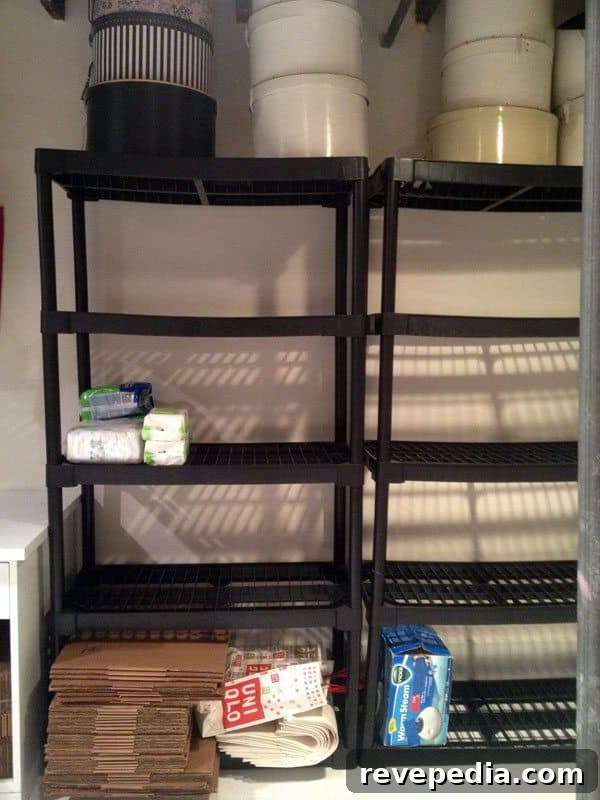
We’re thrilled with the result. The white floor brightened the room and made it feel more inviting—so much so that we celebrated by dancing and relaxing in the refreshed space.


One small hiccup was a sudden rainstorm. Los Angeles rarely gets heavy rain, but this weekend it poured and we had to quickly move items back inside. Timing was a bit off, but the epoxy was ready and the room looked fantastic with its white finish. We used only one gallon of paint, which typically covers 300–400 square feet.
The epoxy floor should hold up much better than standard floor paint. One common concern is that epoxy can be slippery when wet; so far we haven’t had that issue, but it’s something to keep in mind depending on your space and use.
Our local Ace Hardware supplied everything we needed: paint, rollers, trays, and shelving. Having all the supplies in one place made the project quick and convenient.
If you have a utility room or other high-traffic space that needs a refresh, consider an epoxy floor. It’s durable, clean-looking, and not limited to garage use.
Disclosure: Ace Hardware provided materials for this project. They did not influence our opinions or the content of this article.