When we started this project, we knew it was a gamble. It was our first time refinishing a tub, and we accepted that the result might not look professional. We enjoy DIY challenges and the pride of doing something ourselves, even if the outcome isn’t perfect.
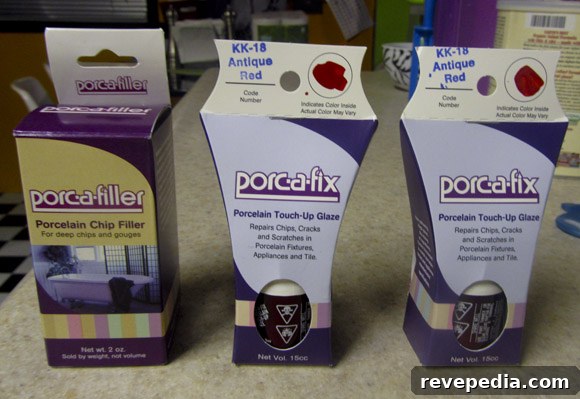
Our tub had only a few small chips, and many people assured us that porcelain filler and touch-up glaze would be enough to restore our Clementine. Confidently, we ordered the recommended products. After cleaning the tub and removing the claw feet, we began repairing the chips late one evening.
We let the filler cure for 24 hours (the instructions said a couple of hours might be sufficient in the right conditions, but we wanted to be thorough). When we returned, we sanded the repaired spots and prepared to apply the glaze.
The filler went on smoothly; it had the thickness of a heavy craft glue. The instructions suggested using a putty knife or spatula, but we used a painter’s knife from an old oil-painting set, which worked well for the small chips.
That’s where our first mistake happened.
The directions called for 220-grit sandpaper and pictured a small circular sanding pad. Instead of getting that, we chose a very fine-grit sanding sponge, assuming it would serve the same purpose.
It didn’t.
The sponge lacked the precision needed to sand the filler cleanly without scratching the surrounding finish. It was also hard to tell whether the filler had been sanded flush with the edge of the chip, which is important so the glaze can blend seamlessly with the existing surface.
After too much sanding, we ended up scuffing Clementine’s interior and making the situation worse. Determined to proceed, we cleaned the sanding residue and applied the glaze, hoping a thin coat would smooth things out.
You can probably guess what happened next.
Two issues emerged. First, the glaze didn’t match the tub’s exterior. We’d assumed the whole tub shared the same finish, but when we brushed the nail-polish-thin glaze over the scratched areas, the color difference was obvious. It appears the exterior is painted a similar shade to the interior glaze, not the same finish.
Second, we applied too much glaze on the interior despite the instructions advising a light touch. The result looked like a hurried manicure rather than a smooth repair.
The kit included a very small piece of garnet paper for smoothing the glaze to match the existing finish, but it wasn’t nearly large enough for our needs. The fresh glaze highlighted how much wear and aging the tub had actually endured, more than we’d realized.
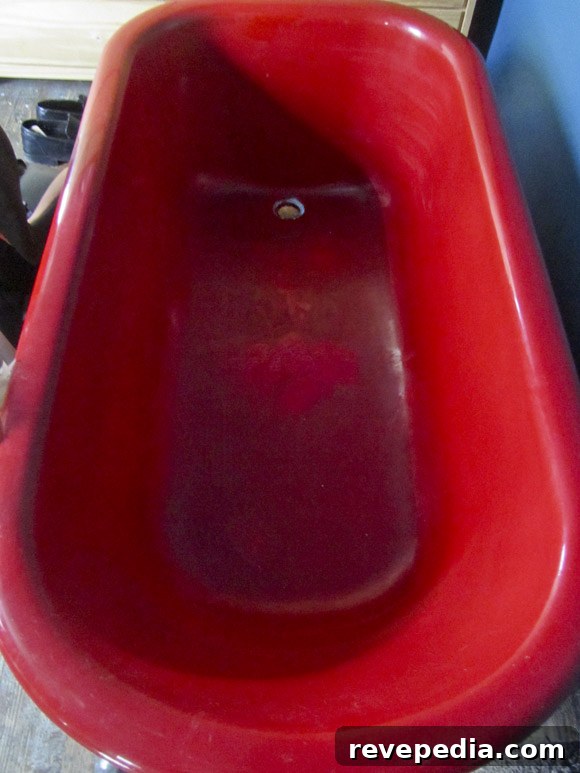
Now we’re considering repainting the tub’s exterior to conceal the glaze marks. For the inside, we have two practical options: sand everything down and re-glaze the entire interior, or use an epoxy refinishing kit to recoat the interior in white.
We want to stress that our experience is not an indictment of the products. When we contacted the manufacturer to ask about larger quantities of glaze, their staff were friendly, knowledgeable, and helpful, which eased much of our frustration. Our problems came from lack of attention to detail and user error, not necessarily the product itself.
So we’d like your input — how would you save Clementine? Would you re-glaze her interior red to match the original look, or would you recoat the inside in white with epoxy? Share your vote and advice in the comments, and check back for part two, where we’ll reveal our other major mistake so far.