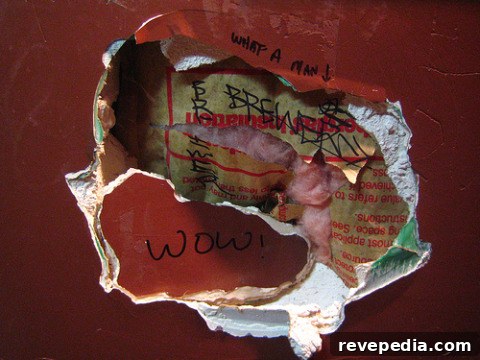
Life delivers plenty of bumps, chips, dents, and scratches — especially to your walls. The walls in any home take a steady beating: furniture gets knocked, pets scratch, and children somehow leave nicks, smudges, grooves, and even chunks out of drywall.
If your walls are showing signs of everyday wear, here are practical, easy-to-follow repair tips to restore them quickly and affordably.
Removing Smudges and Surface Marks
Light marks and smudges often come off with a cloth and a good wall cleaner. For tougher stains — crayon, shoe scuffs, or stubborn dirt — melamine foam cleaners (often called “magic erasers”) are very effective. They lift many kinds of surface grime with minimal effort. Because these products can abrade or dissolve slightly while you clean, wear gloves and test a small, inconspicuous spot first to ensure the finish isn’t affected.
Repairing Small Nicks, Dents, and Scratches
For shallow dents and small gouges, drywall compound (commonly called “mud”) is the best solution. Start by sanding the damaged area lightly to remove loose material and create a slightly rough surface so the compound adheres well. Using a 3″ or 4″ putty knife, press the compound firmly into the scratch or dent to fill it completely. Smooth the surface so excess mud is removed.
Most minor repairs need only one thin coat. If a deeper spot remains slightly soft after drying, wait 24 hours and apply a second coat. Once fully dry, sand the area smooth with fine-grit sandpaper, wipe away dust, prime if necessary, and repaint to match the surrounding wall.
Fixing Larger Holes and Major Damage
When a hole or major puncture appears, a more involved repair is required, but it’s often simpler than you expect. Larger holes usually need support behind the drywall and a patch of new drywall or a reinforced mesh patch before applying joint compound. After patching, follow the same sequence: apply compound, let it dry, sand smooth, prime, and paint.
For detailed step-by-step guides and visual references on repairing bigger drywall damage, look for reputable how-to resources and tutorials that walk through measuring, cutting a patch, and securing backing support. (Avoid relying on unverified shortcuts for structural fixes.)
Final Tips
– Always clean and sand damaged areas before applying any compound to improve adhesion.
– Work with thin layers of compound and allow full drying time between coats to prevent cracking.
– Use primer on repaired spots before painting to ensure an even finish and color match.
– Keep basic repair supplies on hand: a small tub of joint compound, a 3″–4″ putty knife, fine-grit sandpaper, and a lightweight patch kit for quick fixes.
With a little effort and the right materials, most wall damage can be repaired quickly, restoring a clean, smooth appearance. Put on your work clothes and tackle the job—your walls will look good as new in no time.
photo courtesy of flickr/rick