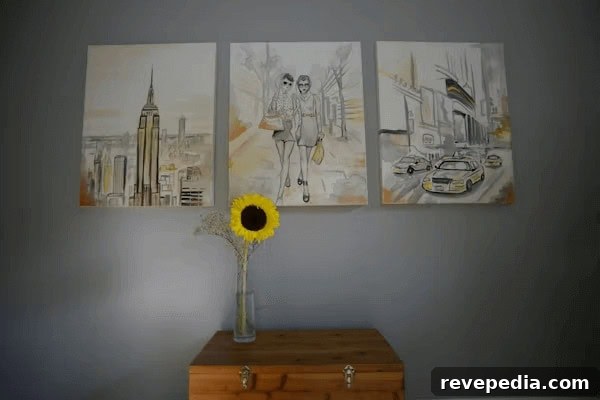
How to Hang Wall Art so It Looks Right (And Stays Put)
An empty wall can make a room feel unfinished. The solution is straightforward: hang artwork that adds color, mood, and personality. The difference between “nice” and “nailed it” is planning—choosing the right height, leveling carefully, and using suitable anchors so the piece stays secure.
This guide gives a clear, stress-free approach to hanging art with reliable results. It also addresses common problems like uneven studs, fragile drywall, and frames that won’t sit straight.
Tools and supplies
You don’t need a full workshop—just these basics:
- Tape measure
- Pencil
- Painter’s tape
- Level (a 2-foot level is ideal, but any level works)
- Stud finder (optional but helpful)
- Hammer or drill/driver
- Picture hangers or wall anchors rated for the weight of your frame
- Two rubber bumpers for the bottom corners of the frame
- Clean microfiber cloth
Tip: Check the hardware on the back of the frame. A hanging wire, sawtooth hanger, or D-rings each require different hardware. D-rings often work best when paired with two hooks for stability.
Step 1: Pick the right height
Artwork generally looks best when its center sits at eye level.
Simple rules of thumb:
- Center the art about 57 inches from the floor as a starting point.
- If you’re hanging art above furniture, keep the bottom edge 6 to 8 inches above a sofa, console, or headboard.
Step 2: Mark your placement without making holes
Use painter’s tape to avoid unnecessary holes and get the placement right before committing.
- Put painter’s tape on the wall where you think the top corners will land.
- Step back 6 to 10 feet to see how it reads in the room.
- Adjust the tape until the piece looks balanced with the surrounding furniture and wall space.
For heavy or wide pieces, enlist a helper—two people make alignment and handling much easier.
Step 3: Find studs or choose anchors that hold
Hitting a stud gives the most secure hold. If that’s not possible, use a reliable drywall anchor rated above the frame’s weight.
- Locate studs with a stud finder or by tapping the wall.
- If you must use anchors, choose ones rated higher than the actual weight of the piece.
Don’t gamble with ratings: if an anchor is labeled “up to 20 lbs,” avoid hanging a 20 lb frame on it—choose a stronger anchor to provide a safety margin.
Step 4: Measure the hanger, not the frame
Many mistakes happen when people measure the frame instead of the mounting hardware.
For frames with a wire:
- Pull the wire up as it will sit on the hook so it’s taut.
- Measure from the top of the frame down to the highest point of the wire.
For frames with D-rings or other fixed hangers:
- Measure from the top of the frame to the center of each hanger.
- Measure the distance between two hangers if the frame will use two hooks.
Transfer these measurements to the wall using pencil marks on painter’s tape so your hook placement matches the actual hanger positions.
Step 5: Hang it and level it
Install your chosen hook(s), hang the frame, and check level with a level tool.
If the frame is not perfectly level:
- Nudge the frame on the hook until it settles straight, or
- Make a slight adjustment to one hook if using a two-hook setup.
Once level, stick two rubber bumpers to the bottom back corners of the frame. They prevent shifting, stop scuffing, and keep the frame flush against the wall.
Step 6: Fix common problems fast
The frame keeps tilting
- Install bumpers to stabilize the bottom corners.
- If the wire is loose, tighten it or reposition it higher on the frame.
The frame is level but looks crooked
- Your ceiling or floor may not be perfectly level; use a nearby furniture line (shelf, sofa top) as the visual reference.
Drywall is crumbly
- Use a larger anchor or a toggle-style anchor for better hold.
- Avoid reusing the same hole; patch and move slightly if needed.
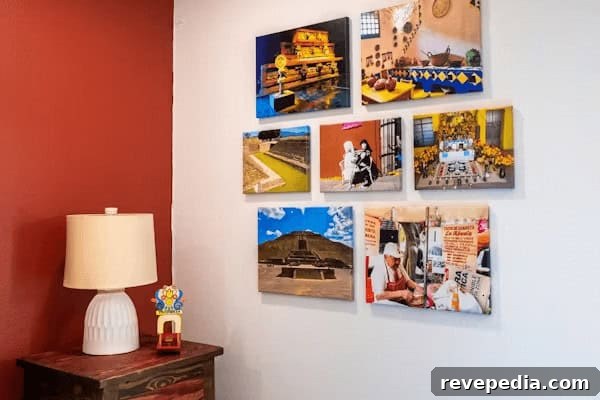
You want a gallery wall
- Lay the pieces out on the floor first to find a pleasing arrangement.
- Make paper templates of each frame and tape those templates to the wall to preview spacing.
- Keep spacing consistent—about 2 to 3 inches between pieces is a good rule.
Picking art that fits the room
Art is personal, but scale and placement matter to make a cohesive room.
- Small wall: choose one medium piece or a compact grouping of 2–3 frames.
- Large wall: use one large piece or a wide row of frames to anchor the space.
- Narrow spaces (hallways): select vertical pieces or a simple grid layout to suit the proportions.
Consider lighting too. If a wall receives strong sunlight, pick materials and finishes that resist fading or use UV-filtering glazing to protect artwork.
Change the vibe quickly
Wall art is one of the easiest weekend projects that can transform a room. It introduces color and personality without repainting or a major renovation. Choose a theme you like and reinforce it with a few coordinating accents like a lamp shade, throw, or shelf styling for an intentional look.

Final checklist
Before you put away your tools, confirm these items:
- The hooks match the hanger type on the frame
- The anchor rating exceeds the frame weight
- The frame is level—or visually level in the room
- Rubber bumpers are installed to prevent shifting
- The wall around the frame has been wiped clean
Follow these steps for clean lines, fewer holes, and artwork that looks great and stays put.