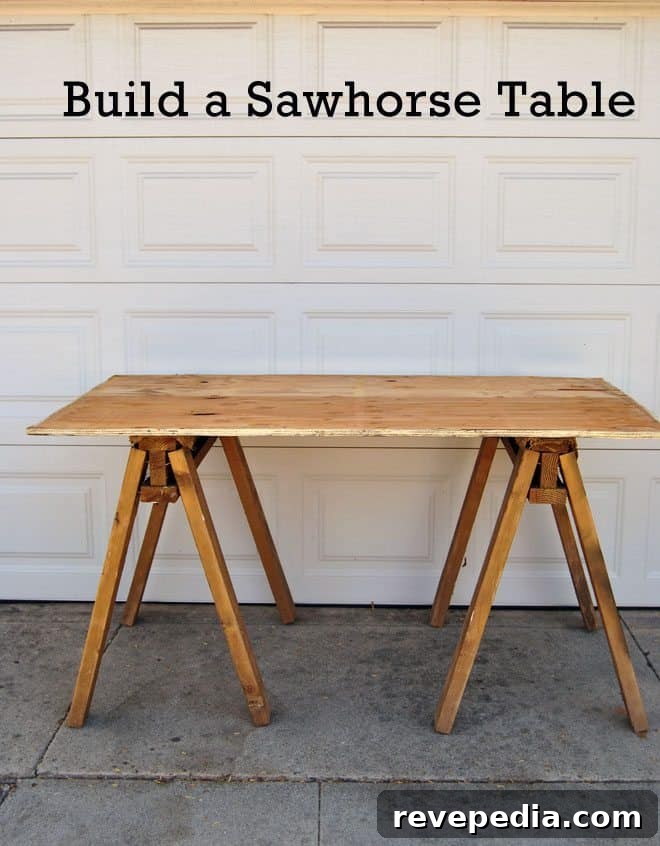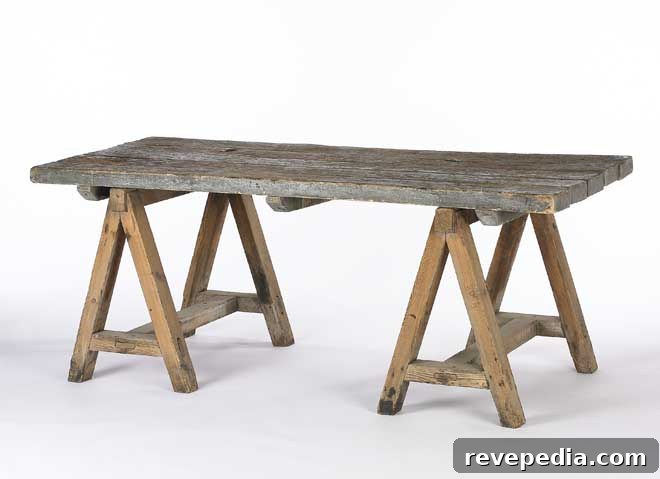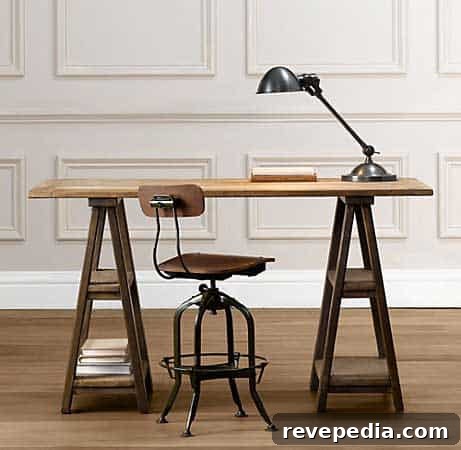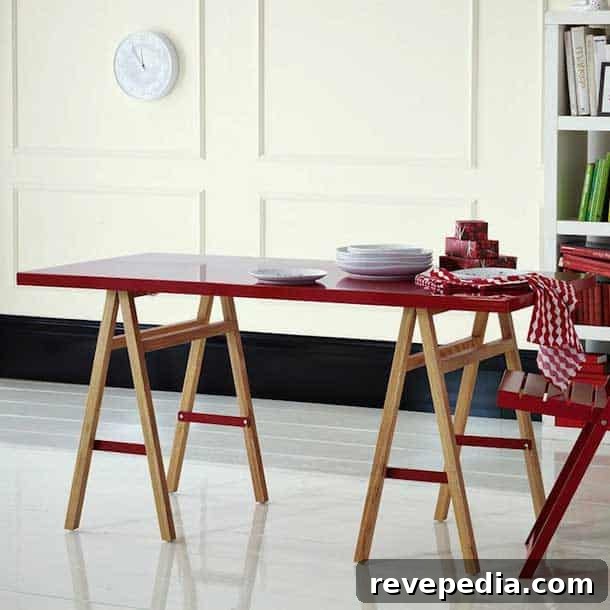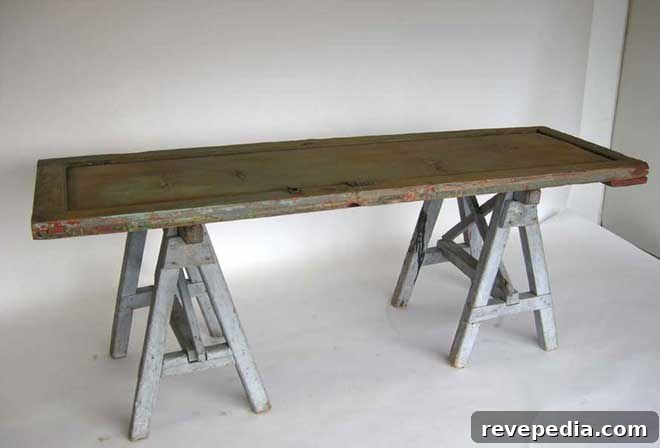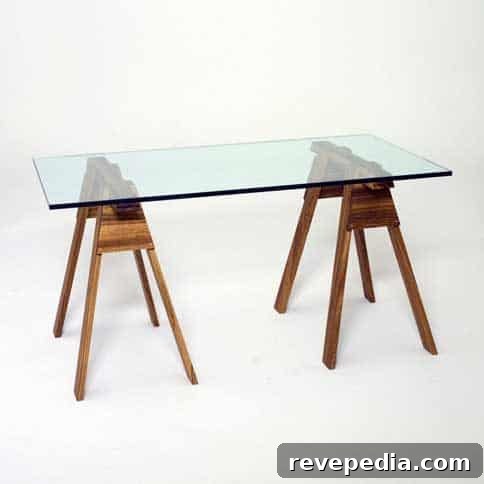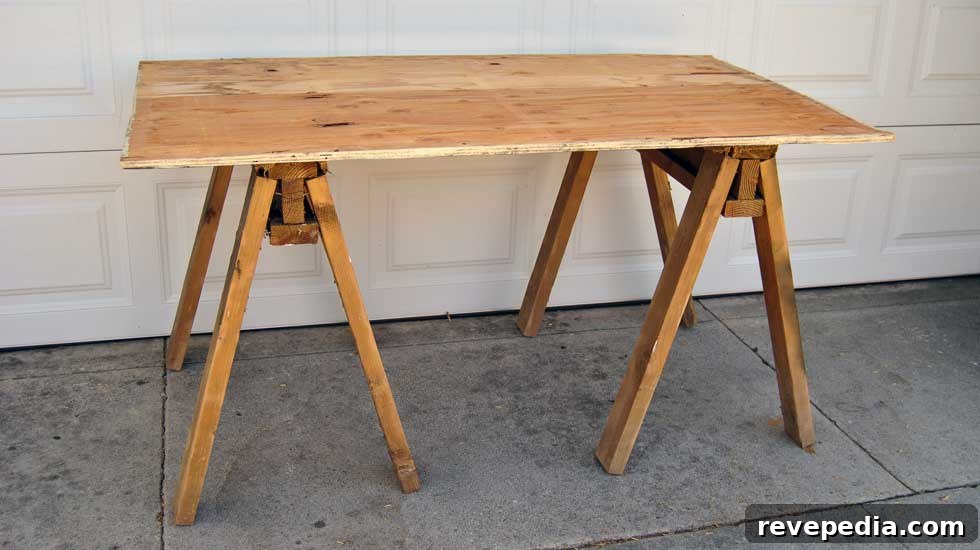
The industrial-chic trend shows no signs of slowing, and sawhorse tables have become a popular, versatile choice for homes and workspaces. If you like the look but not the price tags, here’s a straightforward guide to building a durable, attractive sawhorse table on a budget.
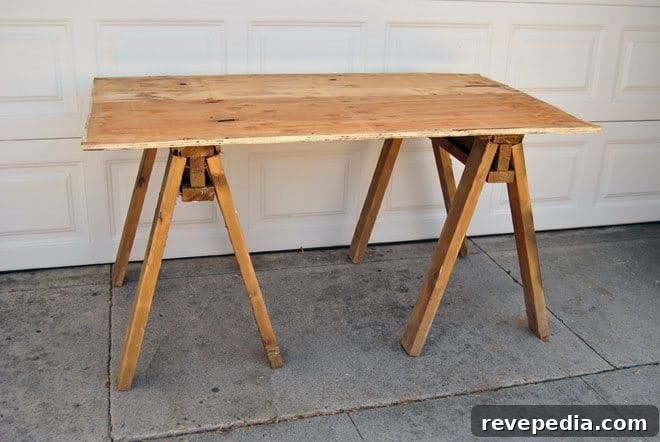
Though they may appear simple, many ready-made sawhorse tables are expensive or made from reclaimed materials sold at a premium. Building your own lets you control the style, finish, and cost—whether you want a rustic, refined, or industrial look.
- Estimated Sawhorse Table Project Time: 2 Hours
- Challenge Level: Medium
- Step-by-Step
This do-it-yourself project takes roughly two hours and can be customized to suit any budget or style. The instructions below describe a mid-range finish and simple construction that’s sturdy and easy to adapt.
Estimated Sawhorse Table Project Time: 2 Hours
Challenge Level: Medium
Tools & Supplies:
– Eight 30″ 2x4s (legs)
– Six 32.5″ 2x4s (for the central I-beam and supports)
– One sheet of 3/4″ plywood for the tabletop (cut to your desired top dimensions)
– Box of 2″ wood screws
– Sandpaper (180 and 220 grit)
– Drill/driver with Phillips bit or screwdriver
– Measuring tape and pencil
– Clamps or a table vise for holding boards while cutting
– Wood finish or paint (Rust-Oleum Ultimate Wood Care suggested) for protection and appearance
Step-by-Step
1. Prepare lumber: mark and cut eight 30″ lengths for the legs and six 32.5″ lengths for the central I-beam and cross supports. Accurate cuts make assembly easier and ensure a balanced table.
2. Work safely in a well-ventilated area and secure boards with clamps or a vise before cutting. Use appropriate eye and ear protection.
3. Cut the boards using your preferred saw. A compact tool that can make clean, straight cuts is ideal for this job.
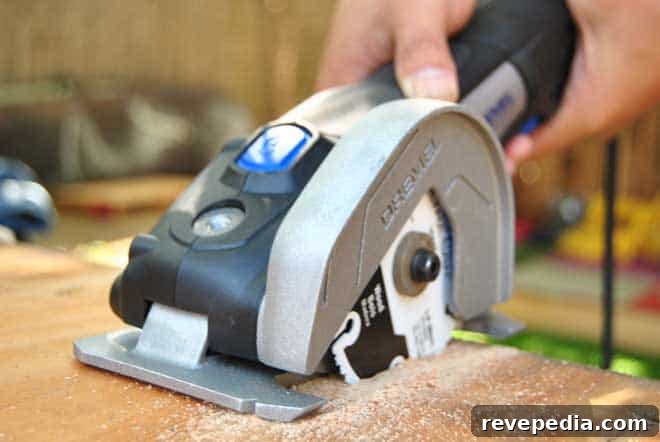
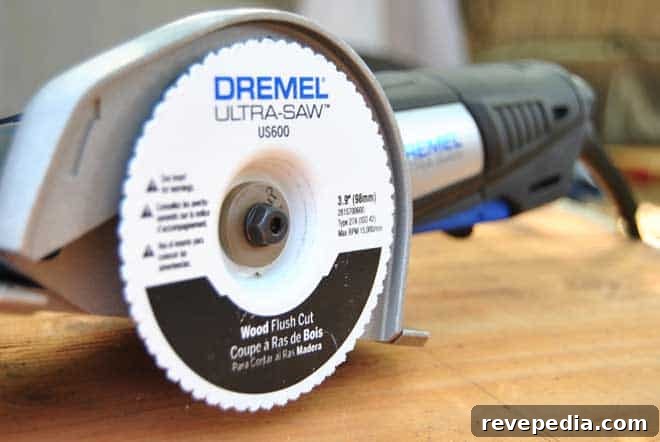
4. Sand all pieces: start with 180-grit sandpaper to remove rough spots and then finish with 220-grit for a smooth surface. Sand the tabletop edges, surfaces, and leg faces to ensure a consistent finish.
5. Remove dust with a tack cloth or a damp lint-free cloth. Clean, dust-free wood ensures better adhesion and a more even finish.
6. Apply finish or paint to the individual pieces before assembly. This step makes the job easier and prevents missed spots. Use Rust-Oleum Ultimate Wood Care or a similar product for protection and an attractive sheen.
7. Allow finished pieces to dry fully according to the product instructions—typically 2–4 hours for most water-based finishes. Make sure pieces are dry to the touch before assembly to avoid smudging or shifting the finish.
8. Build the central I-beam: assemble three of the 32.5″ pieces into a T-shaped support using 2″ wood screws. Position one board vertically and attach two boards flat across it to form a strong center beam.
9. Secure the bottom flanges of the I-beam with additional screws so the assembly is rigid and resists twisting under load.
10. Attach legs: place each 30″ leg just under the horizontal part of the T and fasten with four screws in a square or rectangular pattern for a sturdy connection. Pre-drill screw holes if the wood tends to split.
11. Repeat for all four legs, then stand the sawhorse assembly on its legs and confirm it sits level on the floor.
12. Check stability and tighten any loose screws. Make sure the legs are secure and the sawhorse does not wobble under light pressure.
13. Position the plywood tabletop across the two sawhorses and mark where the sawhorse tops meet the underside of the tabletop. These marks show where to place screws for a secure connection.
14. Attach the tabletop to the sawhorses by driving wood screws up through the sawhorse tops into the plywood along your marks. Use enough screws to prevent movement but avoid over-tightening, which can dent the wood.
15. Re-check the table for level and balance. Make any final adjustments and inspect all joints for tightness.
16. Your handmade sawhorse table is ready. Add finishing touches like protective felt pads under the legs, additional coats of finish for durability, or decorative accents to match your decor.
If you want inspiration for different finishes and styles, study variations from rustic reclaimed looks to painted, metallic-accented designs. Photo ideas include clean modern tops, country-style builds, and glass or mixed-material tabletops for a refined twist.