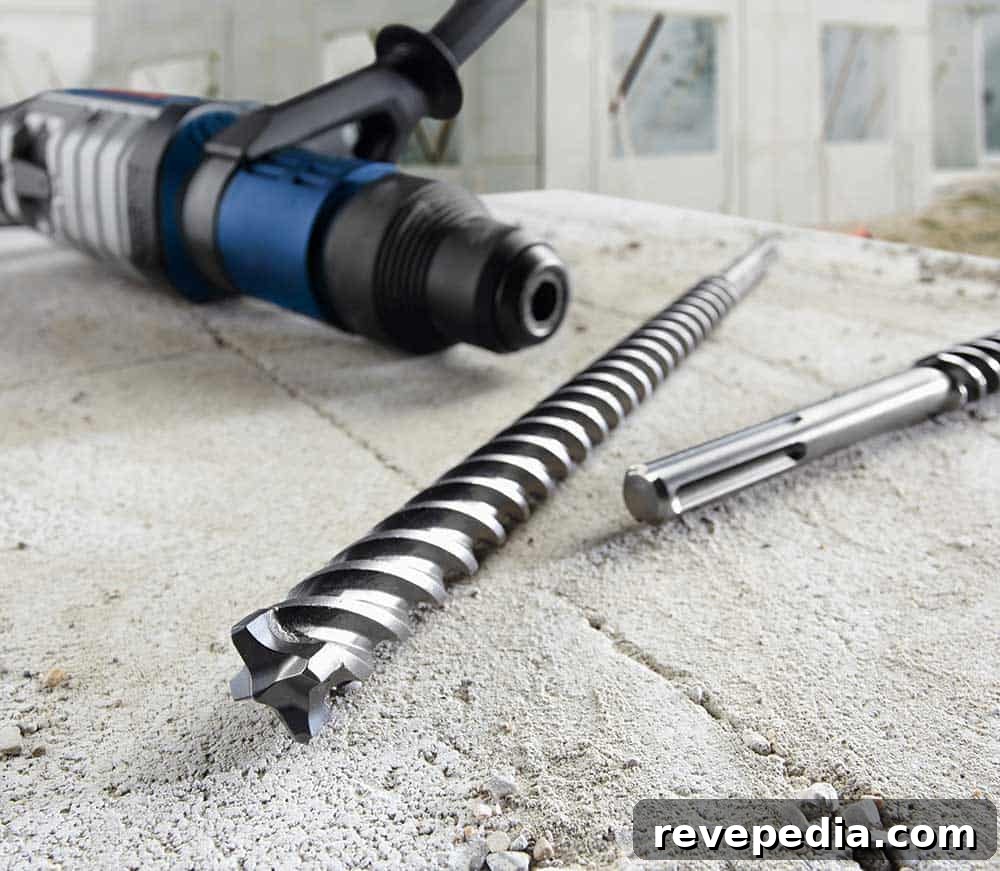
Choosing the right drill bit is crucial to the success of any drilling project. A bit must be sharp and made from a material suited to the surface you’re working on. For drilling into concrete, masonry and other hard materials, carbide-tipped drill bits are the standard choice.
Tom Grego, Group Manager at Bosch, offers practical guidance on carbide use and best practices for drilling. His Carbide 101 answers explain what carbide is and why it’s widely used in demanding drilling and cutting tasks.
What is tungsten carbide?
Tungsten carbide is a composite material that begins as a powder and is processed into a solid form. In the power tool industry it’s commonly applied to cutting edges—such as the tips of drill bits or the teeth of saw blades—because of its hardness and resistance to wear. These properties make tungsten carbide ideal for sustained use against hard aggregates and abrasive materials.
Why is carbide so widely used in concrete work?
Carbide has a reputation in the trades for superior performance. A saw blade with carbide teeth, for example, will outlast and outperform a blade with plain steel teeth. The same principle applies to drill bits and other cutting accessories—carbide extends life and improves cutting efficiency. In concrete and masonry applications, carbide is the go-to material because it delivers the robustness required for long-term use.
That said, “carbide” is a broad term and not all carbide is created equal. Professionals may not always understand the metallurgical details, but they recognize differences in durability and results. A concrete drill bit typically consists of a steel body with flutes for chip removal; the working contact at the tip is what’s reinforced with carbide.
How are carbide tips designed?
The most common tip is the two-cutter design, identifiable by the two cutting edges on the tip. Manufacturers usually mill the steel tip and attach a carbide chip with a welding or brazing process; this is known in the industry as embedded carbide. A step up is the four-cutter design, where either a single carbide piece is notched to form four cutting edges or additional carbide inserts are added. More carbide at the tip generally means longer life.
Full-head carbide represents the top tier: instead of separate notched pieces, the tip is made entirely of carbide and integrated with the steel body for a stronger bond. This full-carbide head is the most durable option, especially when drilling into hard aggregate or through rebar. Some manufacturers also add more cutting edges—six or more—but these extra teeth often provide more of a cosmetic difference than a dramatic performance improvement.
How can users tell carbide quality?
Lower-quality carbide can be brittle and prone to chipping or fracturing. Poor brazing or welding can cause the carbide tip to break off or twist, which users will notice quickly in performance. Different designs have distinct trade-offs: two-cutter bits drill quickly but handle rebar strikes poorly; four-cutter bits resist binding on rebar better but don’t last as long as full-head carbide. The best professional-grade bits for heavy-duty use are full-head carbide in SDS-plus or SDS-max configurations. Two-cutter bits are not intended for drilling through rebar.
Is a higher-priced bit worth it?
Yes—labor is typically the largest jobsite expense, and frequent bit changes or downtime directly cost money. A more durable bit that lasts several times longer reduces interruptions, keeping crews productive. Drilling in awkward positions, extreme temperatures, or using heavy rotary hammers increases fatigue and risk; completing the task quickly with a reliable bit improves safety and work quality. An inferior bit that wears out or breaks on rebar prolongs difficult tasks and raises costs.
Do bit choices affect user safety?
They do. For example, a two-cutter bit that binds on rebar can cause the tool to jerk, potentially wrenching the operator’s arm. Bosch tools include Kickback Control to stop the tool and reduce injury risk, and selecting a four-cutter bit can also help prevent binding. However, a four-cutter may still sustain damage from rebar strikes, whereas a full-head carbide bit is more likely to drill through rebar and continue with minimal trouble. Another option is to switch to a specialized rebar-cutting bit when encountering reinforcement, then return to the concrete bit.
Summary for concrete professionals
Professionals understand the basics: more carbide at the tip typically means a better, longer-lasting bit. What they want in practice is reliability—bits that resist heat, handle rebar without catastrophic failure, and resist wear from hard aggregate. When a bit delivers on those expectations, it keeps crews working, reduces downtime, and improves overall job outcomes.