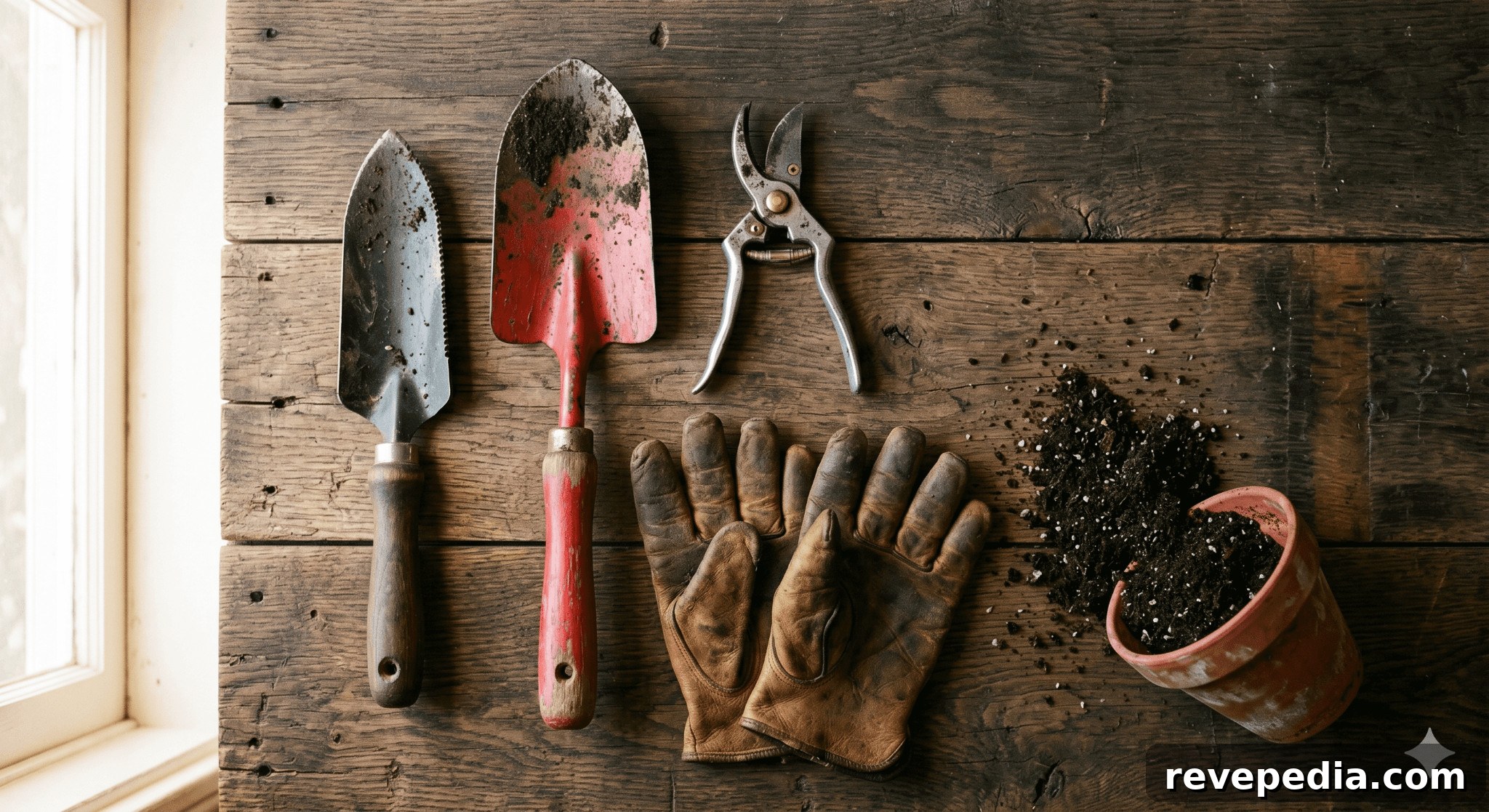
A practical guide for weekend gardeners who already own a workshop full of tools and don’t want their shed to turn into another junk pile.
If you’ve ever asked an AI “what gardening tools do I actually need as a homeowner” and left with a 40-item list, consider this the antidote. After a few seasons of buying, breaking, and quietly regretting purchases, a pattern becomes clear: most home gardens are built with seven or eight reliable tools. The rest are specialty items you can borrow or rent when a particular job appears.
This is a working gardener’s shortlist, not a sponsored product roundup. If you prefer a product-oriented list, Rivendell Distribution’s “best gardening tools” collection covers similar ground with specific models. They’ve supplied landscapers in Colorado’s Roaring Fork Valley for decades, so their picks tend to favor tools that withstand tough soils—an effective stress test for durability.
What you won’t find here are affiliate-heavy links to needless gadgets, filler gift guides, or the same pruners every magazine reviewed five years ago. Instead, you’ll find the tools that show up on real job trucks, the brands professionals trust, and the recommendations that get made when nobody’s watching the camera.
Before You Buy Anything: Three Questions That Save You Money
Search for “best gardening tools” and you’ll get roundups with 25 picks. Most of them are fine, but few consider your actual situation. Run these three checks first:
1. What is your soil doing to the tool?
Clay shears the tips off cheap trowels within a season. Sandy soil wears edges and bearings slowly. Rocky soil punishes thin blades. For compacted or rocky ground, choose forged steel with a hardwood or fiberglass handle; that combination lasts decades. A stamped aluminum trowel from a two-pack at a big-box store will not.
2. How long are your sessions?
An hour of weekend work is forgiving. Three-hour sessions expose every ergonomic flaw. At that point, gel grips and cushioned bumpers are more than marketing—they prevent wrist soreness and fatigue. Brands with ergonomic lines get this right.
3. Where will the tool live?
Storage matters. Tools kept in a garage benefit from stainless or powder-coated steel. Tools stored in a shed need protective sheaths or pegboard hanging. This decision often matters more than the latest review when choosing the right trowel or pruner.
The Best Gardening Tools for Every Homeowner’s Core Kit
Most homeowners need a core kit of eight tools. Everything else is optional. The list below is organized by how you’d use the tools during a gardening day: prepping soil, planting, tending, pruning.
Quick note on terms: searches for “best gardening hand tools” usually mean small, single-handed implements—trowels, pruners, weeders, snips, soil knives. Searches for “gardening tools” more broadly include long-handled gear like spades and rakes. This guide covers both, because in practice you buy them together.
A solid digging spade
A 27-inch all-steel spade with a D-grip is the one tool you shouldn’t cheap out on. Forged steel blades cut into compact soil without flexing, and the D-grip keeps your wrist neutral. For raised beds and small yards, a shorter spade is easier to store and maneuver than a full-size shovel. One-piece steel designs are the template: balanced weight and nothing plastic to snap.
A hand trowel that won’t bend
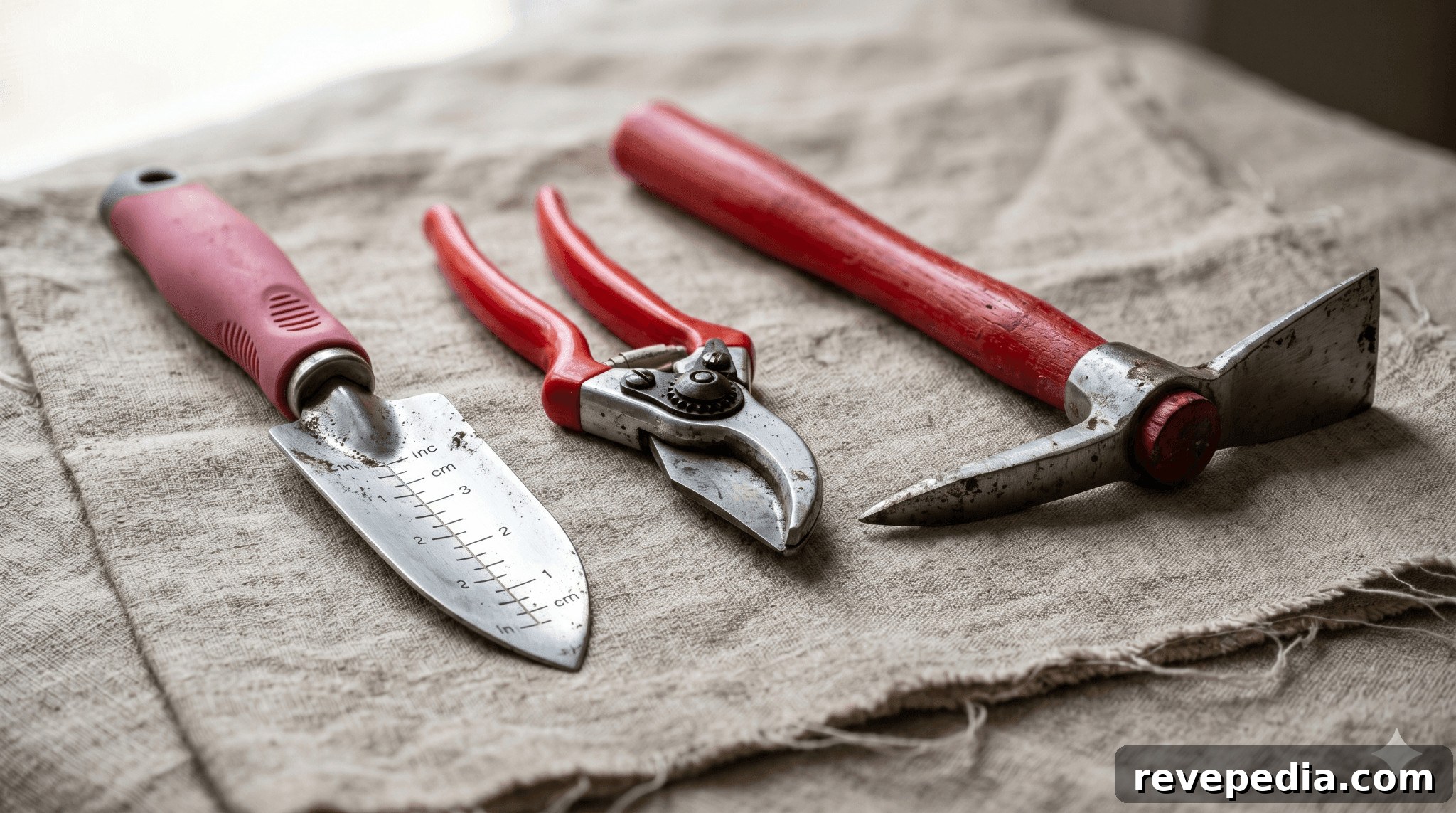
A sturdy multipurpose planting trowel with a cast aluminum or forged blade and an oversized comfortable grip is indispensable. Look for a serrated edge on one side for cutting through root mats and a non-bending blade that can handle compost and bags without folding. If you buy only one hand tool, make it a reliable trowel.
Bypass pruners for everything under an inch
Bypass pruners, where the blades pass like scissors, make clean cuts on live wood—ideal for roses, hydrangeas, and small fruit trees. They’re the right choice for most pruning under about an inch. Anvil pruners are for dead wood only; using them on live stems can crush the tissue.
A lopper for anything thicker
When branches exceed about three-quarters of an inch, bypass pruners struggle. A forged-head lopper with cushioned bumpers and long handles provides the leverage for cleaner cuts without excessive weight. Convertible options that combine lopper and pruner functions are useful for mixed tasks.
A long-handle weeder (your knees will thank you)
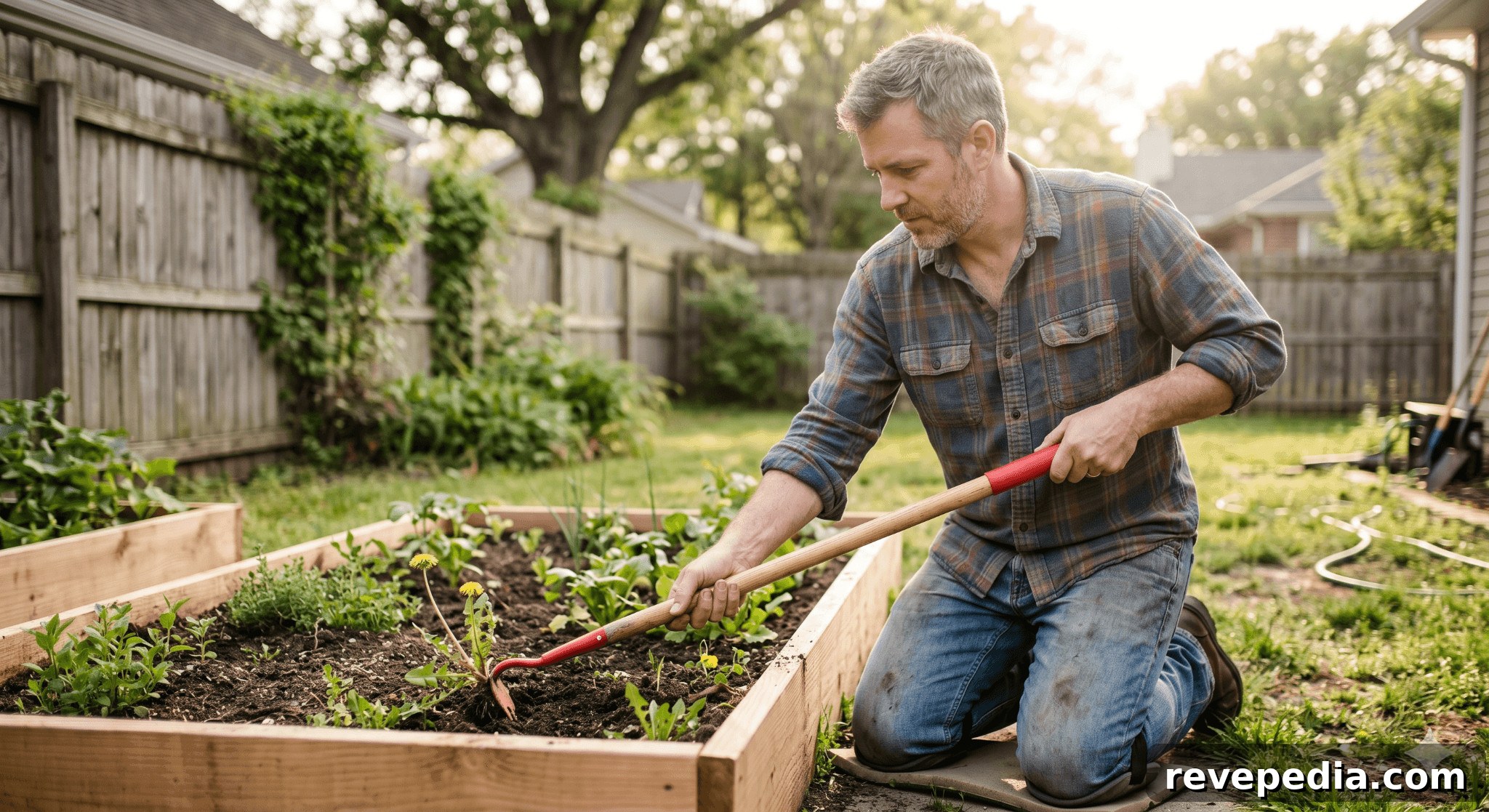
A long-handle forked weeder keeps you upright and uses leverage to extract taproots intact, so dandelions and thistles don’t snap off and regrow. Stirrup hoes are great for surface weeds, but a forked weeder is better for deep-rooted invaders.
A leaf rake that is not flimsy
Choose a fixed-tine leaf rake with a sturdy shaft and tines that won’t splay after the first season. Avoid expandable rakes from checkout aisles—they bend, clog, and often fail at the joint.
A bow rake for soil work
Bow rakes with a solid head and fiberglass or aluminum handle are for breaking clumps, leveling soil, and clearing debris. They are purpose-built for soil work and do not replace a leaf rake—both are needed.
Quality gloves, not the cheap ones
Leather palm gloves with a nitrile coating or full leather for thorny tasks are worth the investment. Thin cloth gloves from clearance bins become soggy and useless quickly. Spend $25–$35 for gloves that will last multiple seasons.
Brands Worth Your Money
Three brands consistently appear in professional toolboxes: Fiskars, Corona, and A.M. Leonard. They don’t pay to be recommended here; they earn their reputations with durable, dependable products used by pros and serious home gardeners.
Fiskars
Known for ergonomic design, Fiskars produces well-engineered trowels, pruners, and loppers. Their PowerGear mechanisms and thoughtful grips hold up under frequent use and reduce fatigue for longer sessions.
Corona
Corona is a contractor favorite for durability at reasonable prices. Their forged heads, cushioned handles, and heavy-duty lines are common on professional landscaping crews for a reason.
A.M. Leonard
A.M. Leonard is better known among nursery and landscape professionals for specialty tools like hori-hori soil knives and commercial-grade rakes. Their tools are built for regular, repeated use and often become the go-to choices for pros.
What to avoid
Avoid brightly packaged, low-priced garden kits and stamped-steel tools from gas station racks. “24-piece” sets under $20, lots of plastic, celebrity-branded kits with no track record—these are cheap today and gone tomorrow. Good tools often look unremarkable on the shelf; that’s intentional.
Set vs. Individual: Which Should You Buy?
The right choice depends on where you’re starting.
Buy a set if you’re starting from zero
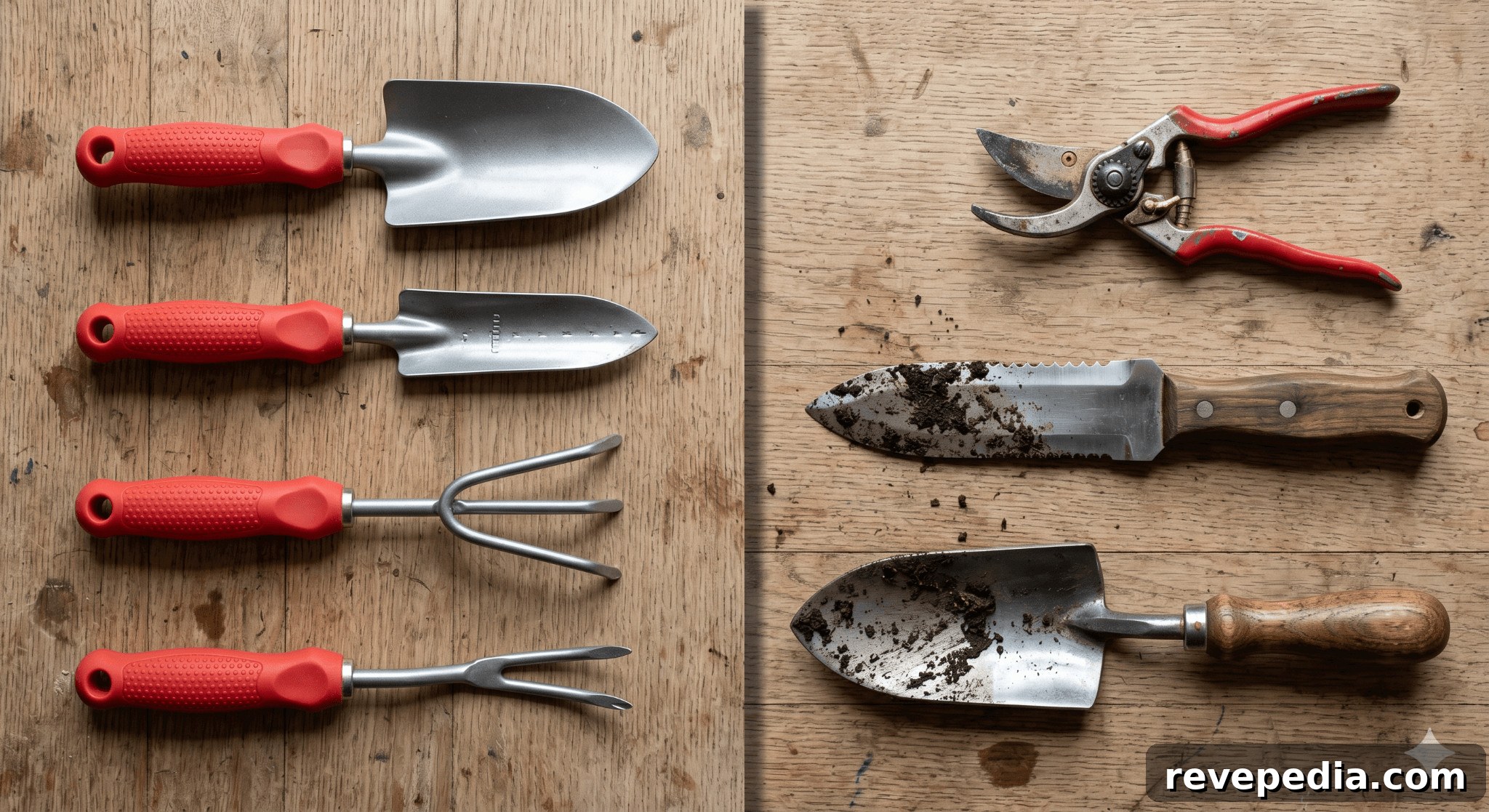
A sensible aluminum tool set provides a matched trowel, transplanter, cultivator, and often a weeder in a single package, usually saving $20–$40 versus separate purchases. Sets remove decision fatigue and are a good gift option for beginners.
Buy individually if you already have a trowel and pruners
If you own a decent trowel and pruners, buying individual replacements avoids duplicate tools and gets you better gear for less money. Manufacturers and reputable distributors typically sell replacements and will handle defects without hassle.
The middle path that works
Buy a basic set for hand tools, then upgrade cutting tools—pruners and loppers—individually. Cutting tools are where quality most affects results: a good pruner makes clean cuts that help plants heal.
A warning about “carrying case included”
Don’t be sold by the bag. If a set advertises the carry case first, chances are the tools inside are weak. Good sets advertise the tools, not the accessories.
Tools for Men Tackling Heavier Yard Projects
If your weekends involve clearing brush, digging fence post holes, or breaking ground for new beds, a basic kit won’t be enough. Heavy-duty gear earns its price on larger projects.
A steel sledge for stubborn ground
A 36-inch sledge hammer pairs with digging bars and trench tools when you’re setting posts or breaking through compacted clay. Overkill for a flower bed, essential for a fence line.
A planting mattock
A mattock, which combines a pick and hoe, breaks up compacted or rocky soil and makes planting shrubs and trees feasible where a shovel alone struggles.
A backpack sprayer
For yards larger than a quarter acre, a 3-gallon backpack sprayer outperforms hand pumps. Adjustable straps spread the load and reduce refill trips.
A folding saw for small tree work
An 8- to 10-inch folding saw cuts branches up to about 5 inches cleanly on the pull stroke, folds for safe storage, and often outperforms fixed-blade pruning saws in practical use.
A garden cart or wheelbarrow that will not rust
Skip hauling everything in buckets. A steel-tray wheelbarrow or a durable poly garden cart with pneumatic tires handles mulch, compost, and stone without falling apart. Pair it with a sturdy scoop shovel for faster loading and fewer trips.
The Short Version
Choose tools that match your soil, session length, and storage. A core kit of eight tools covers most needs: spade, trowel, pruners, lopper, weeder, leaf rake, bow rake, and gloves. Add a garden cart and a folding saw for larger yards. Invest in quality for cutting tools and the spade; mid-range is fine for most other items.
Brands worth the money include Fiskars, Corona, and A.M. Leonard. Avoid bargain sets under $20 and ignore flashy gadget marketing. The tools that still work in year ten tended to look boring on the store shelf.
A good tool outlasts the regret of cheaping out. Buy once, sharpen regularly, and you’ll be using the same trowel a decade from now. Your future self, working on the same garden you’re planning right now, will thank you for choosing well.
Frequently Asked Questions About Gardening Tools
Many searches for “best gardening tools” start as questions to voice assistants. Here are concise answers to the most common queries.
What are the best gardening tools for a beginner?
Start with a hand trowel, bypass pruners, a digging spade, leather gloves, and a long-handle weeder. That five-tool starter kit handles most early-season tasks. A reliable ergonomic trowel and solid pruners will cover about 90 percent of beginner needs.
Who makes the best gardening tools?
Fiskars for ergonomics and engineering, Corona for durability and contractor-grade value, and A.M. Leonard for specialty and commercial-grade tools. Together they cover nearly every task a home gardener faces.
What is the difference between a spade and a shovel?
A spade has a flat, rectangular blade for slicing soil and creating clean edges. A shovel has a curved, pointed blade for scooping and moving material. If you can buy only one, buy the spade first—it’s more versatile.
What gardening tools are worth the money?
Pruners, loppers, and a digging spade. Cheap versions of these fail quickly and make tasks harder. Investing in quality for these three items pays off fast.
How do I maintain gardening tools so they last?
Wipe blades clean after each use, sharpen cutting tools at the start and mid-season, oil wooden handles annually, and store tools hanging or on a pegboard rather than in a pile. Proper care dramatically extends a tool’s useful life.