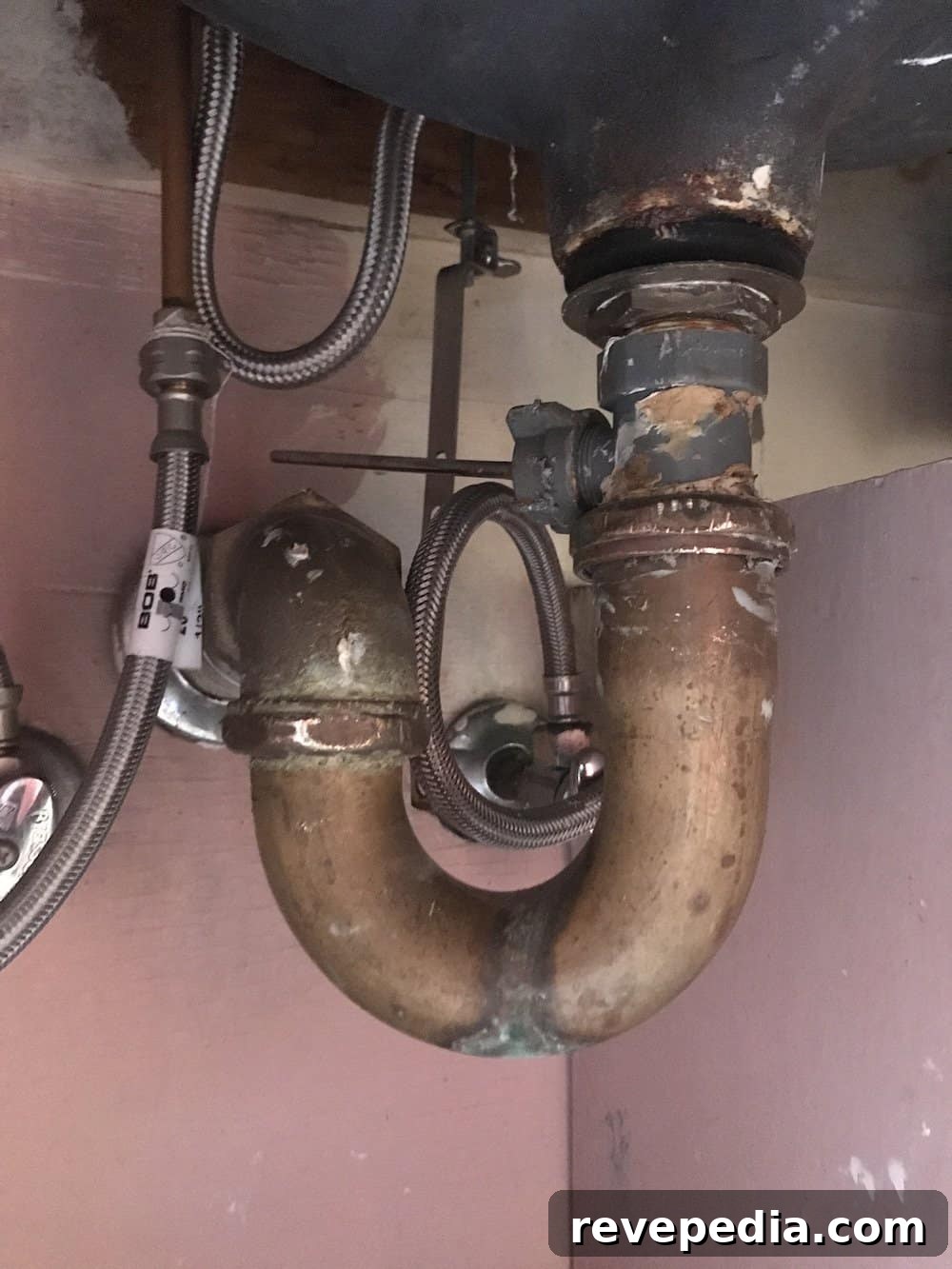
The U-shaped pipe beneath your sink is called a P-trap. Its job is to let wastewater exit while holding a small amount of water that prevents sewer gases from rising into your home. It also catches small items that fall down the drain, such as rings or other jewelry. Over time, P-traps can collect hair, grease, soap scum, and other debris, which reduces drainage and can lead to clogs. When this happens you’ll need to clean or replace the trap.
While clearing a P-trap is often a straightforward repair, consider upgrading to a no-clog or clear P-trap if you want to reduce future maintenance. These modern designs make it easier to see inside the trap and, in some cases, include mechanisms to clear or dislodge debris without disassembly.
What is a P-Trap
A P-trap serves two primary purposes:
- To allow wastewater to flow out while maintaining a water seal that blocks sewer gases from entering living spaces.
- To trap objects that fall down the drain so they can be recovered before they pass into the plumbing system.
Because the trap holds water and collects waste, it’s prone to gradual buildup. Hair, food particles, grease, and mineral deposits can reduce flow and eventually cause a blockage. When water drains slowly or begins to back up, the P-trap is one of the first places to inspect.
One example of an innovation in this area is the PermaFLOW P-trap, a clear trap with an external dial that actuates an internal paddle to help clear clogs. Because the body is transparent, you can easily spot missing jewelry or other items without taking the plumbing apart. Products like this aim to reduce both the inconvenience and time required to address common drain problems.
If you don’t have a clear or no-clog P-trap, there are still several effective ways to clear a clog before removing the trap itself. Chemical drain cleaners such as liquid drain solutions can sometimes dissolve organic buildup, but they’re not always effective on hair and can be harsh on pipes and fixtures. Mechanical methods are often safer and more reliable: a drain snake can reach beyond the trap, and inexpensive tools like a Zip-It can pull hair and debris from the U-bend. Avoid using a plunger on sink drains connected to P-traps, as plunging can push the clog deeper into the system.
When these methods fail, remove the P-trap for cleaning. Removing, cleaning, and reinstalling a P-trap is a simple job that most homeowners can complete in under an hour with basic tools and a little care.
How to replace a P-trap
Follow these steps to remove and replace a P-trap safely and effectively:
- Shut off the water supply valves under the sink if present. If there are no dedicated shut-off valves, simply avoid running the water while you work.
- Place a bucket or large bowl beneath the trap to catch water and debris. Loosen the slip nuts on both ends of the trap using channel-lock pliers or by hand if they turn easily. Support the trap as you loosen the nuts to avoid stressing the tailpiece or the outlet arm that connects to the wall.
- Carefully remove the trap. Dump its contents into the bucket and clean the trap thoroughly with a brush and an appropriate cleaner. Inspect washers and slip nuts for wear and replace them if damaged. If you are installing a new trap, assemble it following the manufacturer’s instructions, making sure washers and threads are seated correctly.
- Reconnect the trap by tightening the slip nuts at both the sink tailpiece and the wall outlet arm. Hand-tighten and then give a slight additional turn with pliers—do not overtighten plastic fittings, which can crack.
- Turn the water supply back on and run the faucet. Check all connections for leaks. If you notice any drips, tighten the slip nuts a bit more or reseat the washers to ensure a watertight seal.
Tips for a successful job:
- Work patiently and keep parts organized so you can reassemble them in the correct order.
- If replacing the trap, choose the correct size and material for your installation—common options are PVC or chrome-plated brass.
- Consider using thread tape or plumbers’ compound sparingly on metal threads if you need extra sealing, but avoid overusing sealants on plastic fittings that rely on compression washers.
- If your drain problems recur frequently, inspect the sink tailpiece, branch drain, and main drain line for deeper issues that a simple trap cleaning won’t fix.
Replacing or upgrading a P-trap is an inexpensive way to restore proper drainage and prevent sewer odors. With the right tools and a little care, you can clear clogs, recover lost items, and install a trap that makes future maintenance faster and less likely to disrupt your day.