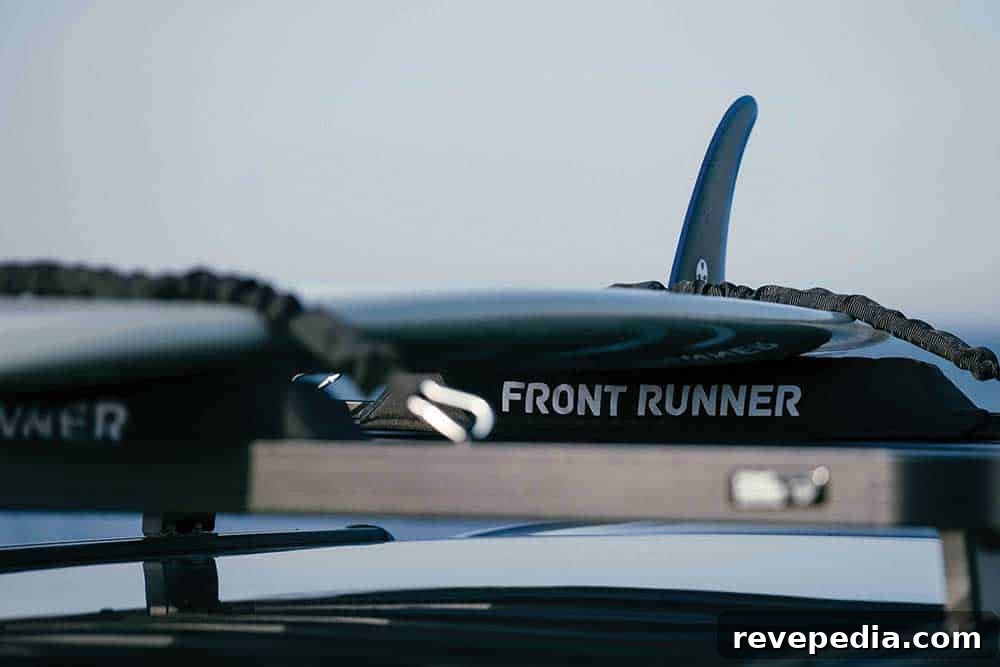
Bungee cords, ratchet straps, cargo nets and traditional rope have all served their purpose over the years, but the most versatile and reliable option you can repeatedly depend on is a high-quality set of tie-down straps.
Our friends at Front Runner Outfitters, who specialize in securing gear to vehicles, recently introduced two new options—the Stratchit and the Stratchit Shorty—and they offered several practical tips to help you choose the right tie-down straps for your trips.
Choose the Right Materials
Select straps made from durable, weather-resistant materials. Look for UV protection and fabrics designed to withstand prolonged sun exposure, rain, and other environmental stresses. Inferior materials can fail at the worst possible moment, so invest in straps built to last.
Metal fittings should be corrosion-resistant—stainless steel or properly galvanized steel—so they won’t rust, stain your vehicle, or weaken over time. Also ensure metal components won’t rub directly against your vehicle’s finish.
Loose metal parts can knock and rattle while driving, or at worst, cause scratches and dents. For attachment points, opt for a secure closed system—such as a stainless steel carabiner—rather than open “S” hooks. Open hooks can bend or slip and detach in transit. Heavy-duty S hooks used on some ratchet straps are often overkill and can scratch surfaces unnecessarily.
Keep It Tight (But Not Too Tight)
Bungee cords are popular because they stretch and adapt to a variety of loads, but they lack precise control over length and tension. For small loads they may not tighten sufficiently; for large loads they can be hard to stretch over the cargo.
Ratchet straps are suitable for hauling very heavy equipment or vehicles, but they can be excessive for everyday needs like hauling kayaks, bikes, or camping gear. Choose straps that are versatile enough to handle both light and heavier loads. A common issue is over-tightening: a few extra ratchet clicks can damage delicate items like surfboards or roof-top cargo.
Seek tie-downs that combine the flexibility of a bungee with the control of a cinching system. Those designs let you secure loads firmly without crushing or cutting into your gear.
Manage Excess Strap Length
When you focus on securing the load, you can forget about what loose strap length will do to your vehicle. Left unchecked, excess straps can whip against roofs and body panels at speed and cause damage.
You can manually roll, tuck, and tie off spare strap length, or choose straps with built-in “strap discipline”—small Velcro wraps or similar systems—that let you roll and secure any leftover length so it won’t lash your vehicle while driving.
Respect the Laws of Physics
Securing gear isn’t just about keeping it down; it’s also about holding it in place when it wants to move. Gravity helps press your load against your roof rack, basket, or crossbars, but rough roads and sudden bumps will launch cargo upward and sideways.
Think about the terrain you’ll encounter: paved highways, washboard fire roads, or off-road trails will affect how your gear behaves. Every bump can send cargo airborne, so plan accordingly.
Always use at least two straps per item when possible, and when you can, cross them to limit movement in multiple directions. For rough driving or challenging terrain, extra restraint is essential.
Check Strength and Ratings
All tie-down straps should display a load rating. Confirm that the strap’s rating exceeds the weight of the gear you plan to transport. Don’t forget to account for additional forces like wind resistance and jolts from uneven roads, which effectively increase the load on the straps.
Inspect straps for wear and care for them to prolong their life. Even straps with UV protection will last longer if stored indoors when not in use. Regularly check hardware and webbing for frays, corrosion, or other signs of weakness and replace straps that show damage.
Ultimately, you know your route and gear best. Combine these professional tips—material quality, secure fittings, proper tension, excess-length management, physics-aware placement, and correct load ratings—with common sense and careful inspection before every trip.
Safe travels and happy adventures!