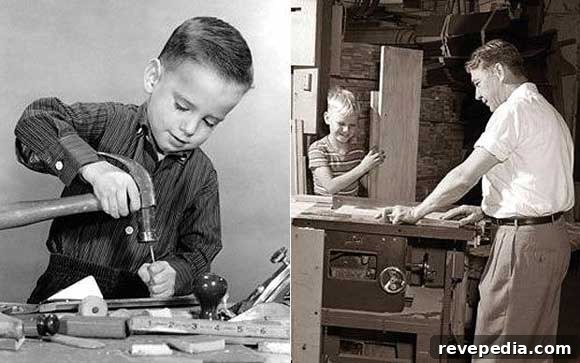
The Telegraph raises a provocative question that resurfaces each year:
Are today’s 20- to 30-year-olds less capable at do-it-yourself tasks than their fathers were?
There are strong arguments on both sides. Modern young adults have far more resources for researching and completing projects: books, magazines, online tutorials, forums, and a wide range of retail options such as Ace Hardware, Home Depot, and Lowe’s. At the same time, an expanding network of specialized contractors and service providers is readily available—often just a phone call or email away—making it easier to outsource household repairs.
As the Telegraph notes, author James May argues that previous generations learned practical skills from their fathers—spanner work, sawing, and gearbox repairs—and that younger men today lack that hands-on upbringing. Technology plays a major role in this shift. Many modern devices and systems depend on electronics and computer controls; when those components fail, the entire system can stop working, and diagnosing or repairing it often requires specialized diagnostic tools and training. Automotive repair illustrates this change well: decades ago mechanics were known for hands-on, grease-under-the-nails problem solving. Today, many technicians rely on onboard diagnostics and electronic codes that point to parts to be replaced rather than repaired.
That said, the picture isn’t uniform. Plenty of fathers were not particularly handy, and not every person who grew up with a resourceful parent learns or adopts those skills. Conversely, many young people are embracing DIY culture through online communities, maker spaces, and hobbyist groups that teach woodworking, electronics, and home repair. The difference may be less about inherent ability and more about opportunity, interest, and the evolving nature of the tasks themselves.
Several factors influence whether a generation appears more or less capable at DIY work:
- Technology: Increased electronics and software integration often shift repairs from manual fixes to diagnostic and component replacement work.
- Access to services: The ease of hiring professionals reduces the incentive to learn and practice hands-on skills.
- Information availability: The internet offers tutorials and communities that can accelerate skill acquisition for motivated individuals.
- Cultural expectations: Changing social norms around gender roles and leisure time affect who learns and values DIY abilities.
- Economic factors: Work schedules and the cost of mistakes can make outsourcing repairs a more practical choice for many households.
In short, it’s too simple to label an entire generation as less capable. The nature of practical skills is changing, and so are the contexts in which those skills are learned and applied. Some young people may rely more on services, while others leverage modern resources to become highly competent DIYers. Blame, if any, is shared among technological evolution, cultural shifts, and evolving economic realities rather than belonging solely to one generation or its parents.
What do you think? Are today’s men losing basic DIY skills, or are the skills themselves just evolving?