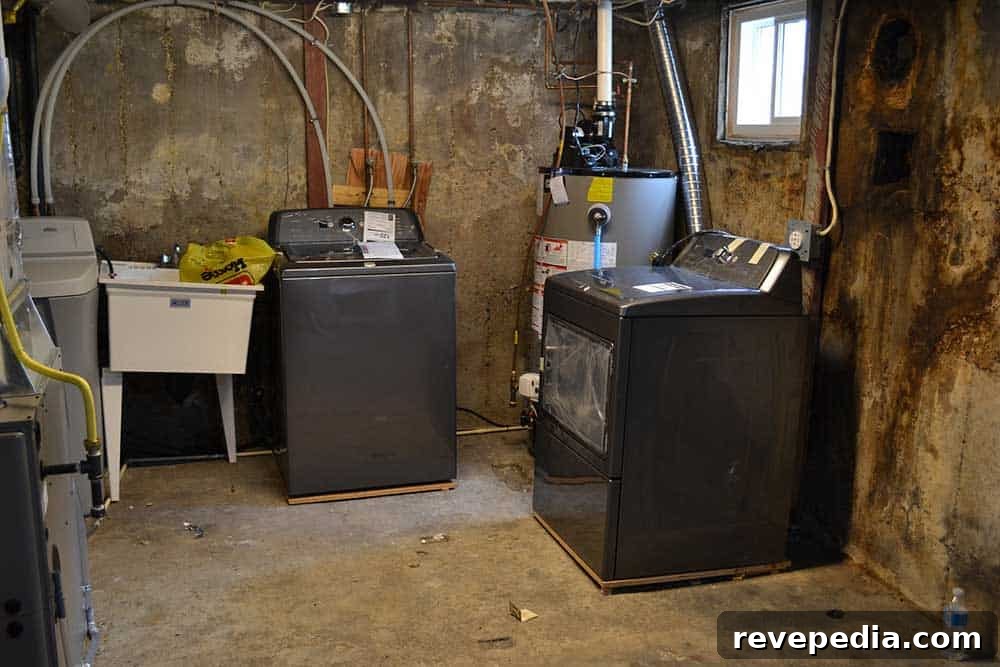
We’ve received many questions about repairing appliances damaged by flooding. Not every appliance can be saved, but with careful testing and a bit of patience you can often determine whether a machine is safe to use again and, in many cases, restore it to working order.
If an appliance has been submerged, please avoid leaving it on the curb for trash pickup until you’ve had a chance to evaluate and possibly repair it. Replacement parts are widely available online, and many repairs can be completed by homeowners with basic tools and guidance.
What to Do With Flooded Appliances
These guidelines apply to major appliances that have been exposed to floodwater deeper than a foot. Follow these steps after the water has receded and you have a safe workspace. Do not try to power up washers, dryers, refrigerators or freezers immediately after flooding. Always unplug appliances before you begin any inspection or work.
Revive a Washer and Dryer
Clean Your Appliances
Thoroughly clean both the interior and exterior with a mild detergent. Avoid using bleach because it accelerates rust. Remove accumulated lint from dryer filters and clean the dryer drum and washer tub to remove mud and debris.
Dry Your Appliances
Let the washer and dryer dry completely, preferably outdoors in the sun, for at least eight hours. Pay special attention to exposed wiring and the drive motor windings: soaking in dirty water can soften the varnish that insulates motor windings, increasing the risk of a short when power is applied. If you have power and safe access to the motor through an access panel, you can speed drying with a hair dryer or warm air source.
Test Your Appliances
Test the electric dryer by plugging it into a grounded outlet. Do not connect the exhaust duct yet. Set the dryer to a low-heat setting and start it. You may smell burning as dirt and lint burn off the heating elements. If the circuit breaker trips and the dryer shuts off, the drive motor or another component may be damaged and require repair or replacement. If the timer or cycle control does not advance, the small motor inside the timer has likely failed; the dryer may still operate but will no longer shut off automatically.
For the washer, reconnect water hoses and the drain, plug in the power, and select any wash cycle with the lowest water level. Start the cycle without any clothes. If the washer completes the wash and spin cycles normally, it is a good sign. If a top-loader fails to agitate or a front-loader drum won’t turn, the cycle selector or related electrical parts may need replacing. Run an additional cycle with higher water levels and detergent to flush out remaining dirt.
Failed Test Options
If repair isn’t practical for you, it may make sense to discard a failed washer or dryer. Waiting weeks for a technician and paying repair costs that approach the price of a new unit can be uneconomical. However, if you want to save money and are willing to do some work, many online repair guides, parts suppliers, and tutorial videos can help you identify and order the parts needed to fix the appliance yourself.
Revive a Refrigerator or Freezer After a Flood
Decide Whether to Restore or Discard
Flooded refrigerators and freezers often contain spoiled food and strong odors. Decide whether to restore or discard the unit only after cleaning and attempting to run it. Always use a grounded outlet and confirm power by checking whether the internal light comes on when the door opens. If the freezer compartment is cooling, there’s a chance the appliance can be saved. If the unit has power but there are no sounds from the compressor or fans, it may be beyond economical repair.
Clean Appliances
If you choose to keep the appliance, perform a thorough cleaning inside and out. Turn the machine off with the thermostat so the interior lights stay on during cleaning. Remove all spoiled food and disinfect all surfaces with a strong cleaner. Pay special attention to the plastic liners and seams, where bacteria and odors can hide.
Clean the condenser coils, which are usually located behind the toe plate or a rear access panel. Remove lint and debris to ensure proper heat transfer. Do not lay a refrigerator or freezer on its side to access the coils; if the unit is laid down for moving or cleaning, stand it upright for at least 24 hours before turning it on to allow compressor oil and refrigerant to settle.
Test Your Appliances
Place a thermometer in the freezer compartment and run the appliance for a few hours. Ideally, temperatures should approach 0°F (-18°C). If the unit struggles to reach freezing, check the condenser fan at the bottom; restricted airflow or a faulty fan can cause poor cooling. If the freezer cools initially but warms to around 32°F (0°C) after a day or two, the defrost system (timer, heater or switch) may not be operating properly.
You can manually advance the defrost timer or switch to force a defrost cycle and observe whether the heaters operate. Moisture collecting on the cabinet or doors suggests wet insulation inside the walls, which is difficult to dry and may compromise the appliance’s insulating performance long-term.
Repair Your Appliances
Major refrigerant system repairs (compressor, evaporator, condenser) are usually not practical for homeowners and are rarely required after a flood. Most post-flood failures are electrical: defrost timers and switches, fan motors, or defrost heaters. These parts are often inexpensive and can be replaced by a competent DIYer following proper safety precautions. When in doubt, consult a professional technician for diagnosis and repair.
Article submitted by Oron Schmidt, an appliance repair technician with 30 years of experience. He wrote this after observing the damage Hurricane Harvey caused in Texas.