A reader recently reached out asking for help with a custom driveway gate. His home is a French Normandy / storybook style—evocative of alpine cottages and rustic European charm—and he wants a gate that complements that aesthetic rather than competes with it.
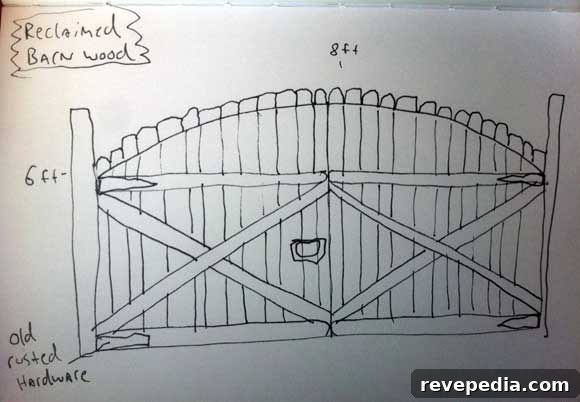
Because this architectural style is so distinctive, there aren’t many off‑the‑shelf gate options that match. That means a custom solution is necessary, but custom also introduces design decisions about scale, material, and visual weight so the gate reads as part of the house rather than an overpowering element.
The reader has found plenty of inspiration for pedestrian gates, but nothing suitable for the wider scale of a driveway. He shared his situation and some sketches, and asked the community for ideas and feedback.
Dear C&H,
I’m stumped on a custom driveway gate solution and could use some help. I have a circular drive with an entrance roughly 30 ft wide and an exit about 20 ft wide. I don’t want the gate to overwhelm the house. Ideally it should feel simple, rustic, and charming—old‑world without being fussy.
The functional constraint is privacy: most of the designs I love are the traditional see‑through styles (examples below), but for my situation the gate needs to be fully solid. I plan to use reclaimed barn wood sourced from the East Coast, and now I’m trying to settle on a design that delivers privacy while still conveying an authentic, aged charm.
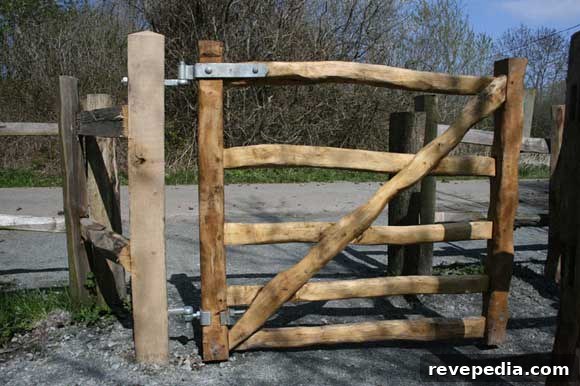
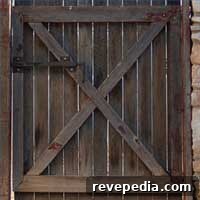
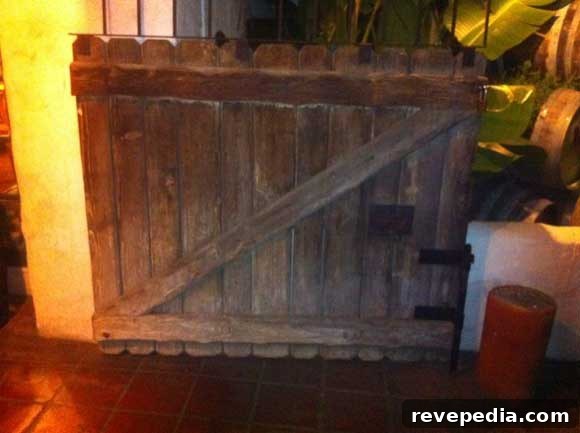
Site and code constraints: the gate cannot exceed 6 feet tall according to city code, unless I shape it as an arch. An arched top could reach 8 feet at the center while remaining 6 feet at the sides. Below are a few of my sketches that explore both flat and arched top profiles.
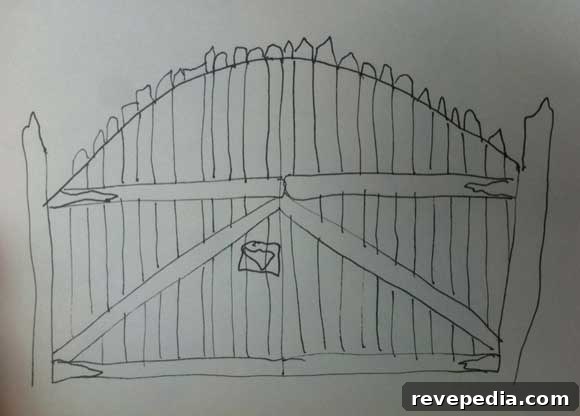
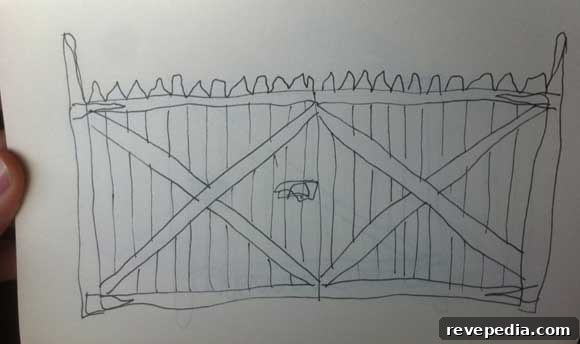
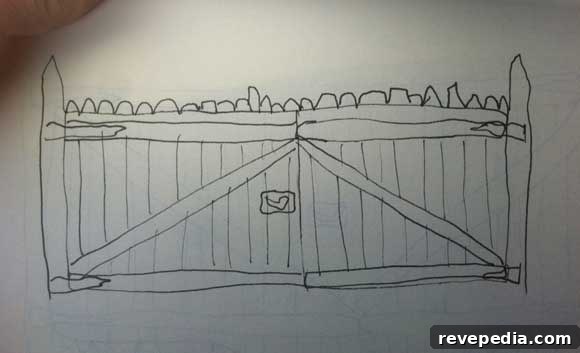
Design considerations he’s weighing
- Material authenticity: Reclaimed barn wood is ideal for texture, patina, and historical feel. Keep boards as wide and varied as possible to showcase the aged character.
- Privacy vs. scale: Solid panels achieve privacy but can feel heavy at driveway scale. Breaking up the plane with grooves, rails, or recessed panels reduces visual mass without sacrificing opacity.
- Proportion and height: A flat 6‑ft top keeps the gate under code limits but may feel boxy. An arched top provides vertical emphasis at the center and reads more storybook/Norman without increasing side heights.
- Joinery and pattern: Horizontal or vertical planking can be enlivened with simple motifs—subtle X braces, a raised central panel, or recessed vertical battens—to reference traditional farm or cottage gates while staying fully closed.
- Hardware and finish: Forged iron hinges, strap bolts, and a hand‑wrought latch complete the period look. A natural oil or light stain that highlights grain will feel authentic; avoid glossy modern finishes.
- Durability and maintenance: Reclaimed wood performs well when properly flashed and sealed. Consider a slight gap at the bottom for drainage, and internal steel framing if needed for strength without adding visible modernity.
Possible approaches that preserve style and privacy
- Arched solid boards with concealed battens: Use vertical reclaimed boards cut to follow a gentle arch. Back these with horizontal battens on the interior to prevent warping and maintain a clean outer face.
- Panelized construction with charred or wire‑brushed finish: Create large, solid panels made of multiple boards but frame them with thin rails and a simple raised center panel—this breaks up the visual mass while keeping full privacy.
- Board‑and‑batten with decorative inset: Use closely spaced vertical boards for opacity and add narrow battens in a repeating pattern or central motif for visual interest without transparency.
- Solid gate with a subtle reveal: Make the gate entirely closed but introduce thin horizontal reveals or shadow gaps every few feet to read as intentional detailing rather than a transparent gate.
- Hybrid: a low solid base with an arched, denser upper field—if a small degree of permeability is acceptable, this can keep privacy while lightening the overall look.
Practical tips
- Mock up full‑scale sections to confirm proportions at driveway width—what looks right in photos can feel different in person when stretched across 20–30 ft.
- Work with a fabricator experienced in reclaimed materials; they’ll advise on straightening, lamination, and reinforcement methods that preserve the aged look while ensuring longevity.
- Coordinate hardware style with the home—forged iron for Normandy character, kept relatively simple to avoid Victorian excess.
- Consider gates in paired leaves that open inwards to preserve sightlines and maintain the scale appropriate to a circular driveway.
He’s studied thousands of gate images and hasn’t found the perfect solution yet. With reclaimed barn wood and a design that balances solid privacy with thoughtful detailing—an arched top, subtle panels, battens, or reveals—he can achieve the storybook, French Normandy feel without creating a fortress at the entrance.
If you have suggestions or design ideas that would suit a reclaimed‑wood, solid privacy gate for a Normandy‑style house, please share your thoughts in the comments below.