Building a raised redwood deck is a popular home improvement project. It’s relatively quick to assemble, redwood is competitively priced, and the result is an attractive addition to any yard.
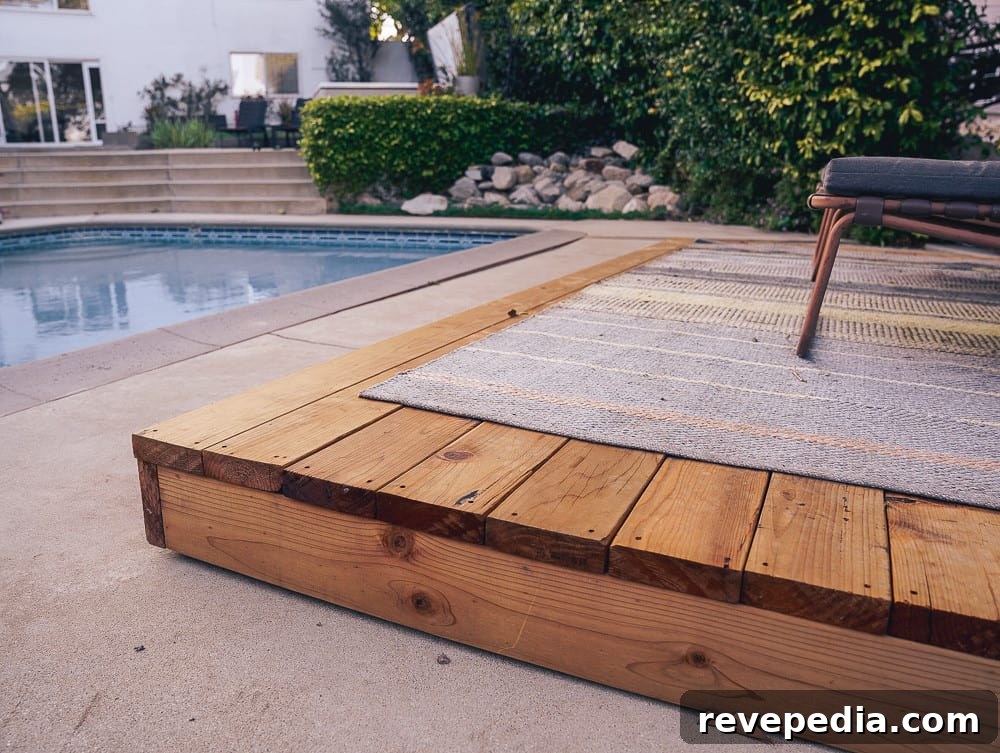
In a previous article we explained how we designed our raised redwood deck; here we cover the step-by-step process we used to build it.
Tools Needed to Build the Redwood Deck
We designed this deck using standard lumber sizes, which meant we did not need to rip boards—saving time and reducing waste. The build doesn’t require special tools. If you choose nails, a hammer is sufficient. For our approach we used 2 1/2-inch star-drive deck screws and an impact driver, plus a small drill bit to pre-drill holes near board ends to avoid splitting.
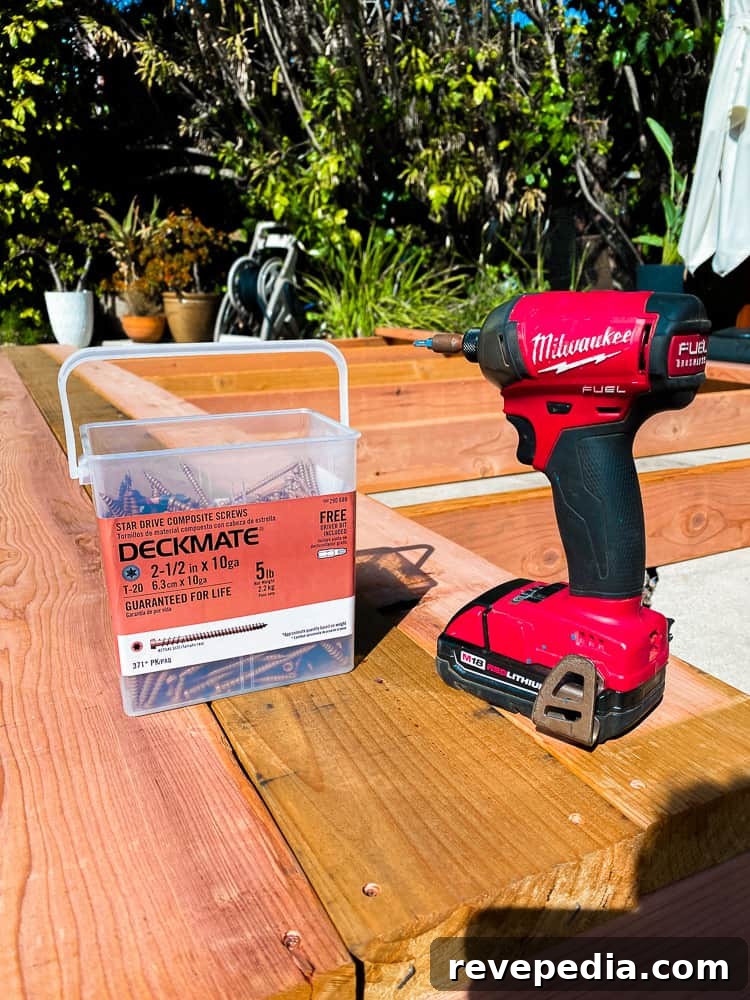
Complete tool list:
- Tape measure
- Impact driver
- 1/4″ drill bit for pre-drilling
- Star-drive impact bit
A miter saw or circular saw is helpful if you need to trim boards, but it isn’t necessary for builds that stick to stock lumber lengths.
Choose Redwood
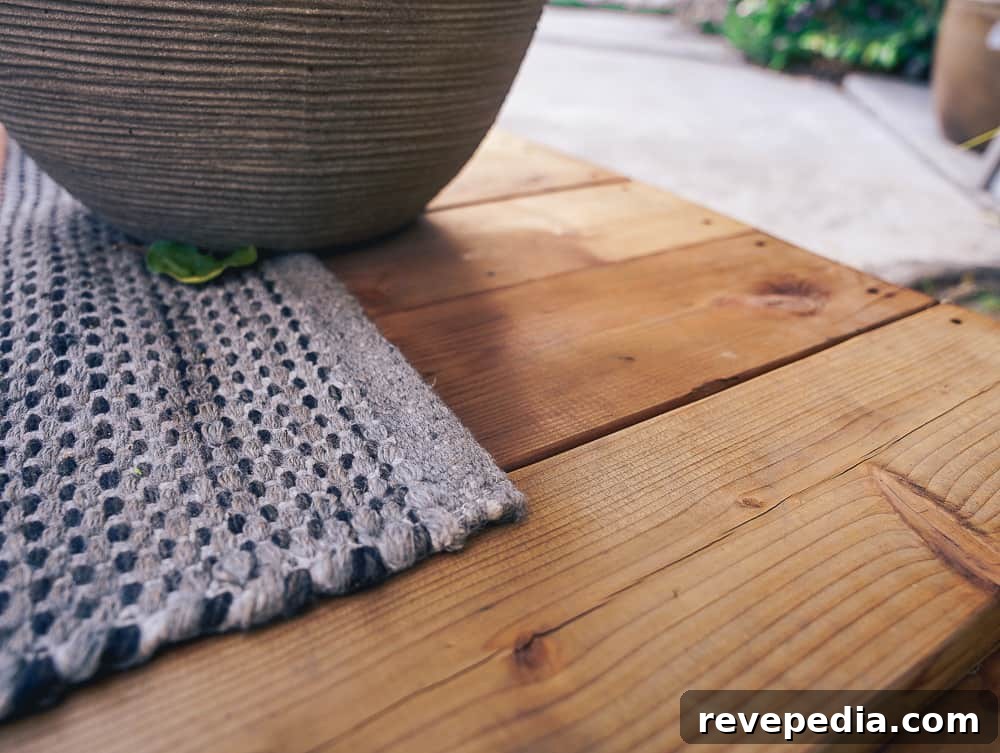
There are many options for deck materials. We’ve used redwood for fences and other outdoor projects and find it easy to work with and consistently beautiful. Compared with pine or Douglas fir, redwood is a higher-end natural material but still often less expensive than composite decking. It’s naturally resistant to rot and insects, making it well-suited to outdoor use. You can leave redwood untreated, as we did, or apply a sealant for added protection.
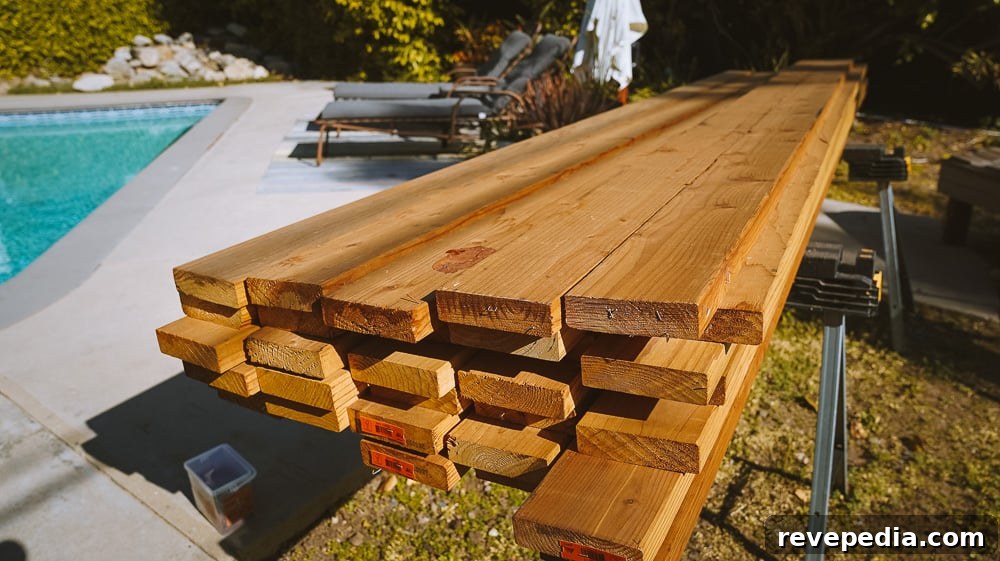
For this project we selected Mendocino Redwood, which is available at Home Depot and carries Forest Stewardship Council certification. Choosing certified wood helps ensure it was harvested under responsible environmental practices.
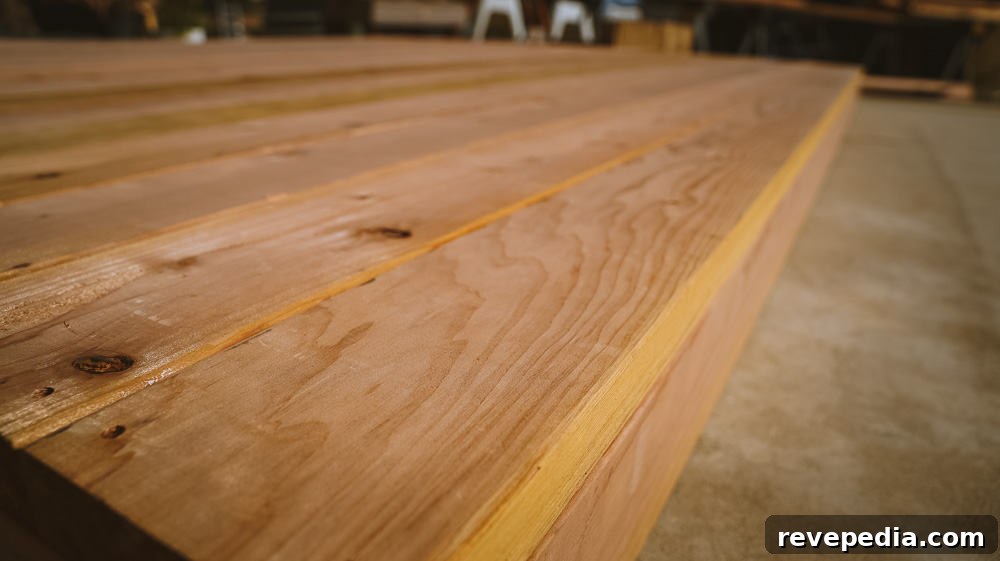
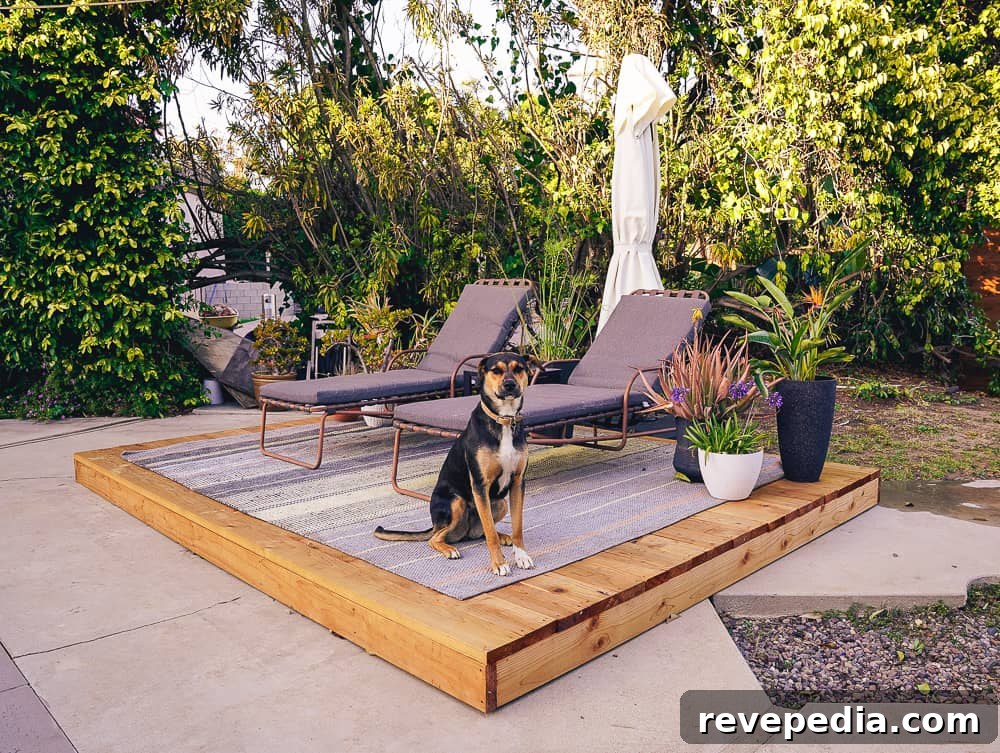
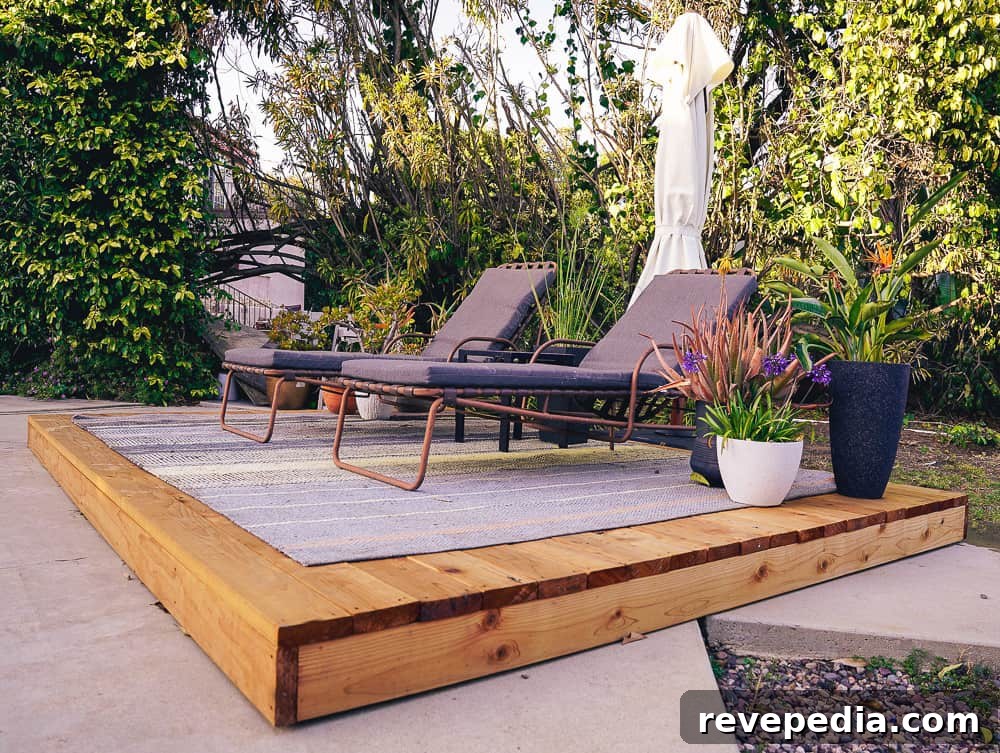
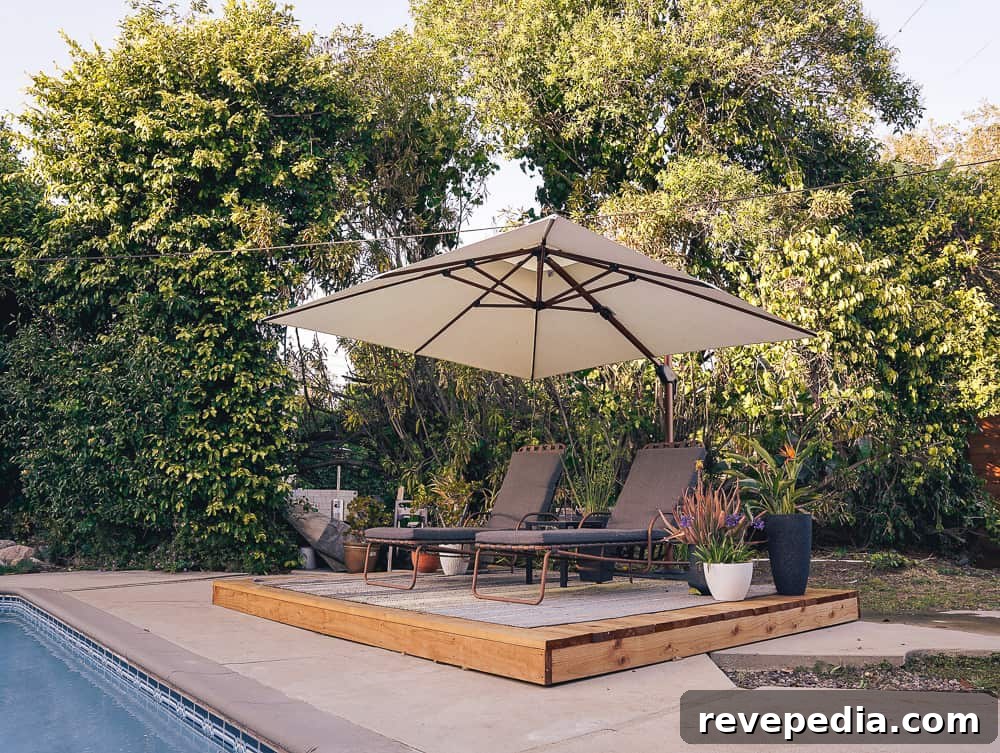
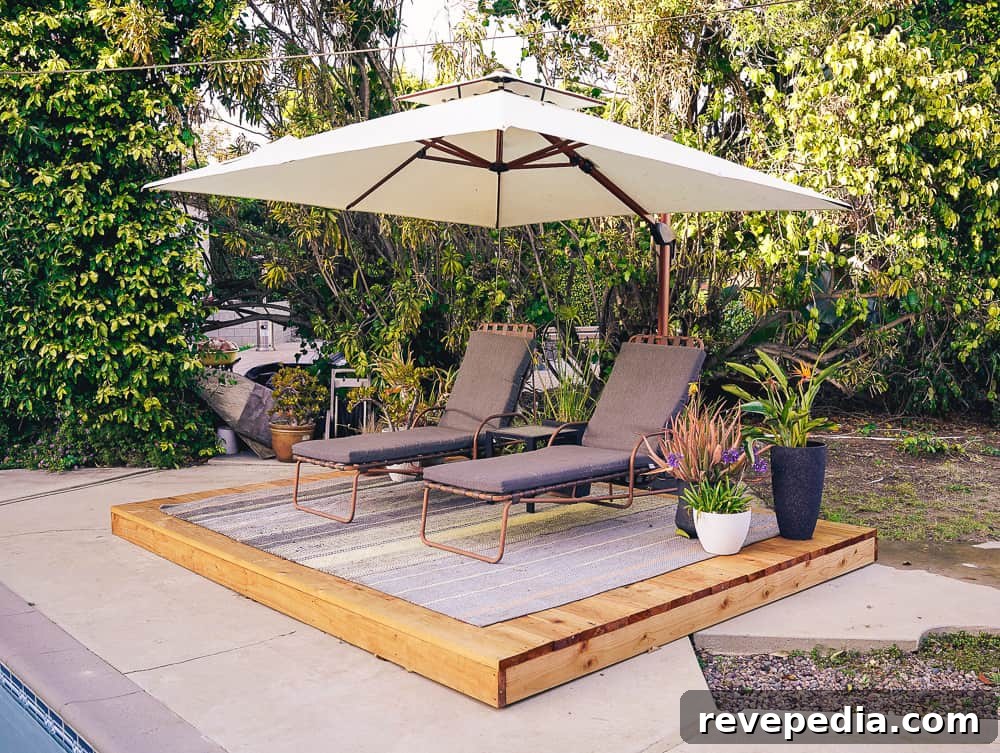
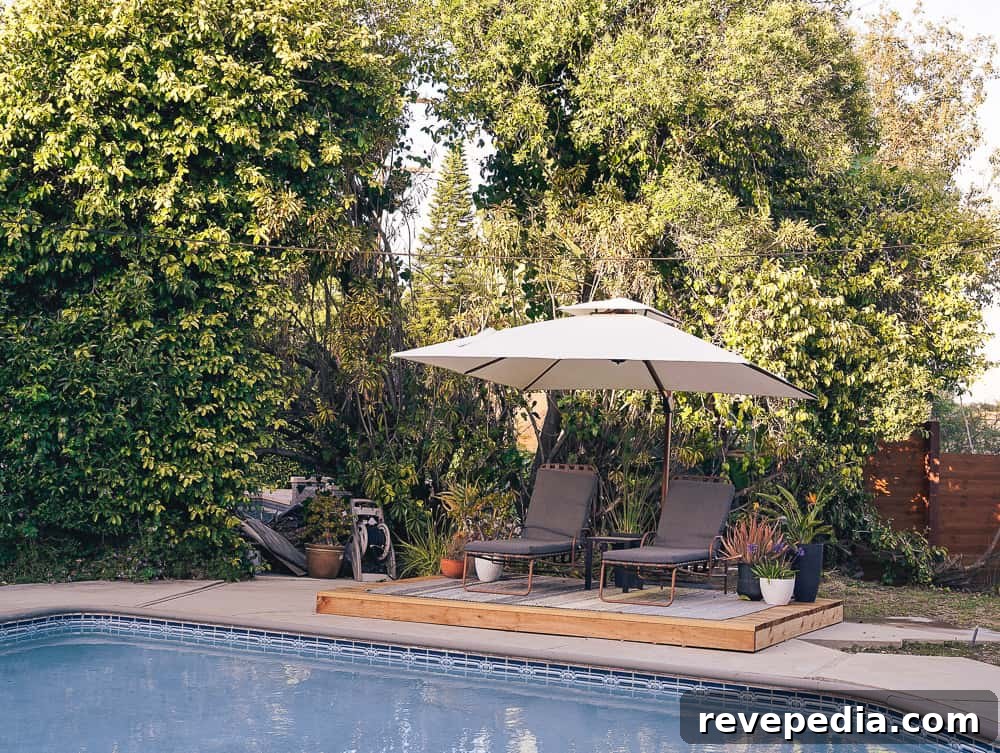
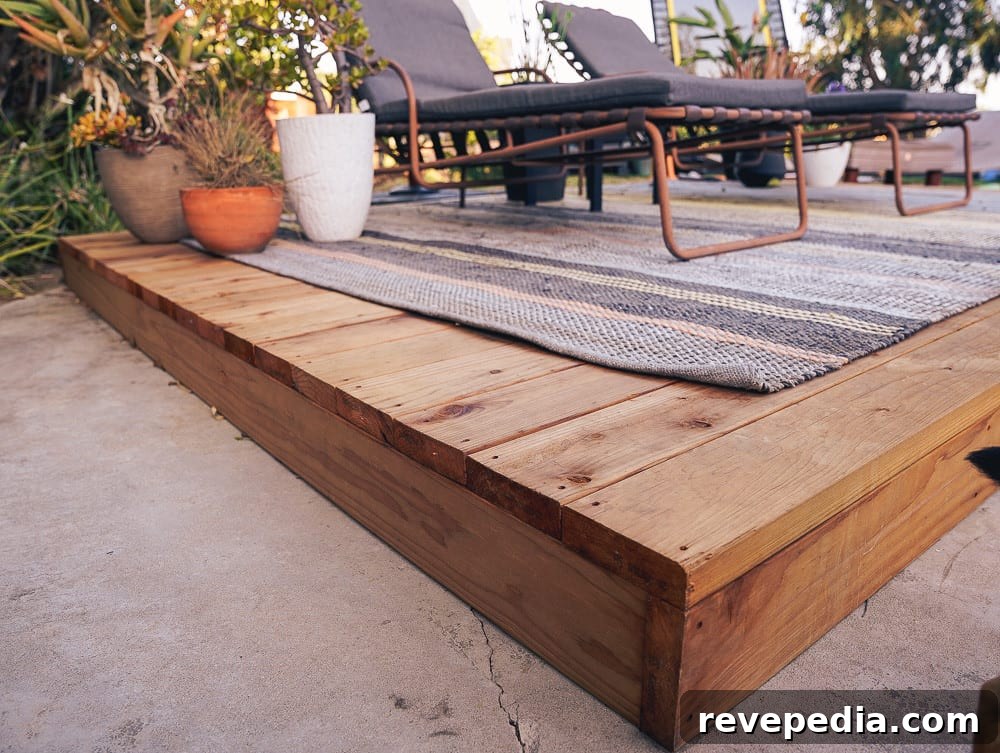
Our deck measures 12 by 10 feet, a manageable size that accommodates two chaise lounges and a table while staying within stock lumber dimensions.
Cut list used for this build:
26 — 2 x 6 x 12 ft
15 — 2 x 6 x 10 ft
When ordering delivered lumber we include extra boards to allow for warped, bowed, or damaged pieces. If you pick boards in person you can select the straightest stock.
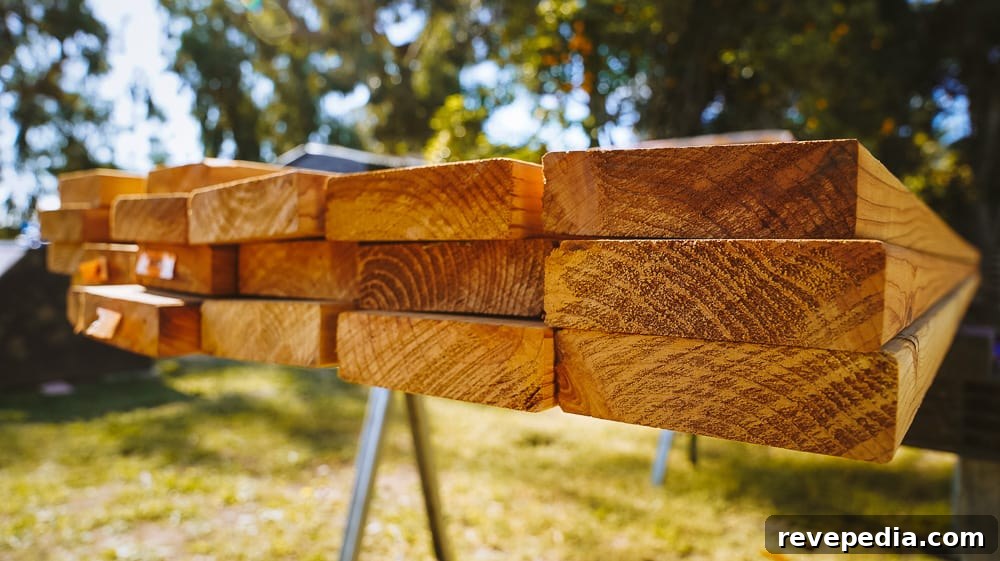
Most of our boards arrived straight, leaving some leftovers for planters or other projects.
Prepare the Foundation and Surface
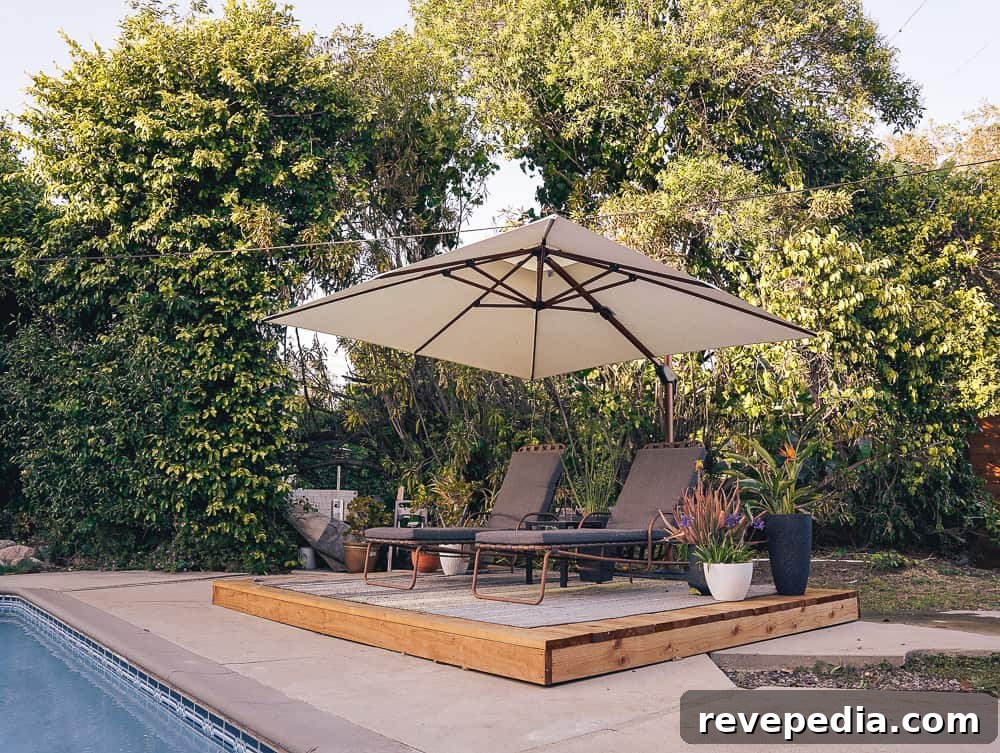
After choosing the deck location, prepare the surface so it’s clean and level. We built on an existing concrete pool deck that was mostly level but had some cracks. If you’re building on soil or grass, install a compacted gravel or paver base to prevent shifting and sinking. That step adds time but is important for long-term stability.
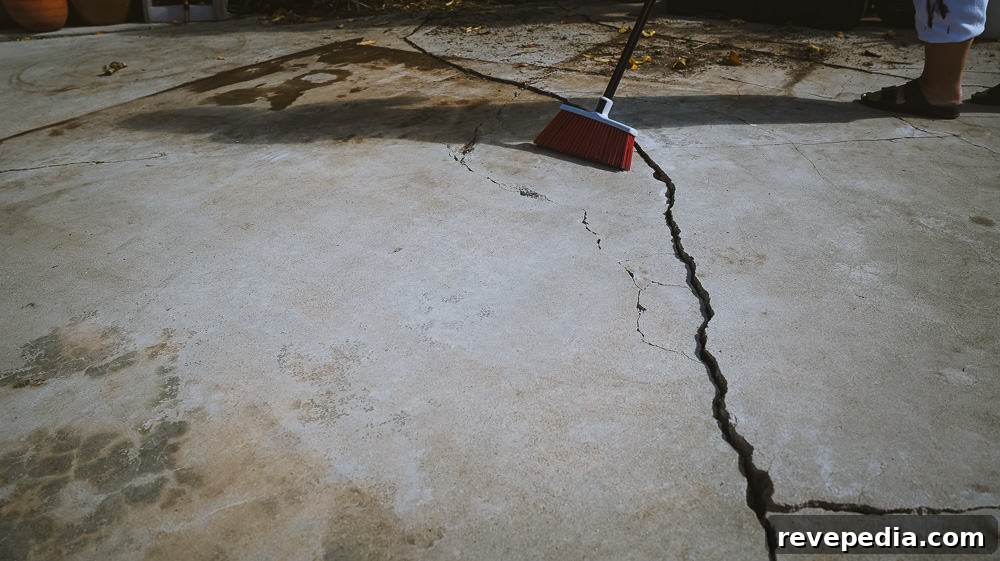
For our concrete surface we simply pressure-washed and swept away debris; the deck hides any unsightly cracks.
Lay Out and Square the Frame
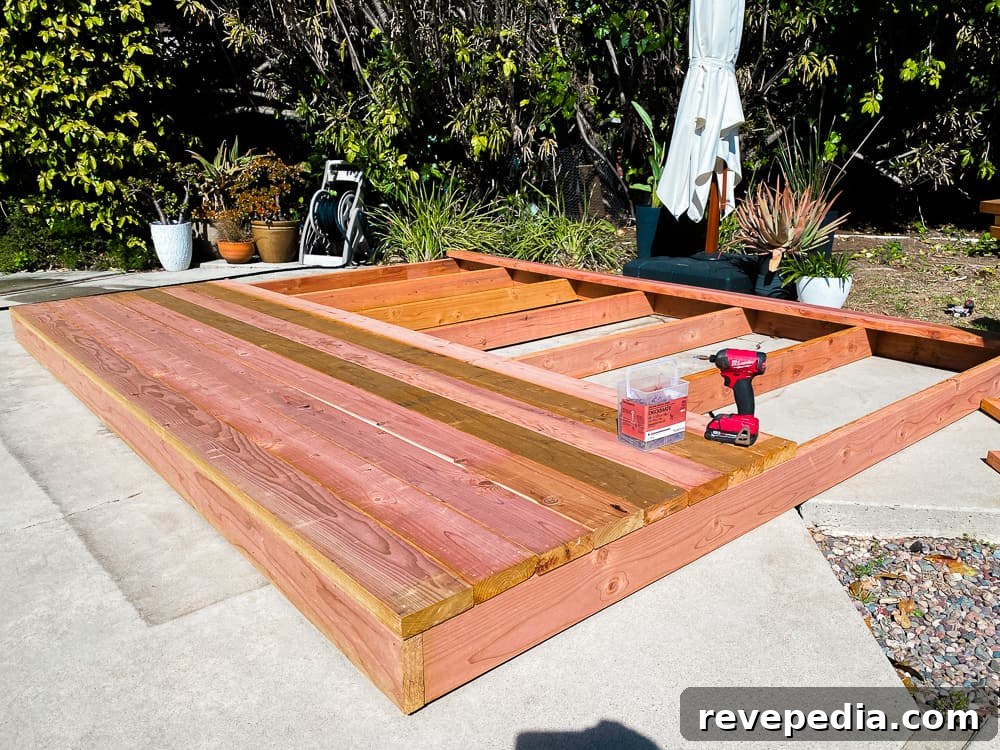
Our frame is straightforward: two 12-foot boards for the front and back, with two 10-foot boards for the sides. Position the side boards between the ends of the 12-foot boards rather than flush with the outside. This configuration adds about 3 inches to the overall width but keeps the decking lengthwise across the 12-foot boards.
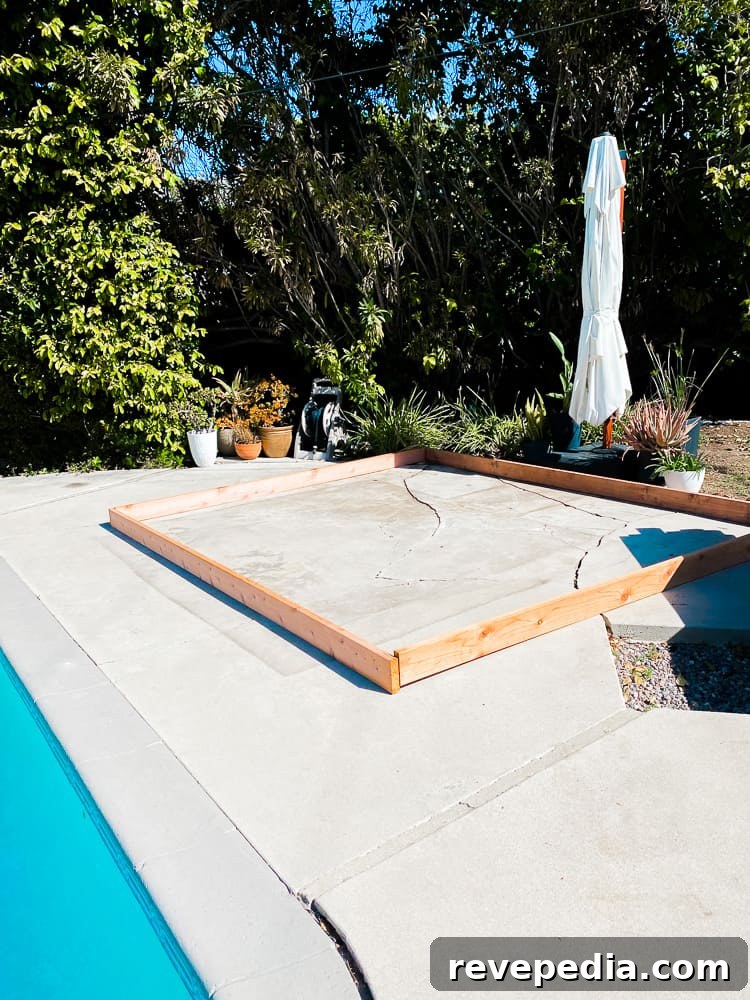
Squaring the frame is critical. Each interior corner should be 90 degrees. Fasten the four corners with screws loosely so you can adjust. Measure both diagonals; when they match, the frame is square. If they don’t, tap one side to adjust length and re-measure until the diagonals are equal, then tighten the corner fasteners and recheck.
Add Supports
For this ground-level deck we placed the joists 24 inches on center. Local codes may vary, so confirm requirements for your area. We debated using footers to raise the deck slightly but decided against it since the deck sits on concrete, won’t contact soil, and we live in a dry climate. If you build on gravel or soil or live in a wet climate, consider installing footers for added protection and stability.
Install Deck Boards
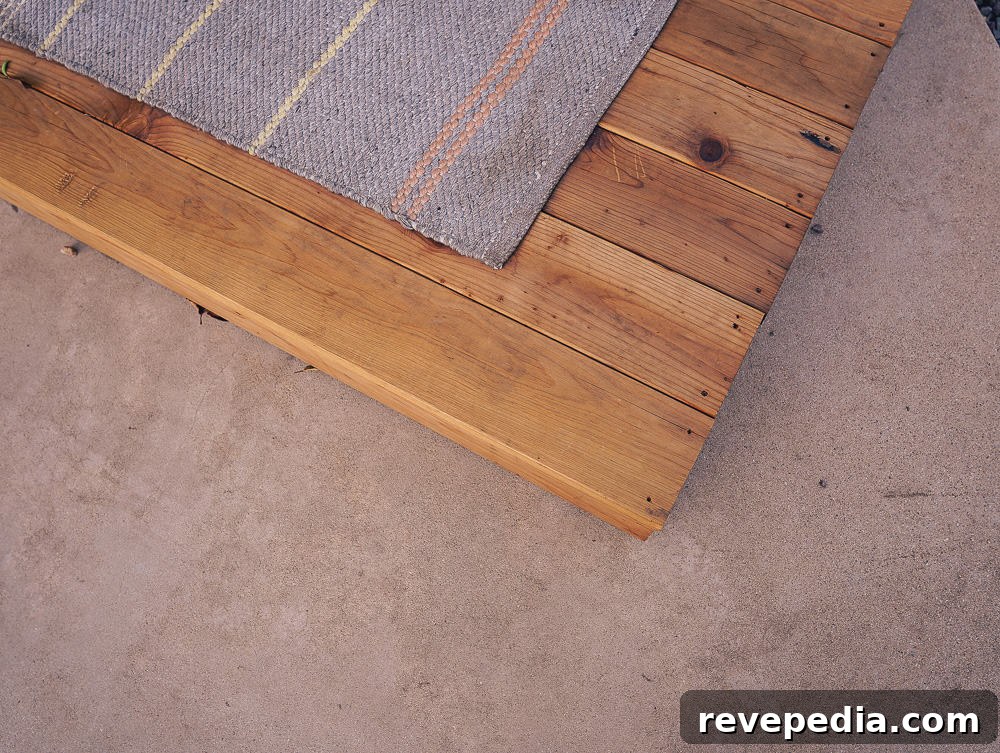
Install the decking by laying the 12-foot boards across the frame and driving two screws into each joist beneath. Leave a small gap between boards for expansion—using a screw as a spacer works well.
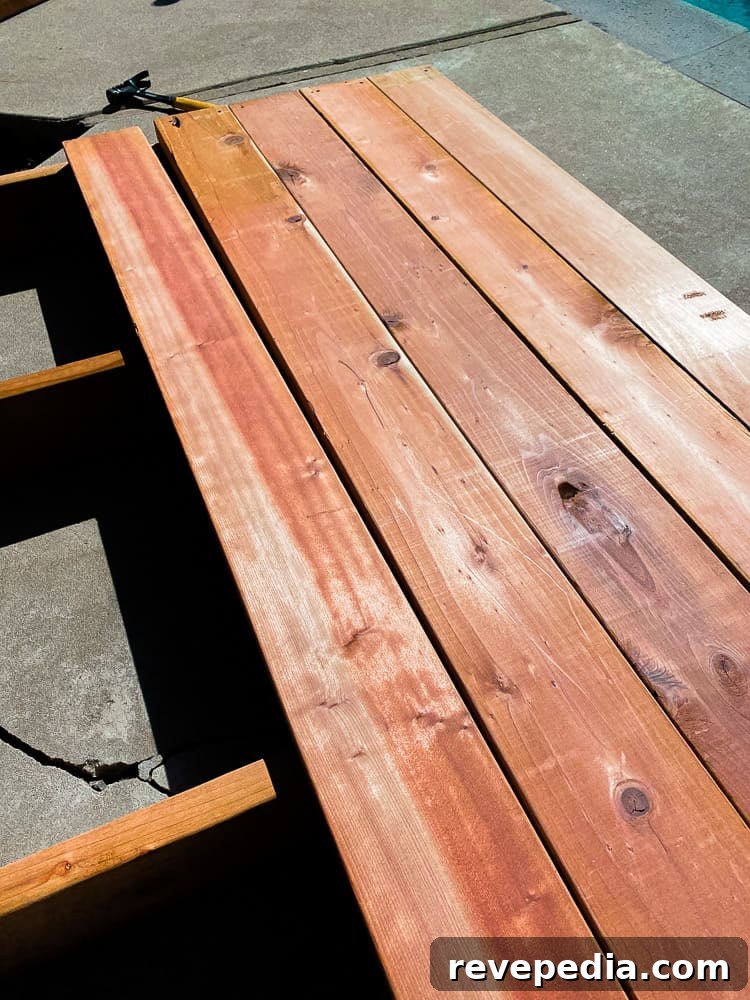
Pre-drill holes at board ends to reduce splitting. If a board is slightly bowed, orient the high point toward the center so it can settle flat; if warped, secure one end and flex the other into place. Our board installation was smooth and took only a few hours.
Sand and Seal
For longevity and appearance, sand and seal the deck as a final step. Our boards were smooth and needed minimal sanding. A clear poly stain isn’t mandatory but can prolong the deck’s life and help maintain the fresh redwood color.
Relax and Enjoy
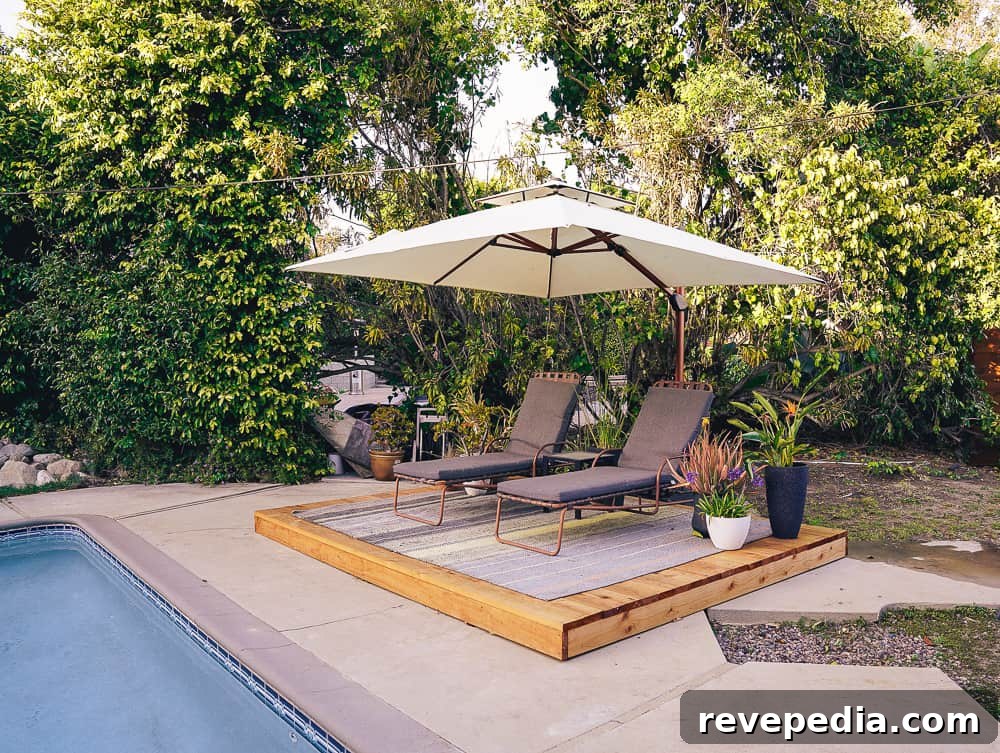
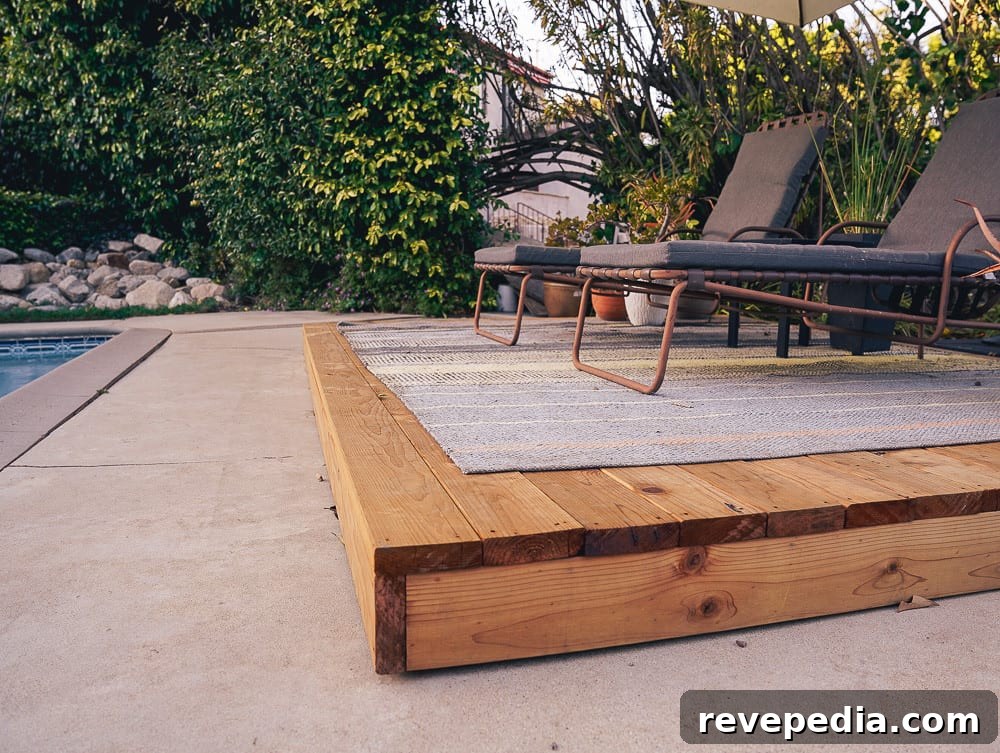
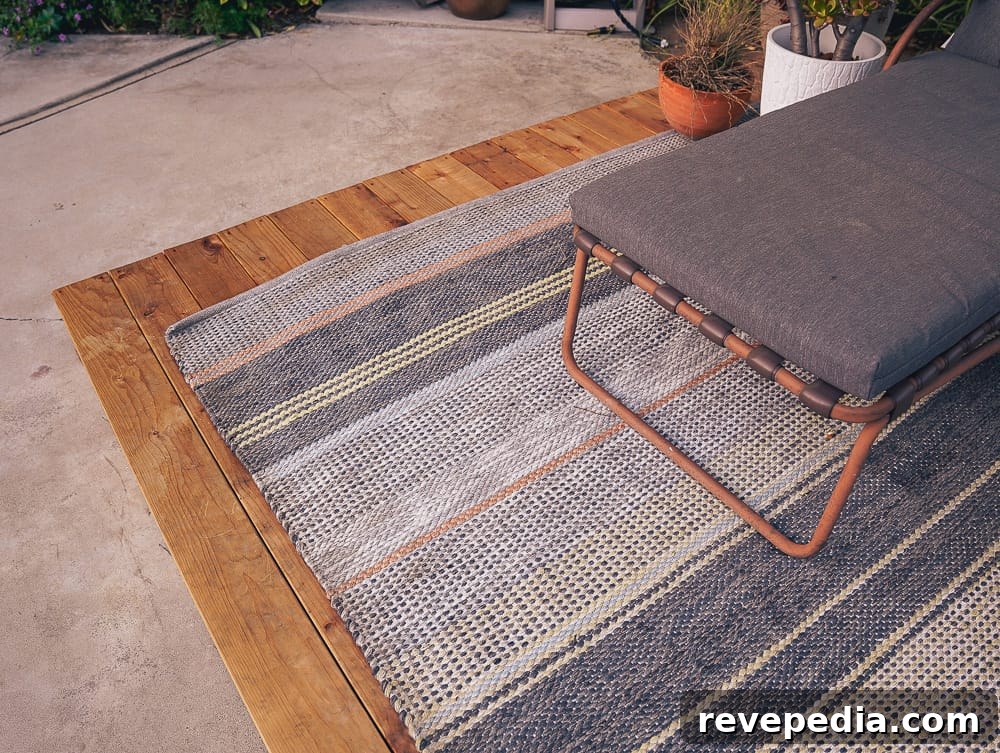
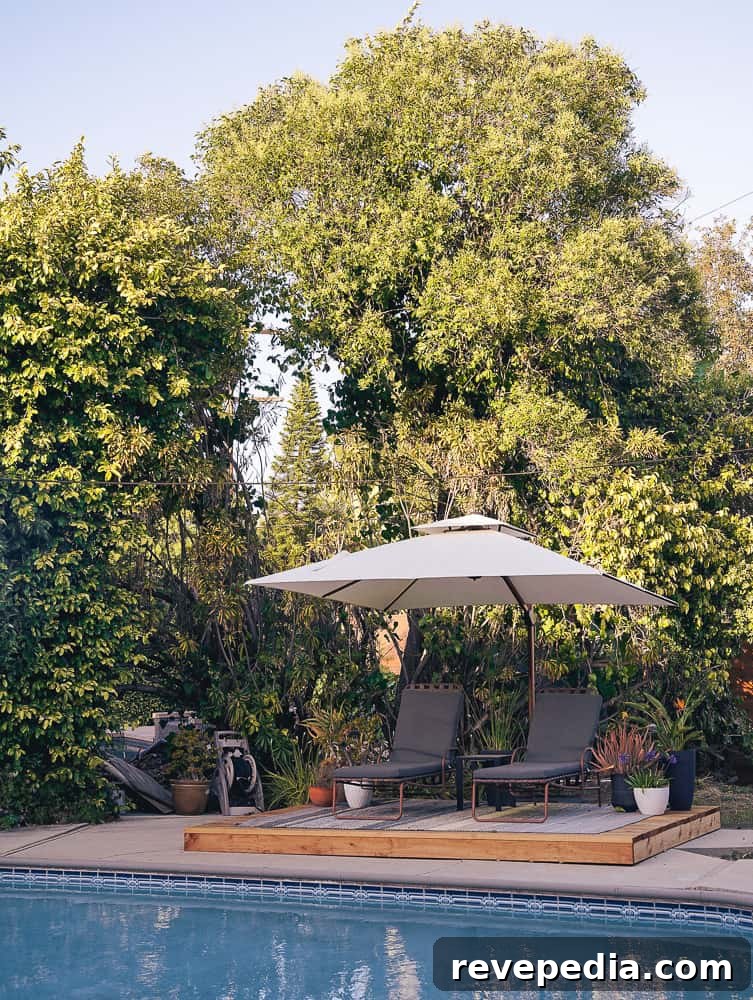
After finishing the deck, furnish it with chairs, an umbrella, and whatever makes the space enjoyable. Sit back and appreciate the result of a well-executed project.
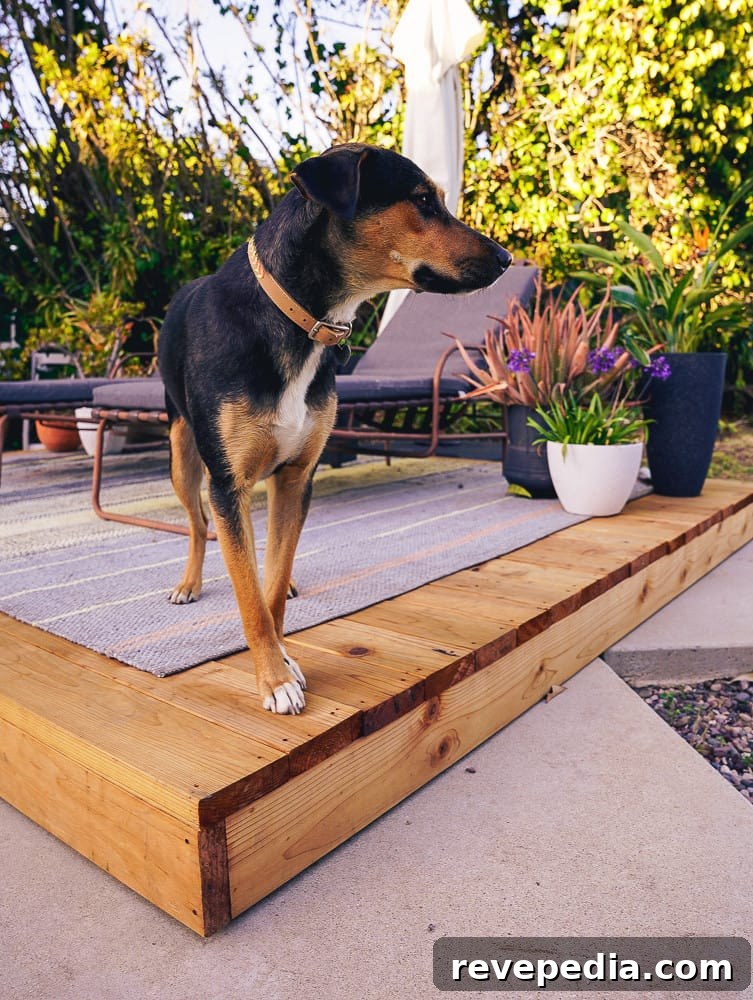
Our dog couldn’t resist modeling for a few photos during the project.