Lead poisoning remains a serious health risk, particularly in older houses. If your home was constructed before 1978, there is a significant likelihood that lead-based paint, plumbing, or soldering materials were used.
Intact, well-adhered lead paint generally poses little immediate danger. The risk increases when paint is disturbed—through scraping, sanding, or chipping—because flakes and dust can be ingested or inhaled. Children and pregnant people are especially vulnerable to the harmful effects of lead exposure.
Regulatory agencies now require specialized training and certification for contractors who work on pre-1978 homes so they can safely handle lead-containing materials. These measures help reduce the risk of creating hazardous dust during renovations and repairs.
For homeowners who want a quick, reliable way to check paint before disturbing it, EPA-recognized test kits are available. One such option is the Klean-Strip D-Lead Paint Test Kit, which is also ETA-verified for detecting lead and lead chromate pigments. The test kit is designed to identify whether EPA-regulated lead-based paint is present and uses a simple color-change method to deliver easy-to-read results in 13 minutes or less.
The D-Lead kit includes materials for six separate tests, making it suitable for sampling multiple areas in a home. When a newborn joined our household, we decided to evaluate the paint in several rooms to be cautious and proactive.
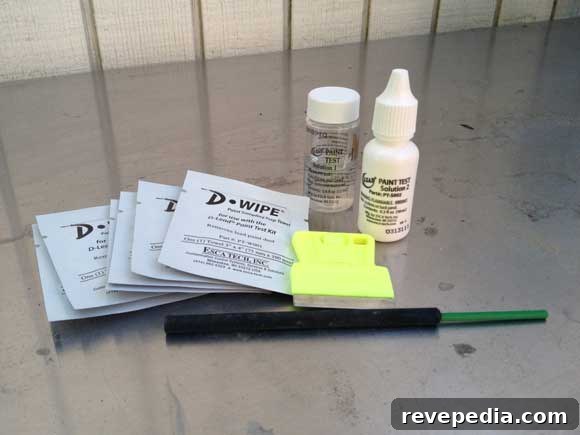
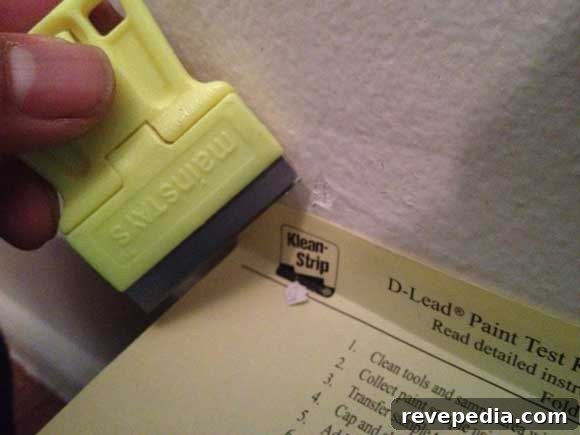
To use the kit, begin by collecting a representative paint sample. Clean your tools, then remove a small piece of paint that includes all visible layers down to the substrate—surface-only samples can miss underlying lead layers. Break the sample into several small pieces and place them into the provided testing solution. Shake the bottle for about 10 seconds, add the indicated number of drops of the second reagent, and shake again for another 10 seconds.
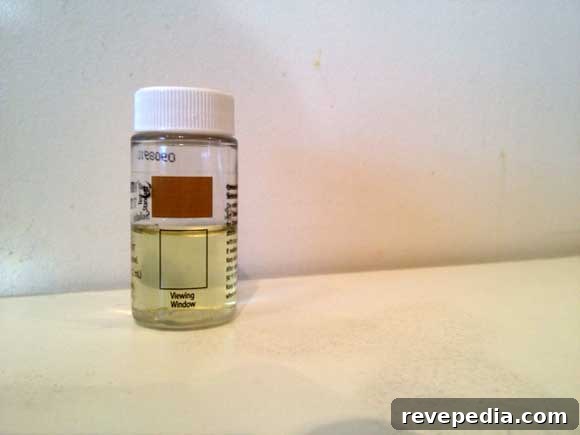
The bottle includes a built-in, color-coded viewer that lets you compare the test solution to the reference shades. If the solution appears darker than the test color, that indicates a likely presence of lead. The kit also includes a secondary test strip to confirm the result, improving reliability for homeowners performing the test themselves.
Overall, this is a straightforward and fast way to screen for lead paint before beginning any work that might generate dust. Testing only takes a few minutes per sample and can provide valuable peace of mind. In our case, despite living in a house built in the 1950s, the results came back negative.
D-Lead Paint Test Kits and other Klean-Strip products are typically sold at home improvement centers, larger retailers, and independent hardware stores. Expect to pay roughly $35 for a kit, which is a modest investment to help protect your family and guide decisions about renovation safety and professional abatement when necessary.