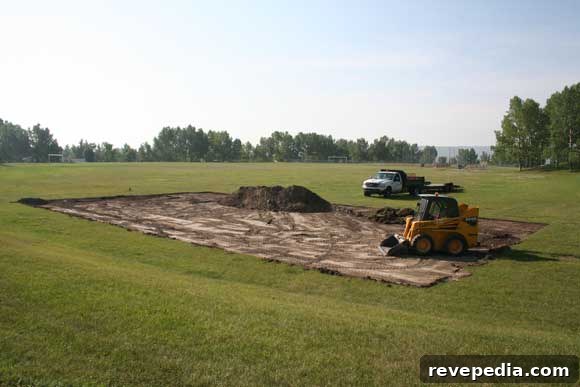
For years, developers have stripped the top 8–12 inches of soil from building sites and sold it to sod farms. Topsoil is a valuable commodity because it stores the organic matter, minerals, and nutrients that come from years of plant and animal decomposition. When topsoil is removed and exported, yards and gardens on the finished property often suffer as a result.
Healthy topsoil makes or breaks a lawn or home garden. If your grass struggles to thrive despite regular watering and fertilizing, the underlying cause may be a lack of nutrient-rich topsoil. Developers remove that layer because foundations are typically poured on firmer subsoil or clay; however, removing topsoil entirely and hauling it away is not the only option. Ideally, usable topsoil should be set aside during construction and redistributed across the lot once the home is complete so landscaping and turf have a proper growing medium.
When topsoil is absent, homeowners and landscapers often try to compensate by applying excessive fertilizers, chemical treatments, or heavy irrigation. These measures can waste resources, harm local ecosystems, and still fail to produce a healthy lawn if the underlying soil lacks organic matter and proper structure. Rather than relying on chemical fixes, it’s better to test the soil’s pH and nutrient levels and address deficiencies with compost, topdressings, or restored topsoil where possible.
If you’re considering buying a new home from a developer, ask about the site’s soil management during construction. Was the topsoil stockpiled and returned to the lot after foundation work, or was it removed and sold? A home built on stripped subsoil will require more intensive remediation to support healthy plant growth.
Removing topsoil for sale raises important questions about long-term land stewardship and the sustainability of local landscapes. Reusing topsoil on-site preserves valuable organic material, supports biodiversity, and reduces the need for chemical inputs. Thoughtful soil management during development benefits homeowners, gardens, and the environment.
Do you think developers should be required to retain and redistribute topsoil on-site? Have you noticed poor lawn or garden performance that might be linked to missing topsoil?