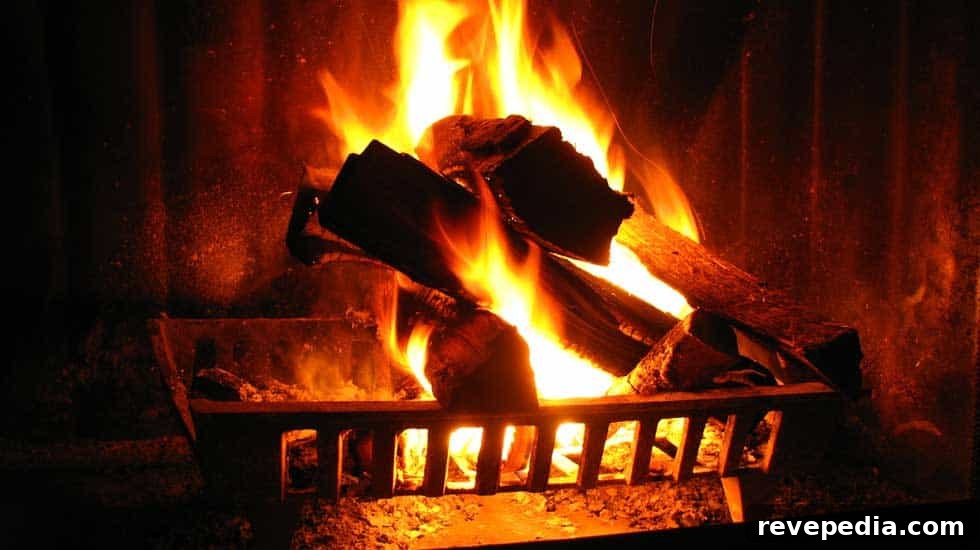
We love using our fireplace during winter. Even though we now live in Los Angeles, the fireplace gets regular use. While it doesn’t produce a huge amount of heat, it makes the living room feel cozy and adds warmth and character to our compact space.
Our fireplace is set up with a gas-burning element that we keep covered with faux tinder and decorative logs we found on Craigslist. If we wanted to, we can still burn real wood, but for convenience and cleanliness we usually leave it as gas.
To improve the fireplace’s efficiency and increase the heat it delivers to the room, consider taking the following practical steps.
1. Replace the screen with glass doors – Traditional metal screens allow warm indoor air to be drawn up the chimney when the fire is not in use. Installing glass fireplace doors minimizes that draft by sealing the opening more effectively. Depending on the glass type and door design, these doors still allow radiant heat to pass through into the room while preventing warm air from escaping up the flue.
2. Upgrade or replace the damper – The damper is the metal plate above the fire that controls airflow through the chimney. Dampers that don’t seal tightly or that warp over time permit heated indoor air to leak up and cold outside air to come down. Inspecting the damper and replacing it when worn will improve sealing. For a complete shutoff, consider installing a top-mounted chimney cap damper that closes the entire chimney when the fireplace is not in use.
3. Add a fireback – A fireback is a heavy cast-iron plate installed at the rear of the firebox. It protects the masonry from intense heat and serves as a heat reflector, returning more of the fire’s warmth into the room. A properly sized fireback increases radiant heat and helps the fireplace heat the living space more effectively.
4. Use a grate heater or radiant heat exchanger – Grate heaters and small radiant units sit in or near the firebox and capture more of the fire’s heat than open hearths alone. They typically contain metal tubing or blowers that absorb heat and force warmed air into the room. These devices are less extensive than full fireplace inserts but can significantly boost the amount of usable heat delivered to your home.
Making these improvements—sealing drafts with doors and a good damper, reflecting heat with a fireback, and adding a heat-capturing grate or radiator—can turn an attractive but inefficient fireplace into a more effective supplemental heat source. Even if your fireplace remains primarily decorative, these changes reduce wasted energy and increase comfort on chilly nights.