Are Brushless Motors Worth the Investment?
Brushless motor technology has become a major trend in cordless power tools over the past few years. Today, almost every leading manufacturer offers a brushless lineup, but the question for many buyers is whether the benefits justify the higher price.
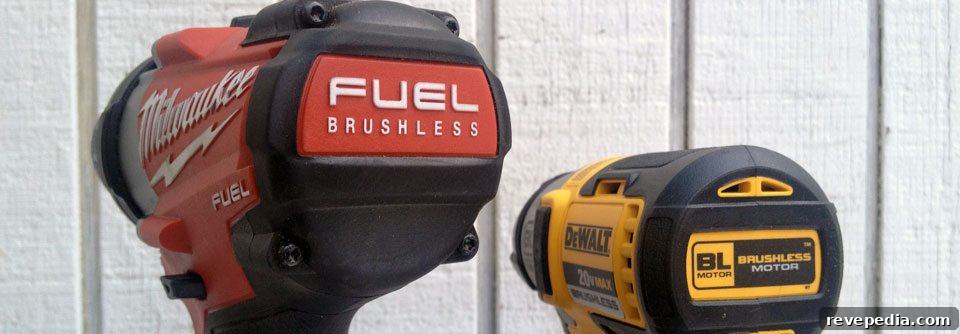
Brushless motors themselves aren’t brand new, yet the shift accelerated when companies like Makita, DeWalt and Milwaukee released comprehensive tool ranges built around powerful battery platforms. Those launches triggered fierce competition and faster adoption of brushless designs.
How Brushless Motors Differ
Unlike traditional brushed motors, brushless motors rely on electronic controls to manage the motor’s performance dynamically. As a tool encounters resistance during drilling, cutting or fastening, the motor responds by drawing more power; when resistance drops, it reduces power draw. That adaptive behavior improves battery efficiency and runtime while maintaining strong performance. In contrast, a brushed motor typically runs at the set speed regardless of load, which can waste energy and reduce efficiency.
Brushless designs also eliminate the mechanical friction and voltage loss associated with brushes. Fewer moving contact points and lower internal wear contribute to longer motor life and more consistent performance over time.
Why Not All Tools Are Brushless
The primary barrier to universal adoption is cost. Brushless tools require more sophisticated electronics and typically a more complex motor build, which increases manufacturing expenses. On average, brushless cordless tools can cost roughly 30% more than their brushed counterparts. That premium tends to be justified for tradespeople and professionals who use their tools daily and need every ounce of performance and runtime. For occasional DIY users, the benefit may be less noticeable and might not outweigh the higher price.
Additionally, brushless motors perform best when paired with high-performance lithium-ion battery packs that can meet their power demands. Battery platforms such as Milwaukee’s M18 Fuel and DeWalt’s 20V Max XR are designed to deliver the higher current and sustained output that brushless tools require.
Practical Advice for Buyers
If you use cordless tools for professional or heavy-duty applications, upgrading to brushless models usually makes sense: you’ll get better efficiency, more runtime, less maintenance and longer motor life. For light home use or occasional projects, high-quality brushed tools remain a viable and more budget-friendly option.
Regardless of motor type, choose lithium-ion batteries over older nickel-cadmium (NiCd) packs. Lithium-ion batteries are lighter, smaller and offer better energy density, making them worth the extra cost for most users.
Conclusion
Brushless motor technology represents a meaningful advancement for cordless power tools, delivering improved efficiency, longer life and smarter power management. The trade-off is a higher upfront cost and the need for robust battery platforms. Decide based on how you use your tools: professionals and frequent users will typically see a clear advantage, while occasional DIYers can often get excellent results from well-made brushed tools paired with lithium-ion batteries.