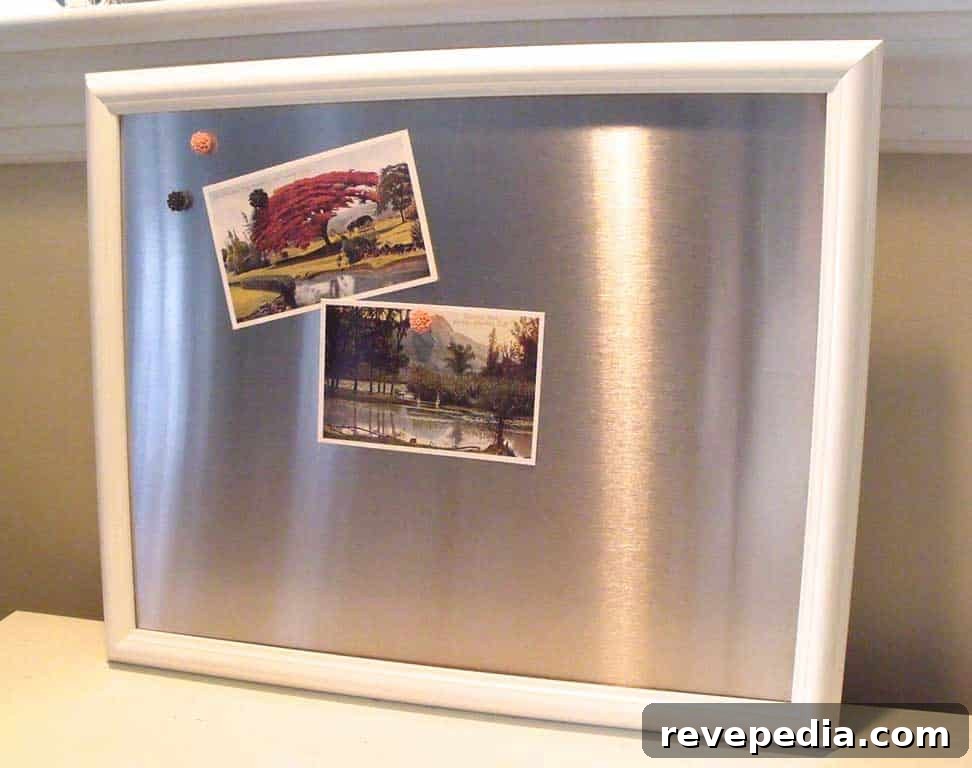
How do I affix refrigerator magnets to a new stainless steel refrigerator door?
Below are several practical, attractive solutions for creating a magnetic bulletin board so you can display magnets, kid drawings, notes, and photos—even if your new refrigerator has a stainless steel door that magnets won’t stick to.
Magnets are everywhere in modern life: in hard drives, chargers, motors, and even high-speed trains. While many devices rely on specialized magnetic components, the humble fridge magnet is still an essential household tool for keeping schedules, reminders, and precious drawings visible. The problem is that most new refrigerators use stainless steel or integrated designs that aren’t magnetic, and those sleek finishes don’t hold magnets the way older enamel or painted surfaces did.
Fortunately, adding a reliable magnetic surface is quick, affordable, and can be done almost anywhere in the home. You can mount a magnetic panel on the front or side of the fridge, attach one to a wall, or even recess a magnetic surface into the wall for a discreet, flush look. Below is a straightforward guide and a materials list to help you build a professional-looking magnetic surface.
Materials you’ll need:
– One or more pieces of 1/16″ (or thinner) sheet steel cut to your desired dimensions
– Household degreaser/cleaner (Simple Green, Easy-Off, etc.)
– Double-sided foam tape suitable for metal
– Spray or brush-on primer (for metal)
– Spray or brush-on paint (optional color of your choice)
– Magnets and items to display
If you want the magnetic surface recessed and flush with the wall, also gather:
– Coarse sanding screen or drywall sanding block
– Spackle or joint compound
– Putty knife
– Construction adhesive (Liquid Nails or equivalent)
– Painter’s tape
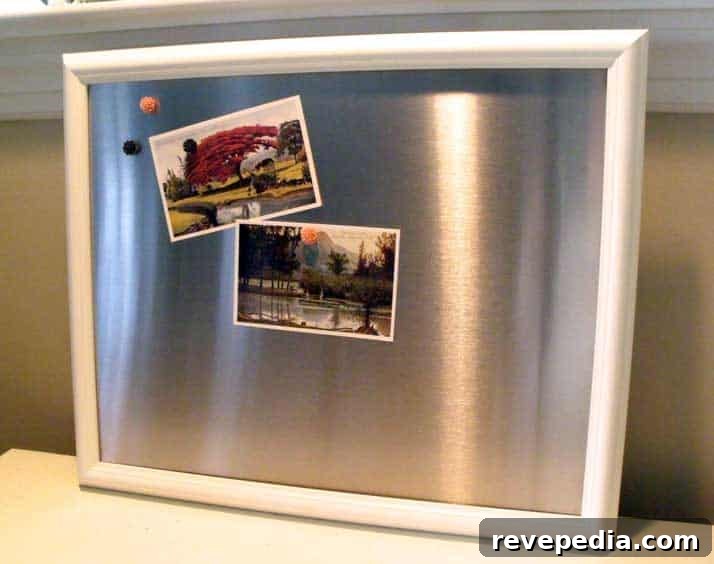
Step 1 — Clean the sheet metal
Thoroughly degrease the sheet steel with your household cleaner. New sheet metal often has oil or residue from manufacturing—scrub until the surface is clean and free of grease so primer and tape will adhere properly.
Step 2 — Prime the metal
Apply a primer made for metal to both sides of the sheet. While you can skip priming, it’s strongly recommended: priming improves paint adhesion, protects the metal, and helps double-sided tape stick better. Let the primer dry completely before proceeding.
Step 3 — Paint (optional)
If you want the panel to match or contrast with your décor, add a top coat of paint. Use paint suitable for metal and apply evenly. If you plan to recess and finish the panel flush with the wall, you may choose to leave it unpainted until after installation so it matches your wall finish.
Step 4 — Attach double-sided tape
Once the paint or primer is fully dry, apply high-quality double-sided foam tape to the back of the sheet metal. Press firmly to ensure good contact. The tape provides an easy, damage-free mounting method for many surfaces. If the panel will be recessed and glued into a cutout, skip the tape and use construction adhesive instead.
Step 5 — Mount the panel
For surface mounting, simply press the panel onto the fridge door or wall where you want it. Hold for a few moments to let the tape bond. For a recessed installation:
- Hold the sheet metal against the wall and trace its outline with a pencil.
- Use a sanding screen or sanding tool to remove drywall so the cavity is slightly deeper than the sheet metal’s thickness.
- Apply a moderate bead of construction adhesive around the recess and press the sheet metal into place. Use painter’s tape to hold it securely while the adhesive cures.
After the adhesive dries, remove the tape and apply spackle around the edges to blend the metal to the wall. Smooth with a putty knife, let the spackle dry, then sand it smooth. Paint the patched area to match the surrounding wall so the metal appears flush and integrated.
Final touches
Once everything is dry and finished, your magnetic surface is ready for use. Arrange magnets, photos, calendars, and kid artwork as desired. If you used primer but skipped a top coat, consider painting the metal or framing it for a more finished look.
Note on magnetic paint
Magnetic paint is an oil-based formulation containing metallic particles that can make painted surfaces somewhat magnetic, but performance varies and it rarely matches the strength of real sheet steel. Some formulations may contain trace metals, so many people prefer using actual sheet steel for reliable magnet performance and durability.
With a little prep and a few inexpensive materials, you can create a versatile, attractive magnetic bulletin area that works on stainless steel appliances, painted walls, or other nonmagnetic surfaces—bringing back the convenience and charm of a classic fridge-front display.