In February we attended the open house for the Passive House in Yellow Springs, Ohio. Hosted by the new owners and the building company, the event was casual yet highly informative.
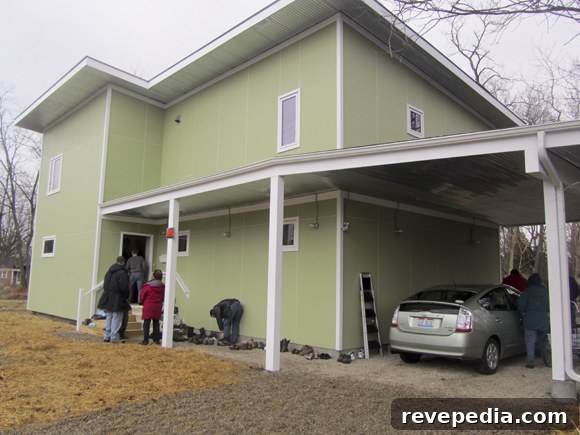
Green Generation Building generously shared the walking tour with Charles & Hudson, so welcome to Ohio’s first Passive House. Below is a clear overview of the design strategies, building systems, and appliances that make this home so efficient—ideas you may be able to apply to your own house.
1. Exceptional energy efficiency
This Passive House is one of the most efficient homes in Ohio, projected to use up to 90% less energy for heating and cooling than a typical house. Its form and systems are optimized to reduce energy losses: the compact shape minimizes exposed wall area (low surface-area-to-volume ratio), reducing heat leakage. Think of it as curling up to stay warm rather than stretching out—less surface area exposed means less heat lost.
2. Very thick, highly insulating walls
The exterior walls are about 15 inches thick and mostly composed of high-density expanded polystyrene (EPS) providing roughly R-58 of insulation. These super-insulated walls give the home the feel of a giant insulated cooler, dramatically reducing heat transfer. The walls are also built to be nearly airtight, which is essential for Passive House performance. They arrived as 4-foot-wide Structural Insulated Panels (SIPs) that were installed vertically around the foundation, speeding construction compared with conventional framed walls.
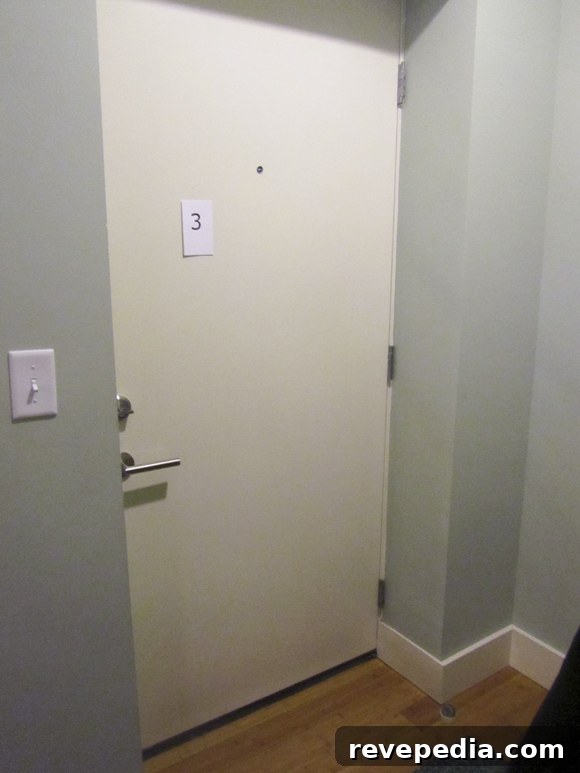
3. Highly insulated doors
The doors in this house outperform typical insulated doors by a wide margin. They incorporate Vacuum Insulated Panels (VIPs), creating insulation values around R-40—comparable to or better than insulation in many roof assemblies. These doors work like a Thermos, greatly reducing heat transfer where openings occur.
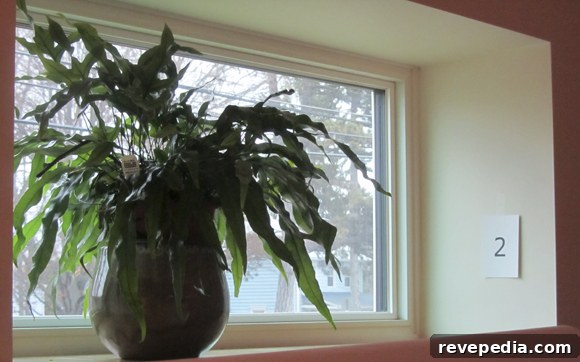
4. High-performance windows and strategic glazing
Windows are designed for insulation and solar gain. The glazing provides the equivalent insulation of thicker, multi-pane units while maintaining a slim profile. Window placement follows Passive House principles: smaller windows on the north side to reduce heat loss, and larger south-facing windows to capture winter solar heat, helping maintain comfortable indoor temperatures without a conventional furnace.
5. Efficient appliances
Appliances were deliberately selected for energy efficiency. The induction cooktop is a standout example: it heats cookware directly using a magnetic field, making it more efficient and faster at boiling than many gas ranges while avoiding combustion fumes. Choosing efficient appliances across the kitchen and household reduces overall energy demand.
6. Mini-split heat pump for heating and cooling
The home uses a mini-split heat pump system that both heats and cools by moving heat rather than creating it. By concentrating and transferring heat from outside to inside (or vice versa), the system uses significantly less energy than traditional electric resistance heating. Even on cold days, there is still usable ambient heat for the heat pump to extract and pump into the home.
7. Heat-pump water heater
Water heating is a major household energy expense, so this home uses a heat-pump water heater that extracts heat from the surrounding air to warm water. This approach reduces energy consumption for hot water and can provide a modest cooling effect in conditioned spaces during summer months.
8. Efficient laundry appliances: washing machine and condensing dryer
The laundry setup pairs a high-efficiency washer with a condensing dryer. Unlike traditional vented dryers that expel hot air outside, a condensing dryer removes moisture by condensing water vapor, saving energy otherwise lost to ventilation and improving overall efficiency.
9. Energy Recovery Ventilator (ERV)
A properly functioning ventilation system is critical in a tightly sealed home. The ERV in this Passive House brings fresh air into living spaces while exhausting stale indoor air from kitchens and bathrooms. Crucially, it transfers up to about 96% of the heat between outgoing and incoming streams, preserving indoor warmth in winter (and reducing cooling load in summer) while maintaining excellent indoor air quality.
10. Water-saving plumbing fixtures
Reducing water use lowers the energy required to heat water. This home incorporates water-saving fixtures to cut overall water consumption and associated energy demand—an important consideration in high-performance buildings.
11. Deep roof insulation
The roof contains roughly two feet of high-density fiberglass insulation—about three times the insulation required by typical building codes—further minimizing heat loss through the top of the home and strengthening overall thermal performance.
These design choices and mechanical selections work together to create a comfortable, healthy, and extremely efficient living environment. Stay tuned for a follow-up that explores the more decorative and interior design aspects of this Passive House.