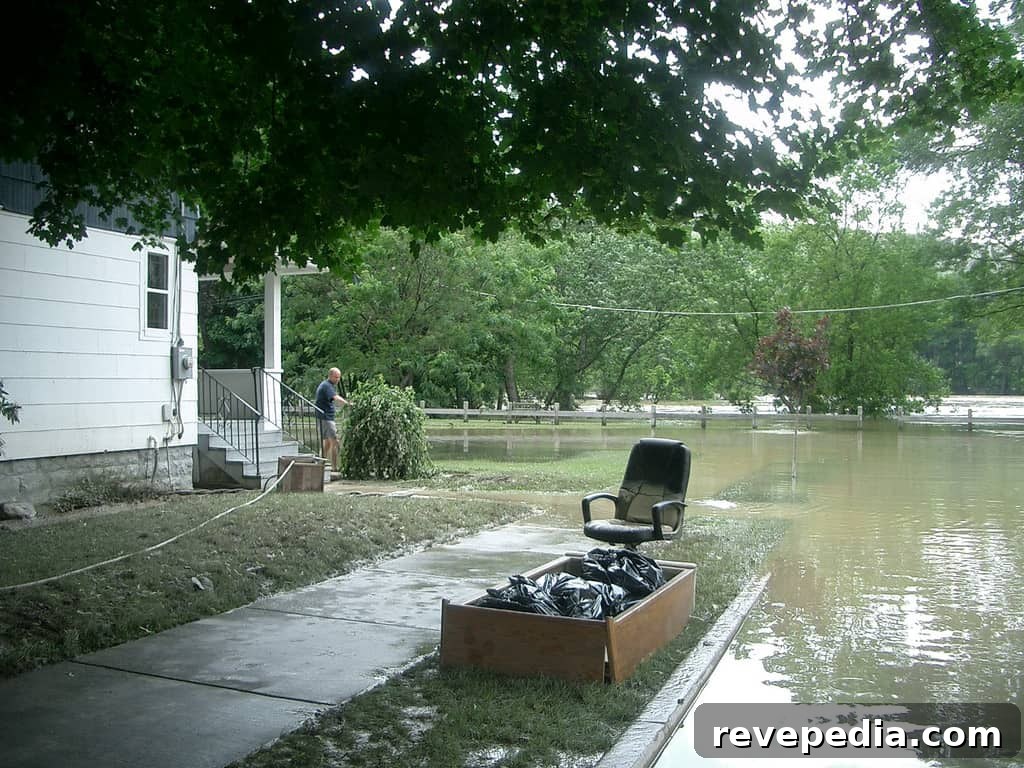
This three-part series explains the steps to take when you discover water damage in your home. After reading all parts, you will be able to safely assess a damaged area and begin basic remediation. While professional restoration experts should handle many situations, there are times when the damage appears minor, when you want to avoid an emergency service fee, or when immediate action is needed to limit further loss. This series gives practical guidance to help you respond quickly, safely, and effectively.
Step 1: Check for Danger
Before you do anything, make sure the area is safe. The primary hazard with water damage is electrical shock. As you approach the affected area, look for damaged light fixtures, ceiling fans, outlets, or appliances that may have been compromised by the water.
For example, if a second-floor bathroom floods and causes part of the first-floor ceiling to collapse, any light fixture or ceiling fan on that ceiling may have been torn from its mounting by the weight of wet materials. Exposed or damaged wiring can create a severe shock risk. If you see exposed wires, loose fixtures, or anything that suggests electrical danger, leave the area immediately and switch off power to the building at the main breaker before proceeding. If you are unsure or cannot safely cut the power, wait for a qualified electrician or restoration professional.
Once electrical hazards are addressed and the space is safe to enter, you can move on to inspecting the extent of the damage, documenting affected materials, and beginning temporary containment measures to limit further harm.
In Part II of this series we will cover how to identify and stop the source of the water causing the damage.
Water Damage
1. Check for Danger
2. Identify the Source
3. Prevention & Drying