We all have similar childhood memories of standing with our backs against a wall while a parent marked our height with our name and the date, creating a tangible timeline of growing up. Those marks often lived in doorways or out-of-sight corners, however, and the moment you moved, that small record of childhood stayed behind with the next homeowners. It was sentimental and easily lost.
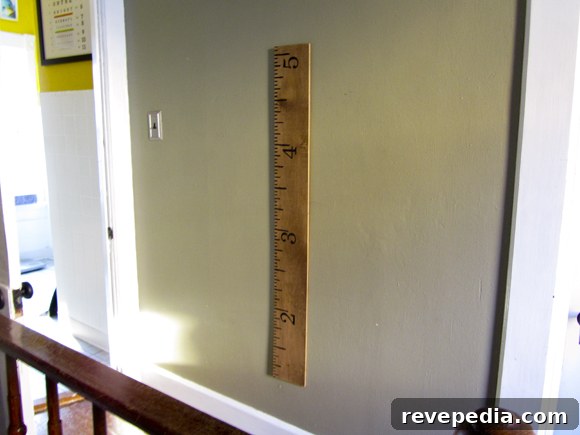
Browsing Pinterest for inspiration, I discovered a charming idea: a giant wooden ruler used as a height chart. It moves with you, lives in plain view as decor, and preserves those growing-up marks without being stuck in a doorway. I decided to recreate a giant ruler using only materials I already had at home, spending $0. Below is a step-by-step guide so you can make your own DIY giant ruler height chart.
Step 1 — Choose and prepare your wood:
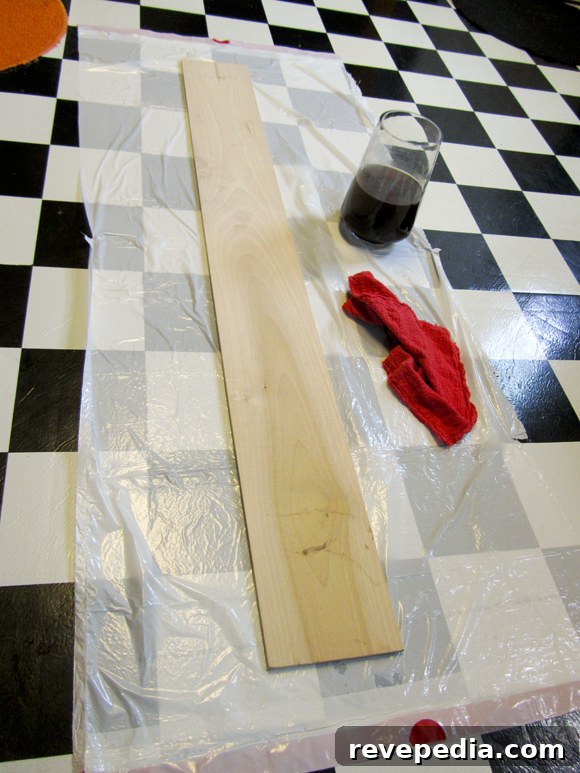
Find a piece of wood long enough to serve as your ruler. I used an unfinished 1×4 from a pile of scrap cuts in my basement. You can cut down a larger board or join smaller pieces together for a rustic look — the goal is to reuse what you already have. Before finishing, sand the board lightly to open the grain and create a smooth surface for staining or aging.
Step 2 — Age the wood for a vintage finish:
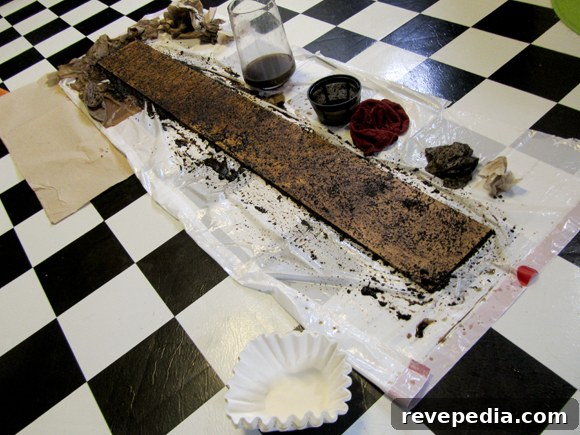
If you don’t have wood stain, you can age the board naturally. I used coffee grounds as a homemade stain — rubbing fresh grounds into the wood several times and wrapping the plank in a garbage bag so it could steep like a tea bag. If you don’t have coffee grounds or tea, strong brewed tea or even garden soil can achieve a similar patina. Work in an easy-to-clean area and wipe away excess material. Allow the board to dry completely before moving on.
Step 3 — Gather tools and decide on color:
Once dry, gather a measuring tape, a straight edge or ruler, a pencil or fine pen, a small paintbrush, and dark paint (black or off-black works well). I used a semi-gloss black with blue undertones from my paint stash to get an aged, slightly softened black instead of a stark glossy finish. Use whatever you have on hand — the goal is to keep this project inexpensive and straightforward.
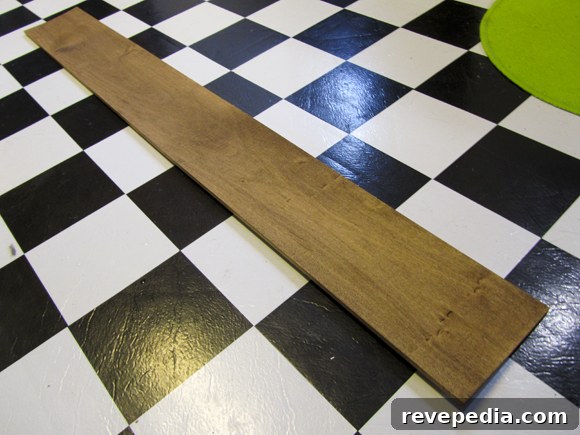
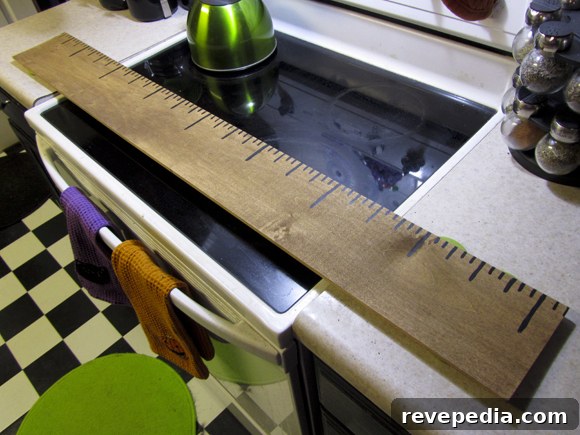
After staining, this is how my plank looked:
Step 4 — Determine the placement and total height:
Decide how tall you want the ruler to measure and where you’ll hang it. Test different placements on the wall to make sure the ruler ends at a realistic height with room to grow. My plank was four feet long; hung about a foot off the floor, it extended to just over five feet on the wall. Adjust according to the board length and the wall space you have available.
Step 5 — Mark the measurement lines:
Measure and mark the feet and sub-divisions according to the height you chose. For legibility and visual balance, I made the foot marks about 3 inches long, half-foot marks 2.5 inches, and shorter marks for smaller increments. Use a straight edge to keep lines even, then trace over the pencil marks with paint for durability and clarity.
Step 6 — Add numbers for the feet:
For neat, consistent numerals, I used a word processor to pick a font (I chose Century Schoolbook) and printed the numbers at a large size. Roughly cut the printed numbers, flip them face down, and shade the back with pencil to create a transfer. Position the number on the board, trace the outline with a pencil, then fill the outlines with paint. This transfer method helps keep the type uniform without stencils.
Step 7 — Seal and hang the ruler:
Once the paint is dry, seal the finished board with a clear satin spray to protect it while keeping the surface writable if you want to add markings later. Avoid high-gloss finishes if you plan to write on it. After sealing, attach a hanger — I repurposed a saw hanger from an old picture frame and mounted it at the correct height to ensure the ruler measures from the floor as intended. Adding a small strip of poster-mount tape at the bottom can prevent the ruler from swinging if it’s accidentally bumped.
Final thoughts:
The whole project kept to zero cost by using household materials and scraps. The resulting giant ruler works as both a practical family record and a decorative piece that can move with you from house to house. We hung ours near the kids’ rooms and the bathroom so it’s easy to reach and adds character to the hallway. If you try this, personalize the finish, font, and placement to suit your home. I’d love to hear other ideas for upcycling materials and creative projects that repurpose what you already own.