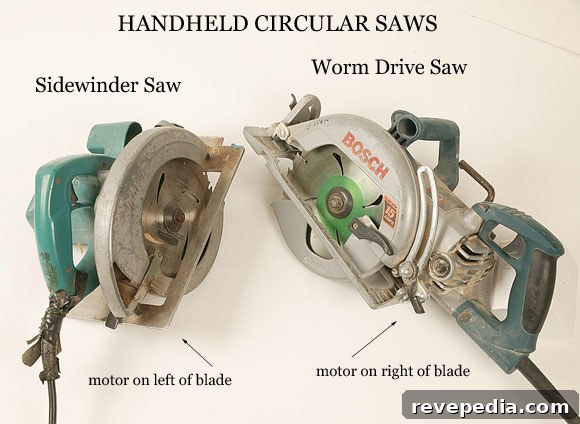
As a home improvement blogger, I’ve met many construction professionals, so when I wanted to understand the differences between types of circular saws—specifically worm drive and sidewinder—I asked my friend Robert Robillard. Robert is a carpenter who also writes about tools and craft at A Concord Carpenter.
Growing up and working on the West Coast, I’ve mostly bought and used sidewinder saws, which are often simply called “circular saws.” However, another major variation exists: the worm drive saw.
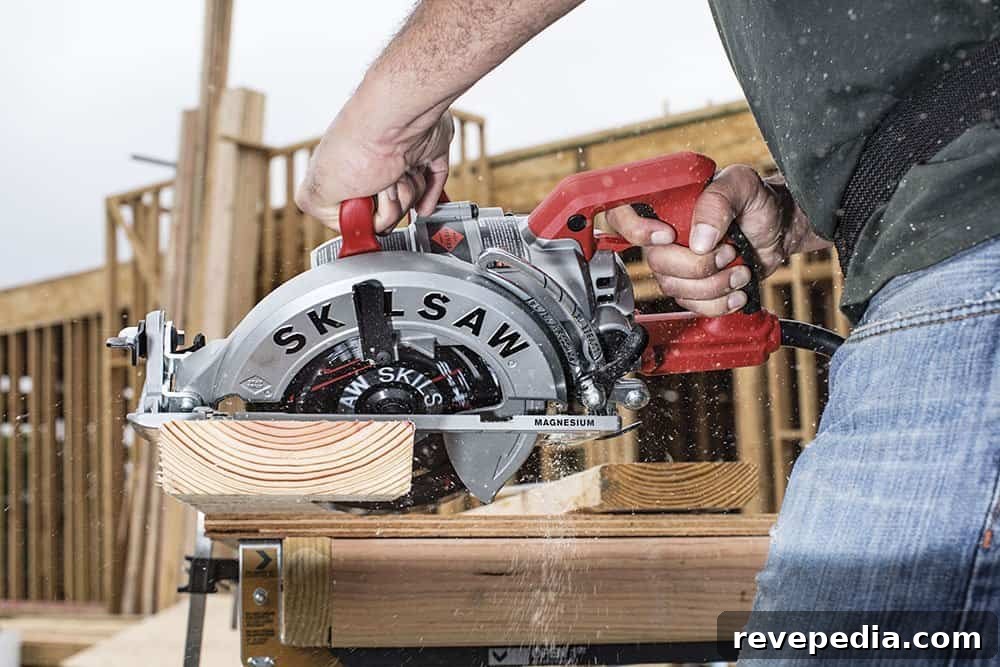
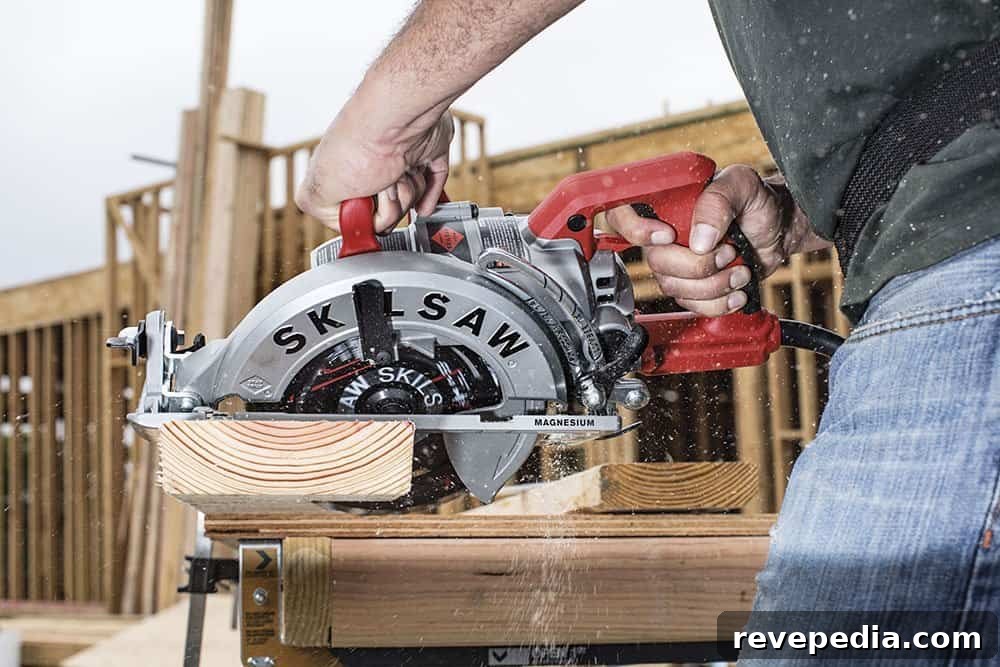
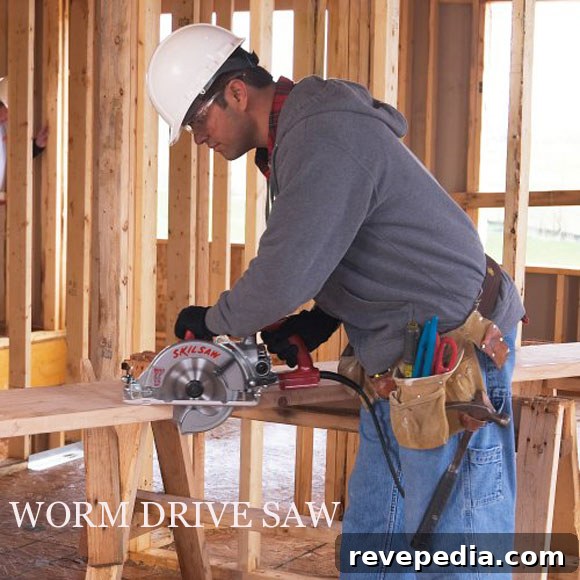
There’s a noticeable regional preference between the two types. Historically, sidewinders were pushed more on the East Coast while worm drives found popularity on the West Coast. The SKIL 77 worm drive, for example, is legendary for its durability and has long been a favorite among professionals. Many right-handed carpenters prefer worm drives because the blade sits on the left, allowing a clearer sightline to the cut without having to look over the motor. On the other hand, sidewinders are lighter and less expensive, which makes them especially popular with DIYers and occasional users.
Sidewinder vs. Worm Drive
Robert explains the key differences.
Worm drive saws have long been the go-to for framing, stairs, and roof rafter work. The term “worm drive” refers to the gear configuration inside the saw: a motor spins a worm gear that transfers power to the blade through a right-angle gear train. This arrangement produces higher torque than a direct-drive saw, allowing the blade to maintain speed and power under heavy load rather than stalling. In practice, that higher torque translates into more cutting power and better performance when ripping thick or dense material.
The downside has been weight. Traditional worm drives are heavier than sidewinders, and for many carpenters who aren’t constantly doing heavy framing, that extra weight was a drawback. Recently, manufacturers have worked to reduce weight while keeping power high—examples include modern DEWALT worm drive models that balance torque with reduced mass.
For many carpenters, the worm drive’s advantages are both visibility and power: with the blade positioned for an unobstructed sightline (blade on the left for right-handed users), it’s easier to see and control the cut. For tasks like stair layout, rafter cutting, and long framing runs, that advantage can save time and improve accuracy. Because job site needs change, many pros now carry both types of saws to match the work: a worm drive for high-torque tasks and a sidewinder for lighter, quick-cut jobs.
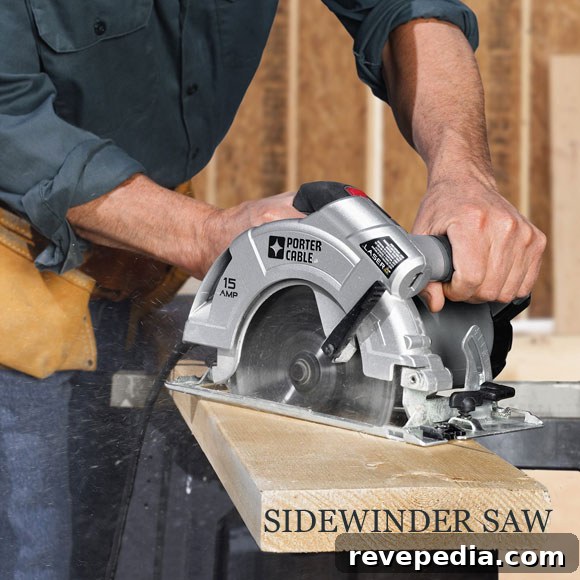
Sidewinders, also called direct-drive saws, are compact, lightweight, and usually less costly. That makes them ideal for DIY projects and tasks where portability and ease of handling matter more than maximum torque. I personally own both styles: for a handful of cuts or light carpentry I reach for the sidewinder because it’s lighter and more maneuverable. For full framing days or heavier ripping I prefer the worm drive for its torque and cut consistency.
Many carpenters carry both a worm drive and a sidewinder to handle opposing bevels or to match the tool to the day’s tasks. Choosing between them depends on the work you do most often: if you need raw cutting power and a clear sightline for precision rips, a worm drive is hard to beat. If you favor portability, lower cost, and lighter weight, a sidewinder is typically the better choice.
Which circular saw do you use, and why? Share your preferred type and brand—your experience helps other readers decide which saw suits their projects best.
photo: Fine Homebuilding