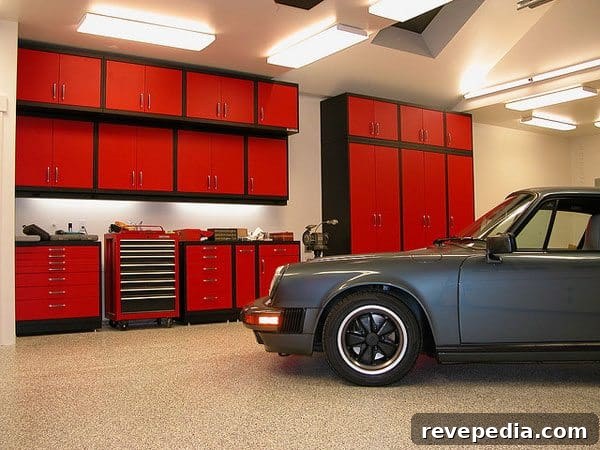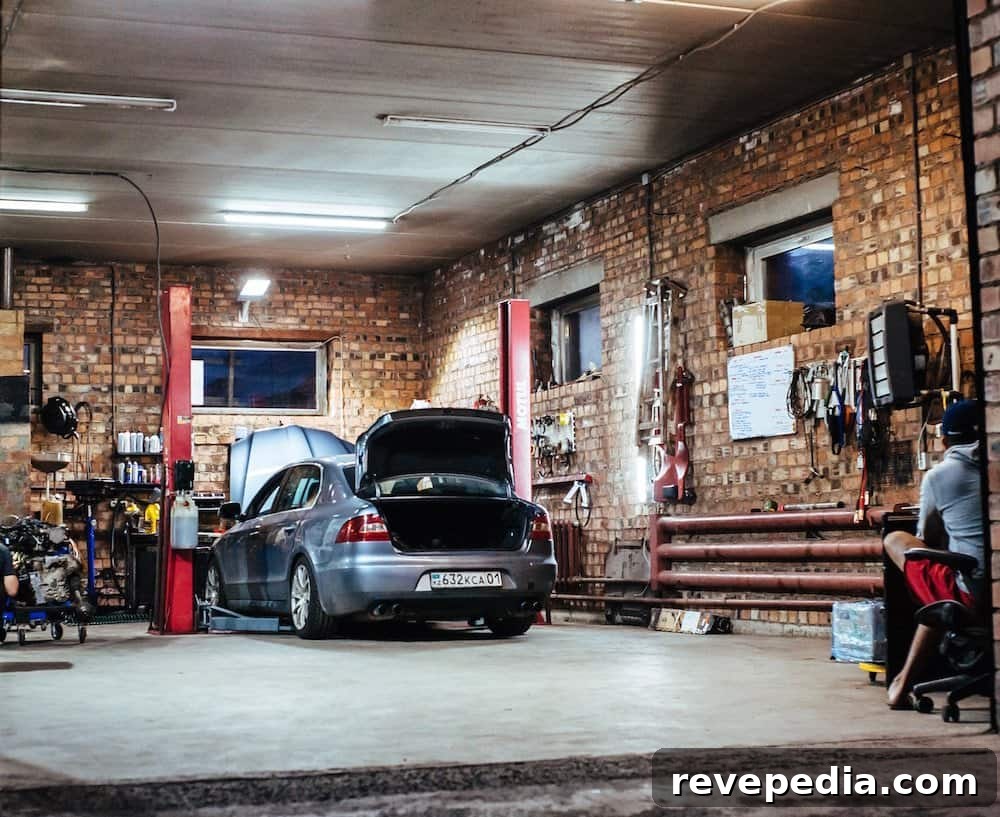
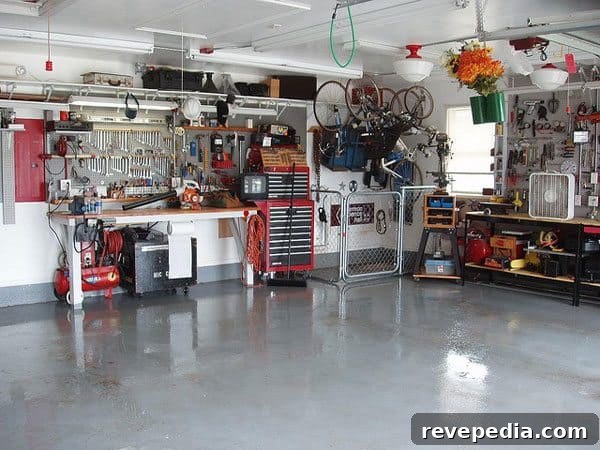
Has your garage become a storage dump for items you might someday use—empty boxes, outdated electronics, old sports gear, and miscellaneous odds and ends? Transforming that cluttered space into a functional garage workshop is simpler than you might think. With thoughtful organization and a few key improvements, your garage can become a safe, efficient, and enjoyable place to tackle projects.
Start by clearing out what you no longer need. Decluttering creates the physical and mental space to plan a proper workshop layout. One practical next step is to sort items into categories: keep, donate, recycle, or sell. Hosting a garage sale can be a great motivator to let items go and recover some money for workshop upgrades.
- Clean Workspace
- Tool Storage
- Electrical Outlets
- Lighting
- Heating and Cooling
- Flooring
- Tools
- Entertainment
- Dust Collection
Once space is freed up, resist the urge to refill every shelf. Instead, invest in essential tools and systems that make the workshop functional. A pared-down collection of high-quality tools and a well-organized workspace will prepare you for most home projects.
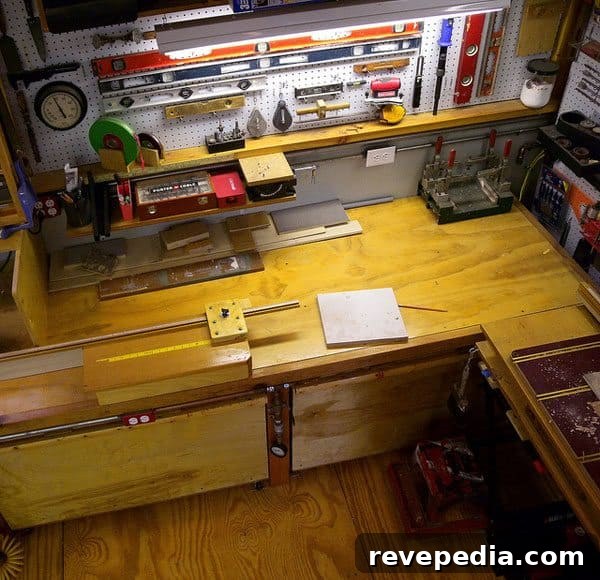
Clean Workspace
A clean workspace is primarily about safety and efficiency. Keeping floors clear reduces trip hazards and makes it easier to locate tools and parts when they’re hung on walls or placed in drawers. A tidy workbench means fewer misplaced nuts, bolts, and small components, and it lets you start projects without first cleaning up previous ones.
Establish daily or weekly cleanup routines: sweep the floor, wipe surfaces, and return tools to their storage spots. Clear labeling and designated zones for different tasks help maintain order, especially if multiple people use the space.
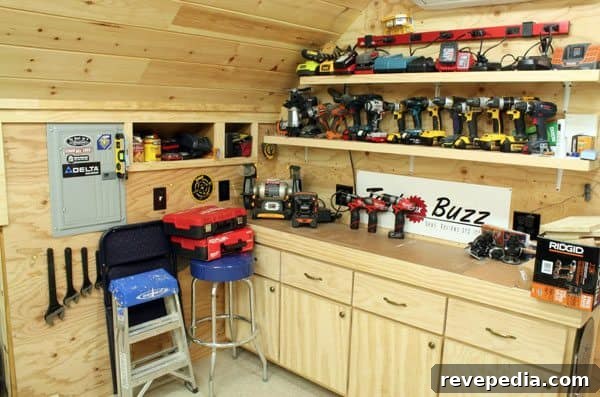
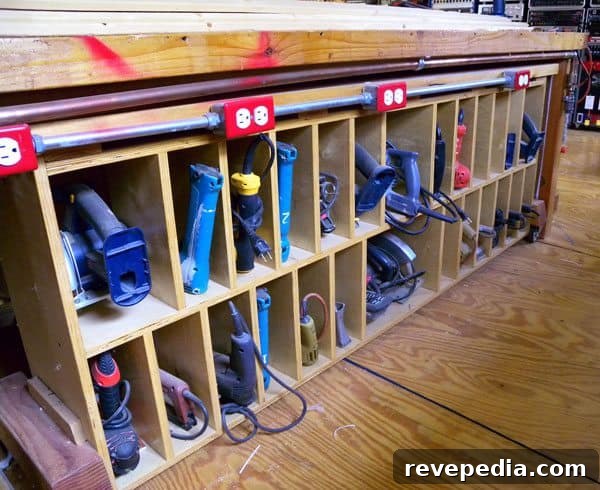
Tool Storage
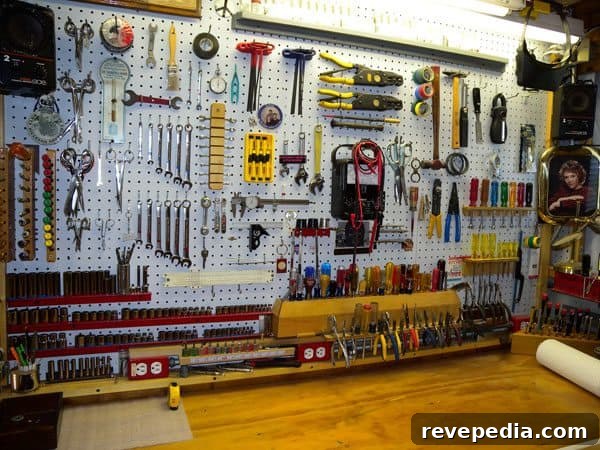
Protect your tool investment with quality storage. A sturdy, lockable tool chest with smooth rolling, ball-bearing drawers keeps tools organized and secure. Drawer liners prevent metal-on-metal contact and stop tools from sliding around.
If you buy used units, inspect for rust and wear that could damage tools. Consider modular storage: a combination of wall cabinets, pegboards, and a dedicated chest gives flexibility and helps keep frequently used tools within reach while storing less-used items higher up.
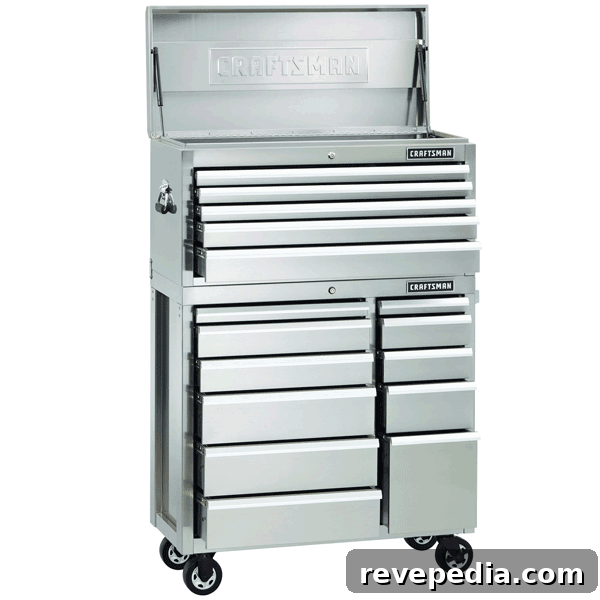
Choose storage solutions that fit your tool collection and workflow. Label drawers by tool type or task to speed up retrieval, and keep a small set of everyday tools near the main workbench for convenience.
Electrical Outlets
Avoid running extension cords across the garage by installing ample outlets. Plan for battery chargers, corded power tools, lighting, heaters, fans, and entertainment devices. Position outlets at benches, on walls near storage areas, and at floor level where needed.
Be mindful of the electrical load. Have an electrician assess your panel and circuit layout so you can safely support multiple tools running simultaneously and avoid tripping breakers.
Lighting
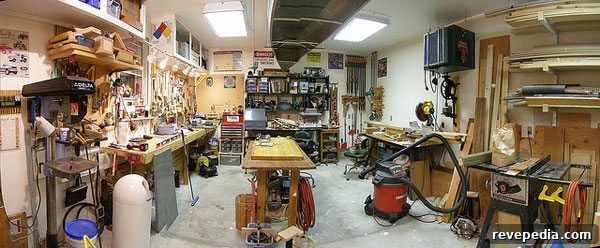
Standard garage lighting is usually just enough to prevent stumbling. For a workshop, you’ll need brighter, more evenly distributed light. Combine overhead fixtures with task lighting at your workbench to eliminate shadows when you’re working on detailed tasks like soldering or precision assembly.
Options such as LED shop lights, adjustable track lighting, and articulating work lamps provide a mix of broad illumination and focused light where you need it. Motion-sensor switches can be useful when your hands are full and reduce wasted energy from lights left on.
Heating and Cooling
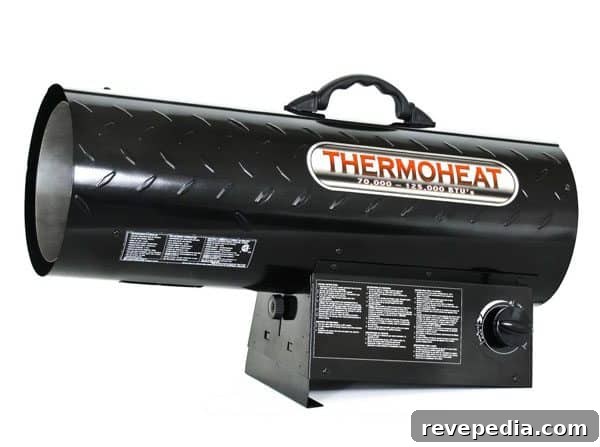
Many garages lack insulation, making them uncomfortable for year-round use. Add insulation, seal gaps, and consider portable heaters, a dedicated furnace circuit, or floor AC units to maintain a comfortable working temperature. Avoid working in extreme cold or heat—comfort affects precision and safety.
If you use propane heaters, take care with ventilation and follow safety guidelines for semi-enclosed spaces. Ensure you have the electrical capacity for electric heating or cooling equipment before installing them.

Flooring
Bare concrete stains and becomes slippery when wet, and it’s hard on your feet and back over long projects. An epoxy floor coating creates a tougher, easier-to-clean surface and can offer better grip. If you want cushioning and insulation, consider commercial-grade rubber mats or interlocking floor tiles from reliable manufacturers.
Select flooring that resists chemicals and is easy to maintain. Use anti-fatigue mats in front of workbenches to reduce strain during long standing tasks.
Tools
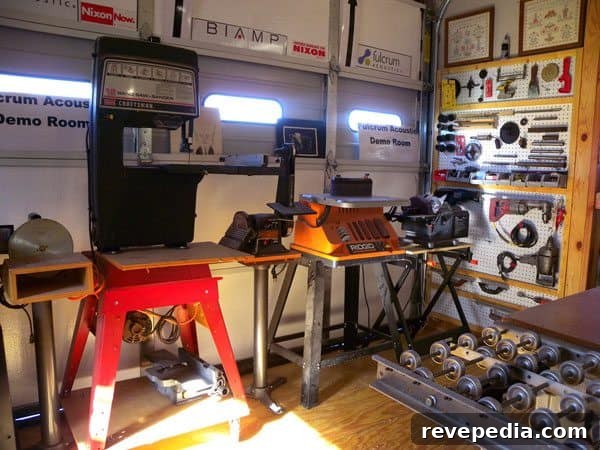
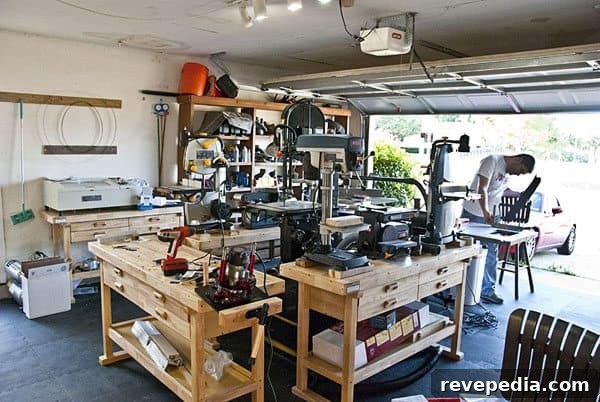
Tool preferences vary—some swear by specific brands—but beyond brand loyalty, focus on building a set of reliable tools matched to the projects you do most. In addition to basic hand and power tools, consider adding these workshop staples:
- Drill press for precise, repeatable holes.
- Table saw for cutting large stock quickly and accurately.
- Belt sander for rapid smoothing and shaping of wood.
- Vise or anvil for secure clamping and metalwork support.
- Abrasive blasters for removing paint, varnish, and rust—use with a proper blast containment setup.
- Welder, metal bender, and shear for metal fabrication if you work with steel or sheet metal.
Entertainment
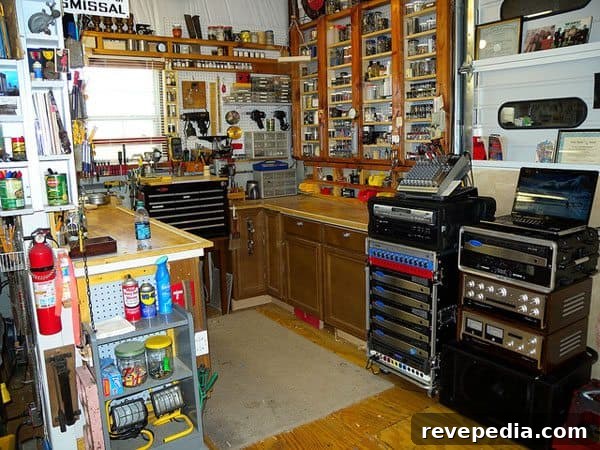
Music and media make long projects more enjoyable. If you prefer rugged audio, consider portable, jobsite-rated speakers that can run on cordless battery platforms used by many tool brands. These units are durable, often charge batteries, and supply additional power outlets.
For visual entertainment or instructional videos, mount a flat-panel TV or a durable monitor and stream content from a media device. Tailor the system to your space so it enhances productivity without becoming a distraction.

Dust Collection
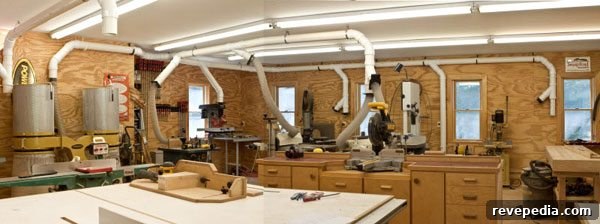
For a healthy workshop, invest in dust management: a dust collection system, a central vacuum, and good ventilation. These systems reduce airborne dust, pollen, and fine particles that can harm lungs and contaminate projects. Proper dust control improves air quality and keeps your workspace and tools cleaner.
Place collection points near major dust-producing tools (table saws, sanders, routers) and use sealed systems where possible. Combine this with air filtration and make-up air or exhaust ventilation for the safest environment.
What are your must-haves? Tailor your workshop improvements to the projects you enjoy most and balance comfort, safety, and functionality so your garage becomes a space you actually want to use.