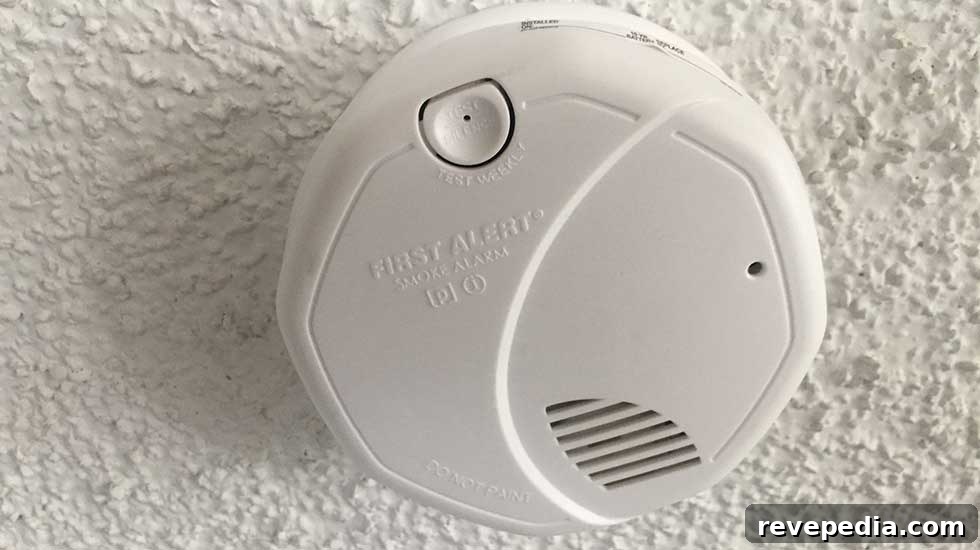
It’s Fire Prevention Week, and there’s no better time to review your smoke alarms. Smoke alarms are legally required in every home in many regions, but not all alarms offer the same level of protection. This guide explains how to choose, locate, and maintain the right smoke alarms for your home so you can protect your family and property effectively.
A working smoke alarm significantly reduces the risk of dying in a house fire—studies show the risk is roughly cut in half when functioning alarms are present. For that reason, install smoke alarms in every sleeping room, outside each sleeping area, and on every level of the home, including the basement. This placement provides comprehensive coverage and increases the chance you’ll be alerted early enough to escape safely.
Power Sources
Smoke alarms are typically powered in one of two ways: hard-wired (AC) systems that link all alarms in the house together, or battery-powered units that operate independently. Hard-wired systems are common in newer homes or when an existing home has been retrofitted for interconnected alarms.
Interconnected hard-wired alarms will sound every unit in the home when one detects smoke, which is especially useful in larger houses where a single alarm might not be heard far away. If you select a hard-wired system, choose units with a battery backup so the alarms remain operational during power outages. Test those backup batteries monthly and replace them at least once a year.
Battery-powered alarms are flexible and can be installed anywhere because they don’t require a connection to your home’s 120V wiring. For reliable protection, test battery-powered alarms weekly by pressing the test button. Remove the cover monthly and clear any dust or debris from the interior—using the vacuum cleaner’s extension wand makes this quick and easy. Replace disposable batteries every six months, or follow the manufacturer’s guidance for sealed, long-life battery models.
There are also wireless interconnected battery-powered alarms that communicate with each other without hard-wiring, offering the convenience of interconnected alerts with simpler installation.
Smoke Alarm Sensors
Smoke detectors use different sensing technologies, and each performs better with different types of fires. Ionization sensors are common and react quickly to fast-flaming fires fueled by paper, grease, or flammable liquids. However, they are less sensitive to slow, smoldering fires that produce heavy smoke, such as a cigarette igniting bedding.
Photoelectric sensors respond more quickly to larger smoke particles from smoldering fires and are generally better at detecting slow-developing, smoky fires. For the broadest protection, choose a dual-sensor smoke alarm that combines both ionization and photoelectric technologies. Dual-sensor units provide faster response across a wider range of fire types than detectors that rely on only one sensor type.
Some devices combine a smoke alarm with a carbon monoxide (CO) detector. While these combination units can save space and add CO detection, many contain only a single type of smoke sensor. If you rely on a combo unit, consider adding separate dual-sensor smoke alarms in key areas for improved smoke detection.
Where to Install Smoke Alarms
When positioning smoke alarms, avoid placing them within 10 feet of cooking appliances to reduce false alarms. Keep alarms away from windows, doors, and vents where drafts might interfere with detection. If a wall-mounted placement is necessary, install the alarm high on the wall, close to the ceiling, because smoke rises and collects near the ceiling first.
Never paint a smoke alarm, and avoid covering it with tape, stickers, or other materials that could block sensors or vents and cause the unit to malfunction. Keep detectors clean and unobstructed for reliable operation.
How to Install a Battery-Powered Smoke Alarm
Installing a battery-powered smoke alarm is straightforward and can usually be completed in under 10 minutes. Follow these basic steps and consult the manufacturer’s instructions for model-specific details.
- Insert the appropriate battery (commonly a 9-volt or AA pack) and press the test button to verify the unit powers on.
- Choose the ceiling location where you want the alarm. Use the template included with the alarm to mark drilling locations for the mounting screws.
- Drill holes at the marked points and insert the screw anchors. Tap the anchors flush with the ceiling if required.
- Attach the mounting bracket to the ceiling using the screws provided.
- Mount the smoke alarm on the bracket and secure it, often by giving the unit a short quarter-turn to lock it in place.
- Test the alarm again to confirm it is working after installation.
After mounting the template and anchors, verify the alarm is level and securely fastened. If the alarm has an activation switch on the mounting plate or wiring harness, ensure that switch is turned on so the unit will operate.
Maintenance and Best Practices
Regular maintenance keeps smoke alarms reliable. Test alarms weekly or monthly depending on the manufacturer’s recommendation, and clean them monthly to remove dust and insects that can trigger false alarms or block sensors. Replace disposable batteries at least every six months, or replace the entire alarm according to the unit’s lifespan—typically every 8 to 10 years for most manufacturers. If an alarm chirps, it is signaling a low battery or a malfunction—address it immediately.
Avoid placing alarms too close to bathrooms where steam can cause nuisance triggers, and do not install them near heating or cooling vents that could prevent smoke from reaching the sensor. For homes with multiple levels, ensure alarms are installed on each level and that bedrooms have nearby coverage. In large homes, consider interconnected alarms so a single triggered unit alerts the entire house.
Smoke alarms are an inexpensive, essential safety feature that can save lives. Installing and maintaining proper alarms throughout your home is a simple step with a substantial impact—most installations take less than ten minutes and provide critical early warning in the event of fire.