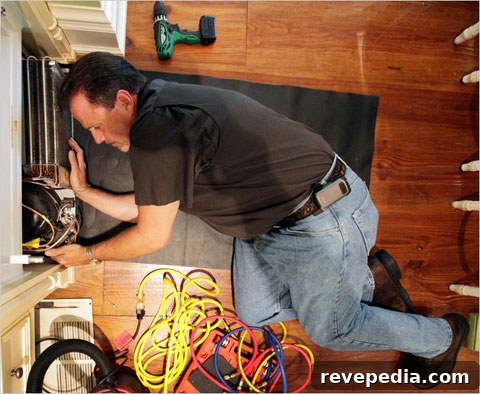
A useful New York Times piece explains why appliance repair technicians often charge more than customers expect. Understanding these factors won’t make the final bill painless, but it does clarify why some costs appear high and which expenses technicians must cover.
1. Travel and Training
Many repair technicians invest time and money in continuing education. As one technician explained, he travels out of town at least twice a year for training on new products and updated service techniques. Those travel expenses—conference fees, transportation, and lodging—are typically paid by the technician or their small business and are reflected in service charges.
2. Research and Diagnostic Time
Troubleshooting modern appliances can be time-consuming. Technicians often spend long hours researching complex issues, sometimes working late into the night to identify uncommon faults or to source the correct repair procedures. The time spent diagnosing a problem—both in the field and afterward—contributes to the overall cost.
3. Fixed Business Costs
Repair businesses incur several fixed costs that are necessary to operate safely and professionally. Insurance and liability coverage, truck maintenance and fuel, shop or office rent, and basic office equipment are all part of running a repair service. These overhead expenses are spread across the work the technician performs and are included in service pricing.
4. Higher Parts Costs
Replacement parts for modern appliances are often more expensive than older, purely mechanical components. Many appliances now rely on sophisticated electronic modules and circuit boards, which can cost significantly more than simple mechanical parts. As a result, parts and component replacement drive up repair bills in many cases.
The Value of Expertise
A common repairman joke illustrates the value of experience: a customer asks why they were charged for a quick fix after the technician tapped a device with a hammer. The technician replies, “That’s $50 for hitting it with a hammer, and $200 for knowing where to hit it.” The point is that accurate diagnosis and effective repairs require skill and experience, not just labor time.
Understanding these elements—training, diagnostic work, business overhead, and parts costs—can help consumers see why repair bills sometimes feel steep. Tomorrow we will offer practical tips to help lower appliance repair costs and make repairs more affordable.
photo: AJ Mast for NY Times