You spend a weekend building a shop knife. The grind is clean, the profile is exactly what you wanted, and the steel came out of the stock with accurate geometry. Then you file across the edge after heat treatment and it slices like nothing—your blade is soft. All that work, and it’s essentially a butter knife.
This happens more often than people admit. Heat treatment is the step many DIY metalworkers either skip entirely or approach with overconfidence, and that’s where real problems start.
High-carbon steel that’s been hardened or tempered incorrectly won’t just underperform—it can fail in dangerous ways. A glass-hard chisel with no temper will shatter when struck. A blade with uneven hardness can flex and break under load.
Below is a straightforward guide: what heat treatment actually does to steel, how to do it correctly at home for projects your shop can reasonably handle, and a realistic assessment of the limits of a backyard forge.
What Heat Treatment Actually Does to Steel
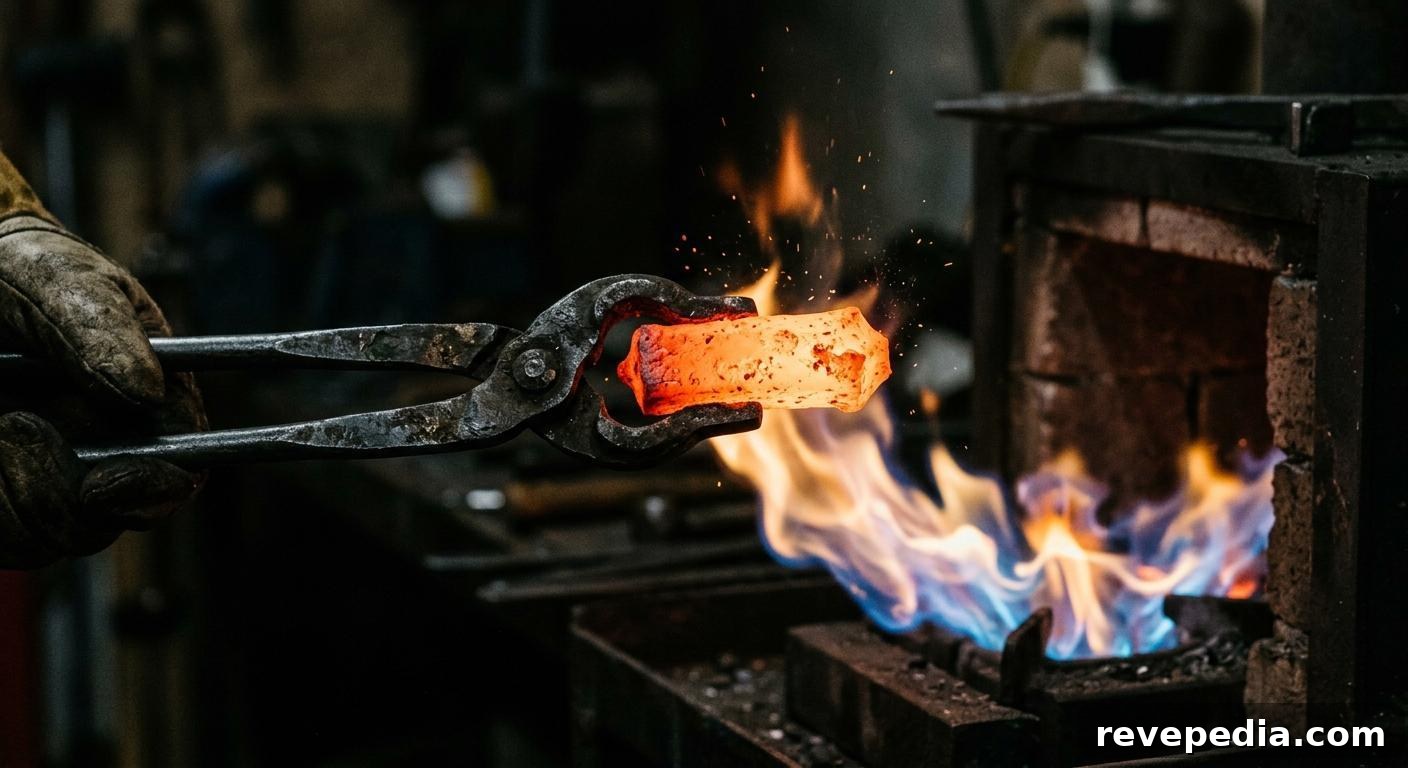
Heating high-carbon steel to the austenitizing range—where the metal becomes non-magnetic and ready for quenching.
Heat treatment is not magic; it’s controlled manipulation of a metal’s internal grain structure. When steel is heated to the correct austenitizing temperature range, the carbon that provides hardness dissolves uniformly into the iron matrix. Quench the steel rapidly from that temperature and you trap those carbon atoms in a hard, wear-resistant structure called martensite. Cool slowly in air instead and the steel stays relatively soft.
Martensite is hard but brittle. Tempering—reheating the steel to a lower temperature—relieves stress in the crystal structure and trades a bit of hardness for toughness. A properly tempered blade won’t shatter on impact; a properly tempered chisel will hold an edge without crumbling. Get the tempering wrong and you have a tool that behaves like glass.
Heat treatment is fundamental to modern manufacturing. Steel makes up a large portion of heat-treated materials worldwide, and the process underpins everything from automotive parts to hand tools. The difference between “I heat-treated it” and “it’s properly heat-treated” is wider than most people realize.
Choosing the Right Steel for Your Project
Different steel grades respond differently to heat treatment—matching the steel to your setup is the most important choice you’ll make.
Not all steels harden. Mild steel, widely used in structural applications, contains too little carbon to respond to quench-and-temper cycles. For cutting tools you generally need a carbon content above about 0.4%, and preferably 0.6% or higher.
For home heat treating, choose simple high-carbon steels. 1084 and 1095 are forgiving and well documented, O1 is a reliable oil-hardening tool steel, and W2 can give great results with proper technique. These steels offer a broad hardening window so small temperature variations don’t ruin the outcome.
High-alloy steels cause trouble in a home shop. Grades like D2, M2, H13, and CPM powder-metallurgy steels require tight temperature control, careful soak times, and often atmosphere-controlled furnaces to avoid decarburization—the loss of carbon from the surface that produces a soft skin right where hardness is needed most. Home forges are almost always inadequately controlled for these steels.
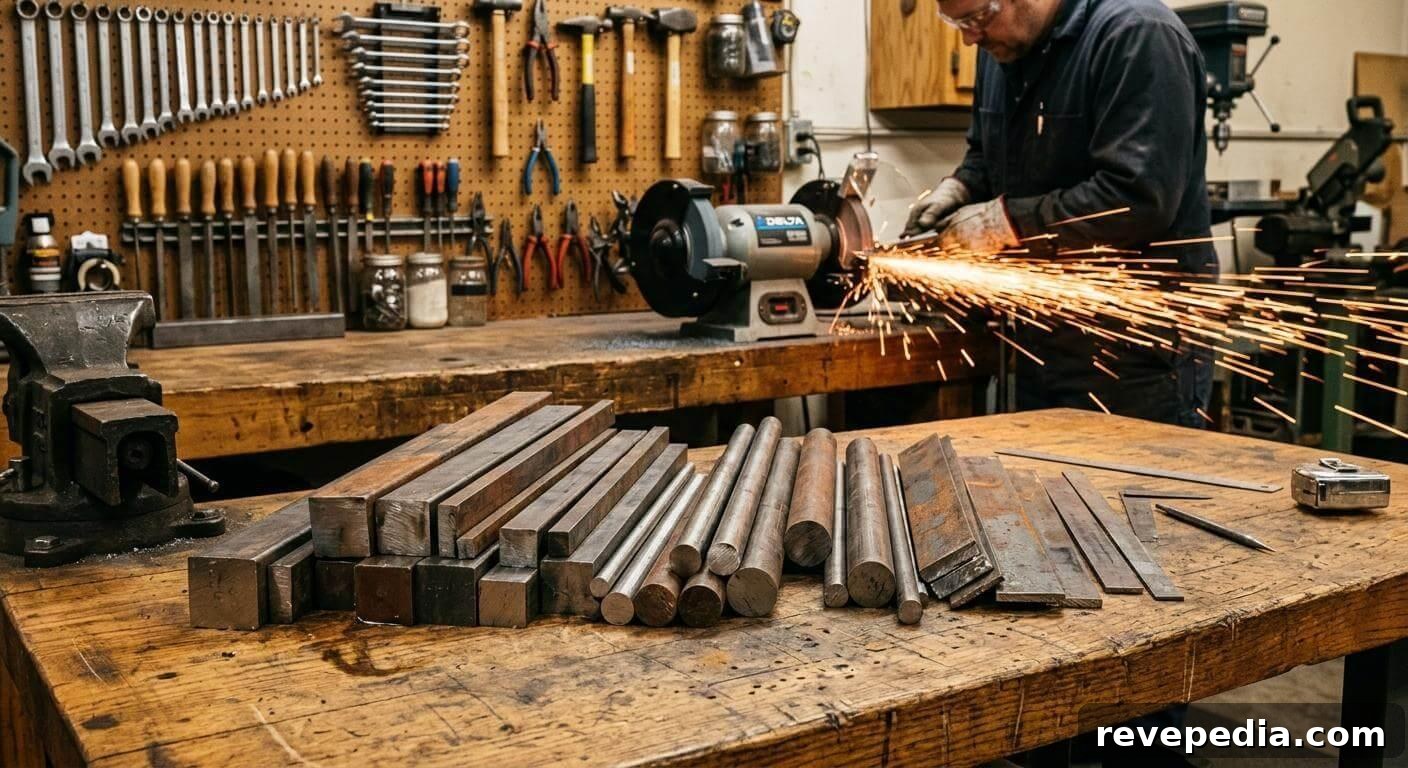
A simple field test helps: hold the steel near a bench grinder. Bright, bursting sparks generally indicate higher carbon content; fewer dull sparks suggest mild steel that won’t harden. It’s not lab-grade, but it’ll prevent wasting time on the wrong material.
The Home Heat Treating Process: Step by Step
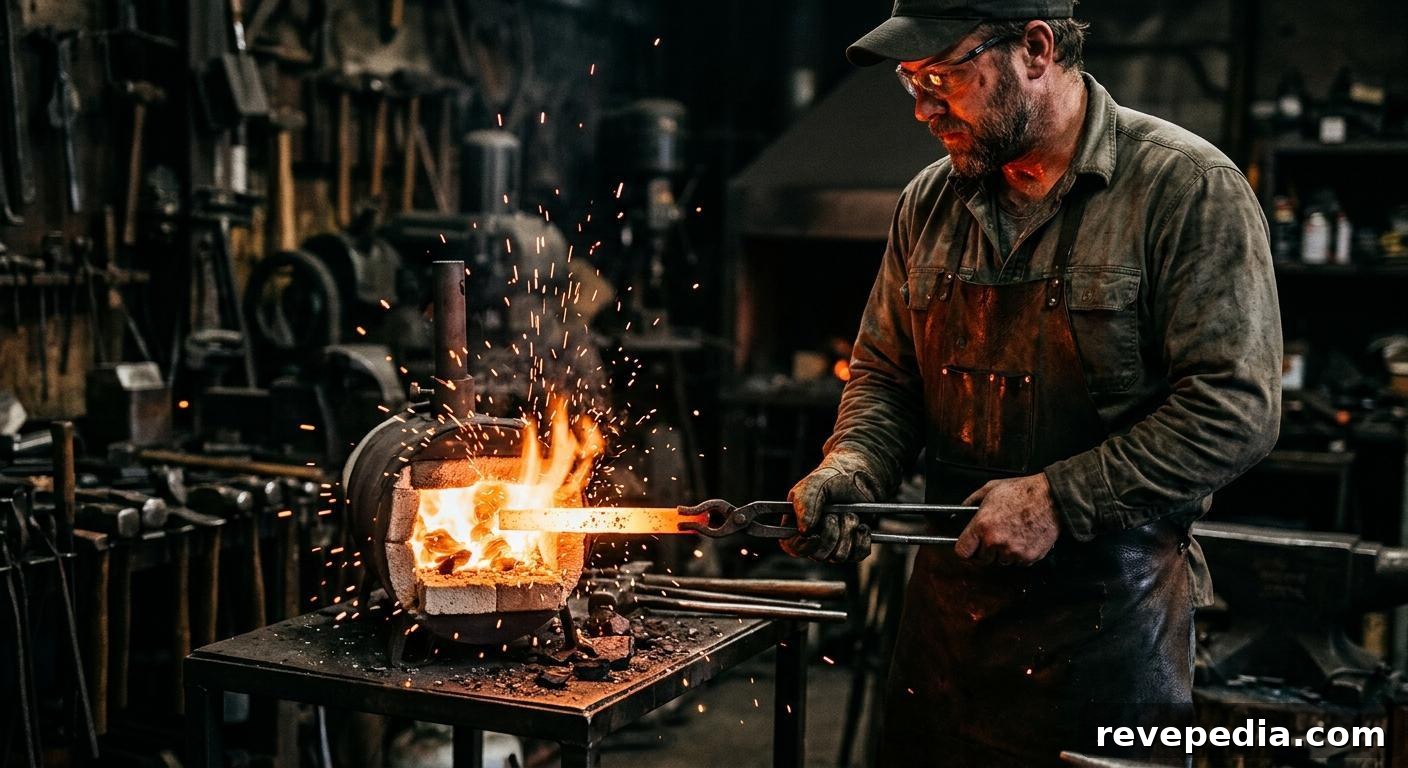
A home metalworker austenitizing high-carbon steel over a propane forge—the first step toward a properly hardened tool.
You don’t need industrial equipment to heat-treat basic carbon steels. A propane forge or MAP-Pro torch, a quench tank (an old steel pipe section works), canola or a proper quench oil, and a kitchen oven for tempering will handle most common projects.
Begin with a preheat: bring the steel to 300–400°F before pushing it into the austenitizing range to reduce thermal shock, especially in thicker stock. Heat slowly and evenly to the target austenitizing temperature—for example, 1084 typically austenitizes around 1475–1500°F. Use a magnet: once the steel loses magnetic attraction, you’re in the right zone. Hold that temperature for a short soak—don’t immediately quench after first reaching color.
Quench in oil for most high-carbon steels. Move the piece up and down in the oil, not side to side, so fresh oil contacts the surface and reduces warping. Water quenching is faster and more severe, increasing the risk of cracking; use it only for steels and shapes suited to it.
Temper promptly—ideally within an hour of quenching. A household oven set to 375–450°F for two one-hour cycles, allowing the piece to cool fully to room temperature between cycles, produces reliable results for many knives and chisels. Color alone is an unreliable indicator; an accurate oven thermometer is inexpensive and essential.
Safety and organization matter. An uncluttered bench, fire-safe surfaces, and a clear work area reduce the risks associated with oil quench and open flame. Setting up a dedicated, fire-conscious workspace makes the process both safer and more repeatable.
The Honest Limits of a Home Setup
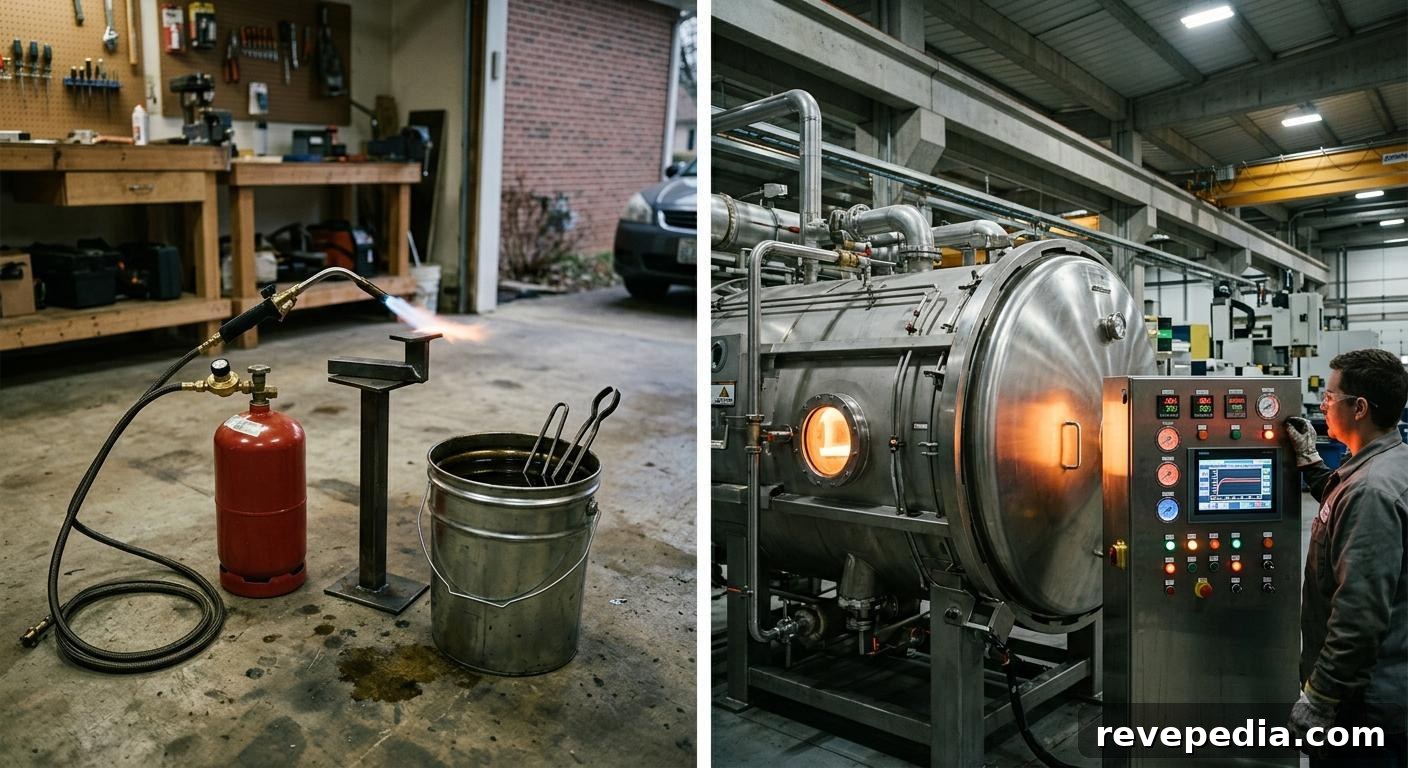
A backyard propane torch can handle basic carbon steels, but high-alloy tool steels demand the temperature uniformity and atmosphere control of commercial furnaces.
Be honest: a propane forge has hot spots. Flame tips can reach extreme temperatures while other areas are significantly cooler. That variation is acceptable for simple steels like 1084 but can ruin high-alloy grades, producing soft or unevenly hardened parts that fail in service.
Commercial furnaces control temperature tightly—often within ±5°F across the part—and use neutral or vacuum atmospheres to prevent oxidation and decarburization. They also enforce precise soak times so carbides dissolve correctly. That level of control is not available with an open-air forge and a handheld torch.
Industry practices keep advancing; commercial heat treating increasingly uses precision sensors and automated controls. The capabilities of professional operations continue to outpace what typical home shops can achieve, especially for alloyed and stainless steels.
When to Send Your Steel Out
Outsourcing heat treatment is a practical decision, not a defeat. Send parts out when you’re using high-alloy steels like D2, M2, or stainless grades that don’t tolerate imprecision. Also outsource when you have a batch to run: the cost per part often drops significantly with commercial processing.
Send work out when parts carry critical tolerances—drill press spindles, precision gauges, or components that cannot tolerate warping. If the material and labor invested in a piece make a failed DIY heat treat expensive, professional processing is usually the better choice.
Ask potential vendors the right questions: what furnace type they use (vacuum, atmosphere-controlled, or salt bath), whether they document time-temperature records, whether they perform Rockwell hardness testing and share results, and their experience with your specific steel grade. Reputable heat-treatment services will provide clear answers.
Factor time and material costs into your decision. A few outsourced batches are often cheaper than multiple failed home attempts on costly steel. Running a simple budget exercise for your workshop helps clarify where outsourcing saves money and where in-house capability is worth the investment.
Tempering Is Not Optional
The single most dangerous DIY mistake is hardening without tempering. Glass-hard steel—fully hardened but untempered—will shatter when struck. A shattered punch or chisel can send fragments across the shop. This is a real hazard.
Tempering temperatures vary by application. Chisels and plane irons generally temper well around 400–450°F, retaining a hard edge with improved toughness. Knives often temper between 350–400°F. Struck tools like punches, drifts, and hammer faces require higher tempering—475–550°F—to withstand impact.
Run two tempering cycles instead of one: two one-hour cycles with full cooling between them relieve stress more evenly than a single long cycle. Process control during tempering is as critical as the hardening step because tempering sets the final properties of the tool. After the second temper, allow the piece to cool fully to room temperature before testing or use.
Building the Heat Treating Habit Into Your Shop
Good heat treating is a practice, not a one-off skill. Consistent results come from disciplined record-keeping.
Keep a heat-treat log for every part: steel grade, stock thickness, austenitizing temperature, soak time, quench medium, temper temperature, number of cycles, and observations such as warping or surface scale. Over time you’ll develop a personal reference that’s more valuable than generic charts.
Start with forgiving steels—1084 and O1—before attempting high-alloy grades. Develop repeatable workflows and build confidence with materials that tolerate some variation. When you move to tighter-tolerance steels, you’ll benefit from a solid baseline and documented experience.
Once tools come out of the shop heat-treated, storage and care matter. Moisture is the enemy—surface rust can form on tempered tools in a damp environment. Keep tools off concrete and out of high-humidity areas. An organized system for tool storage prolongs the life of every piece you’ve invested time into.
Design projects around the equipment you have: choose steels your setup can reliably handle, outsource the jobs it cannot, and be honest about that boundary.
Final Thoughts
Heat treating is the invisible step between raw stock and a functional tool. You can perfect geometry, grind, and handle, and still ruin the result with a bad quench or a skipped temper—or end up in the emergency room from a shattered tool.
The good news: home setups can achieve excellent results with the right materials and methods. Simple high-carbon steels such as 1084 and O1 respond well to a propane forge, oil quench, and an oven temper. The technique is learnable, the equipment is affordable, and the results are real.
The honest news: understanding the limits of your setup is what separates makers who improve from those who repeat failures. When a job requires a controlled atmosphere, a precision furnace, and documented Rockwell results—send it to a professional. That’s not weakness; it’s how experienced people work.