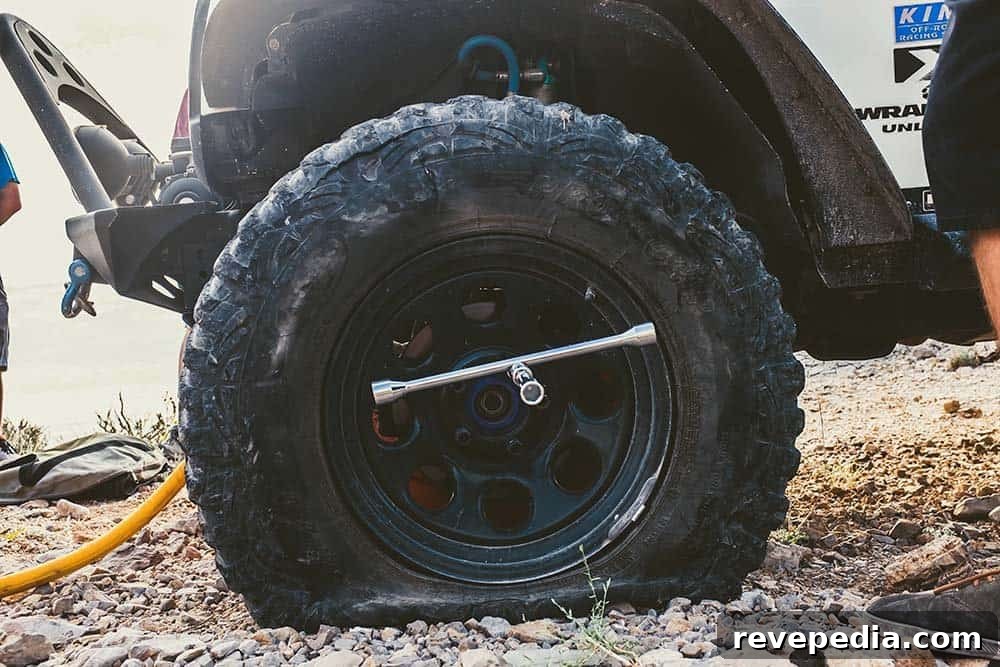
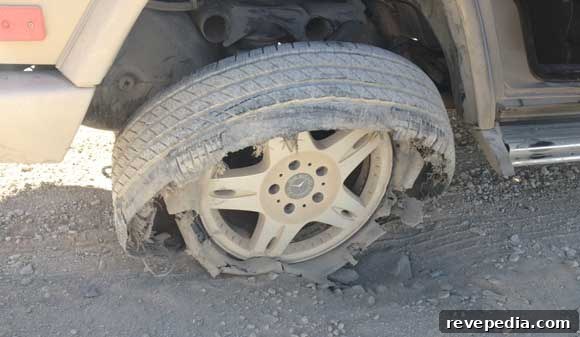
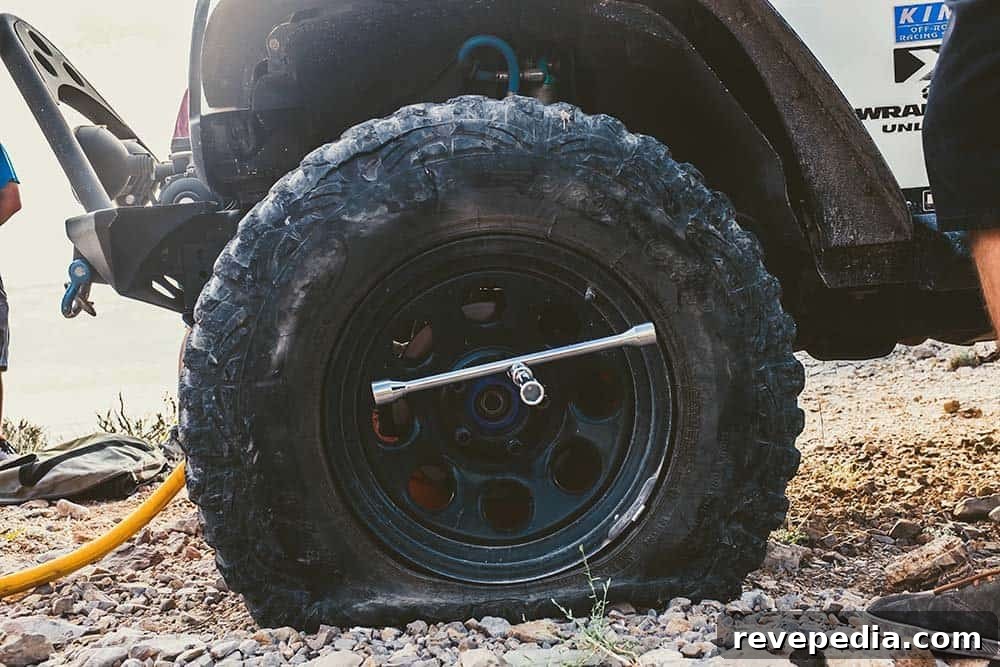
This past weekend we were driving through the Nevada desert and likely pushing too fast on a rough dirt road. One sharp rock was all it took — BOOM — and the tire blew out, just like that.
Thankfully the blowout affected the rear tire and we were able to bring the vehicle to a controlled stop. Even so, the rim took some damage and ended up dented along a couple of edges.
We carry a full-size spare, so after a quick inspection we set about changing the flat. Being miles from any town, calling roadside assistance wasn’t an option.
Below are clear, practical steps for changing a flat tire. Specifics can vary depending on the type of jack and where your spare is stored, so follow your vehicle owner’s manual as needed.
Assess the Situation
Once you’ve stopped, move as far off the road as possible and make sure the vehicle is on level ground. If you have reflective triangles or cones, place them behind the car to warn approaching drivers. If you don’t have those, raising the hood can also signal distress so others slow down and pass carefully.
Remove the Spare Tire and Jack
Most cars store the spare tire in a well in the trunk beneath the carpet, along with the jack and lug wrench. Some vehicles keep the spare under the rear cargo area, under the vehicle, or mounted on the back door. It’s a good habit to check your spare periodically for proper inflation and signs of age-related damage such as dry rot.
Remove the Flat Tire
Before raising the vehicle, loosen the lug nuts slightly while the wheel is still on the ground. This gives you better leverage and prevents the wheel from spinning while you apply force. Break each lug nut loose a half-turn to a full turn so they’re easier to remove once the car is lifted.
Raise the Vehicle
Follow your vehicle manufacturer’s instructions for jack placement and operation. Set the parking brake and place wheel chocks on the opposite side if you have them. Ensure the jack sits on firm, level ground — avoid soft soil or steep angles.
If your jack is hydraulic or powered, engage the safety switch or valve as directed, then pump or activate the jack to raise the car until the flat tire is off the ground. When finished, reverse the process to lower the vehicle.
Attach the Spare
Once the vehicle is raised and the lug nuts are removed, take off the damaged wheel and mount the spare. If you have a full-size spare, you can drive normally; if you’re using a compact “donut” spare, drive cautiously and limit your speed until you can get a proper tire fitted. Hand-tighten the lug nuts first, then lower the vehicle so the tire touches the ground and finish tightening the lug nuts in a star pattern to secure the wheel without over-torquing.
Keep the Flat Tire
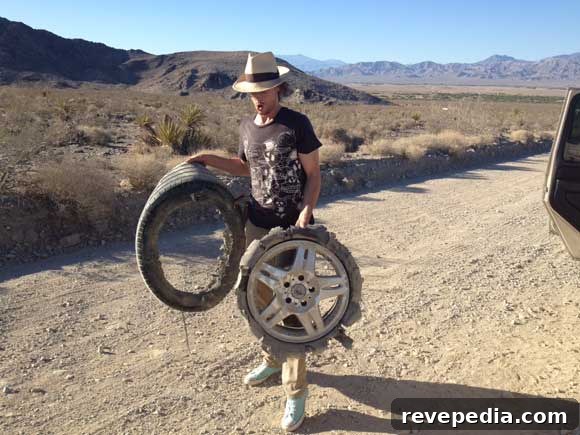
Save the damaged tire and rim if possible — you may be able to repair the rim or have the tire patched depending on the damage. Store the flat in the same spot where your spare was to avoid losing any components.
Go to a Garage
Don’t delay getting professional service. If you used a compact spare, replace it with a full-size tire as soon as possible. Even with a full-size spare, have a technician inspect the rim and tire to ensure everything is safe for continued driving.
Changing a flat is straightforward with the right tools and a calm, methodical approach. Regularly checking your spare’s condition and familiarizing yourself with your vehicle’s jack and lug wrench will make the process faster and safer when you need it.