Summer brings different challenges for lawn care than spring, so it’s important to adapt your maintenance routine. Experts from Husqvarna recommend several practical steps to keep your lawn healthy, equipment running smoothly, and your chores safer and more efficient during peak heat.
1. Read the owner’s manual
Every mower model has its own maintenance schedule and safety instructions. Review the owner’s manual for your machine and follow the recommended tasks throughout the season to ensure reliable performance and long service life.
2. Tune up regularly
Some homeowners are comfortable performing routine tune-ups themselves, while others prefer to take machines to an authorized dealer. If you choose the DIY route, follow all safety instructions in the manual, use manufacturer-recommended parts and oil, and inspect filters and spark plugs. Sharpen the blade at the start of the season and again mid- to late-summer for best cutting performance.
3. Use and store fuel properly
Store only enough gasoline to last about 30 days, and keep it in an airtight, approved container. Use 89-octane fuel with no more than 10% ethanol (E10); fuels with higher ethanol content can harm small engines and reduce reliability.
4. Choose the right mower for your yard
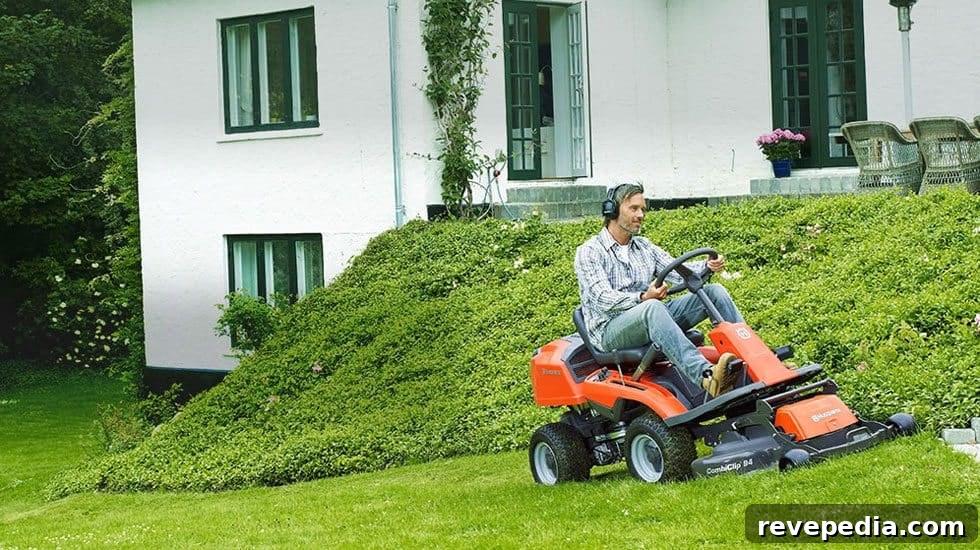
Modern mower technology makes it easier to manage difficult terrain and larger yards. All-wheel-drive (AWD) residential mowers are becoming more popular for their traction and control. For example, certain AWD models feature powerful engines, heavy-duty steel decks, ergonomic controls, and options for mulching or bagging. Selecting a mower with features suited to your yard will make summer maintenance faster and less strenuous.
5. Follow the one-third rule
Never remove more than one-third of the grass blade in a single mowing. Cutting too short stresses the grass, weakens the root system, and can increase weed pressure. Maintaining the correct mowing height promotes a healthy, drought-tolerant lawn.
6. Water deeply but infrequently
High temperatures put stress on grass and its roots. Aim to provide 1 to 1.5 inches of water per week, delivered in one or two deep watering sessions rather than frequent shallow sprays. If you rely on sprinklers, schedule watering for early morning to reduce evaporation and lower disease risk.
7. Prioritize safety
Safety around lawn equipment is essential. Never give children rides on riding mowers or let them play on or around equipment, even when it’s not running. Manufacturers generally recommend operators be at least 16 years old to use riding mowers. Always monitor speed, exercise caution when backing up, and look in all directions before moving. For walk-behind mowers, push the mower away from your body, avoid mowing wet grass, and do not mow after dark.
8. Use built-in safety and convenience features
Many modern mowers include automatic safety features that stop the engine or cutting deck if the operator leaves the seat or shifts into reverse. New operator interfaces, such as keyless ignition and illuminated status icons, make starting and monitoring the machine easier and safer. These features can indicate parking brake status, battery condition, headlights, and reverse operation modes for added convenience and peace of mind.
Adapting maintenance routines for summer heat helps your lawn stay green and your equipment remain dependable. Regular checks, proper fuel handling, correct mowing practices, and attention to safety will make seasonal chores quicker, more effective, and safer for the whole household.