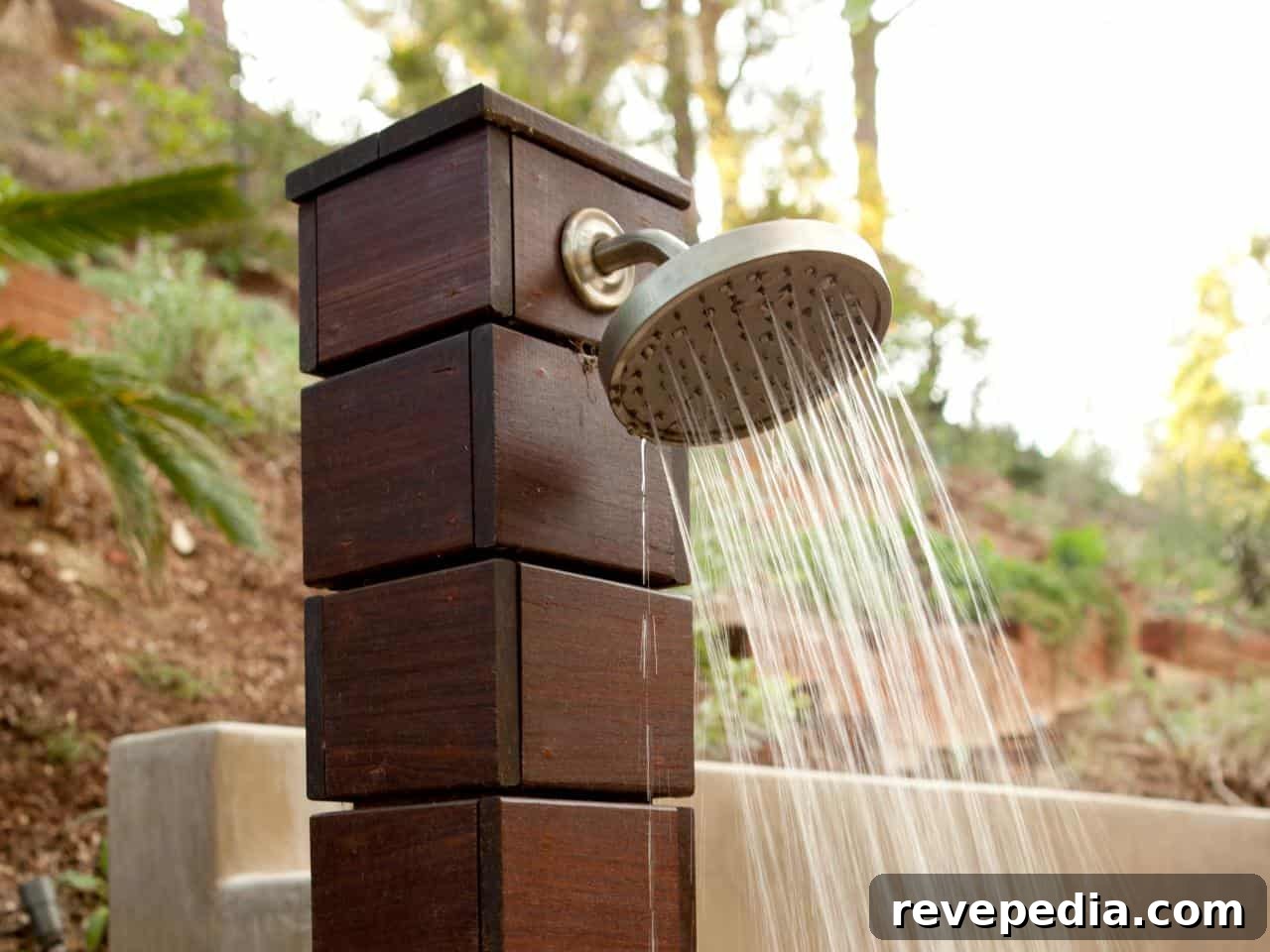
Building an outdoor shower is simpler than many people expect. Whether you want a convenient rinse station for after gardening or pool use, or a refreshing way to cool off on hot days, an outdoor shower can be both practical and stylish. With a few planning decisions and basic materials, you can create a functional shower that enhances your yard without major construction.
Start by deciding what type of outdoor shower best suits your needs: a simple wall-mounted showerhead for quick rinses, or a fully enclosed stall for privacy. The wall-mounted option is the easiest to install and can be dressed up with decorative stone, tiles, or a small privacy screen to give the space character without taking up much room.
Below is a straightforward guide covering the essential steps and considerations for installing an outdoor shower.
Step 1: Choose Location and Install Plumbing
Decide on the shower’s size and its exact location—commonly on the rear or side of the house where plumbing access is easier. Mark the area on the exterior wall using a measuring tape, pencil, and level. You may need to remove siding or shingles to expose the wall studs and plumbing cavity; a circular saw or reciprocating saw is typically used for this task. At this point, hiring a licensed plumber is wise to run hot and cold water lines to the shower location, ensure proper pressure, and install necessary shutoff valves and backflow prevention.
Mount the shower valve and showerhead per the plumber’s guidance. This basic installation can be perfectly functional on its own. Many homeowners also consider installing a shower filter to improve water quality by reducing chlorine and other impurities, which can make outdoor rinses more pleasant.
Step 2: Create Privacy Screens or Enclosure
If you want privacy, build a screen or full enclosure around the shower. Options range from simple bamboo roll-out screens supported by a timber frame to a full cedar or composite enclosure with a locking door. Materials and design will depend on budget, desired longevity, and your carpentry skills. Be sure to allow for ventilation and drainage; slatted designs or gaps near the bottom help air circulate while shedding water.
Step 3: Prepare a Stable Base
A solid, slip-resistant base will keep the shower functional and comfortable. One common approach is to pour a concrete pad. Mark the pad perimeter with stakes and excavate to about 8 inches deep. Build 1×4 wooden forms to hold the wet concrete. Add a 4-inch layer of compacted gravel for drainage and stability, then pour premixed concrete and screed it to a smooth finish with a slight slope away from the house for drainage. Allow the concrete to cure fully before use.
Alternatives to concrete include pressure-treated wood decking with proper spacing for drainage, pre-cast concrete pavers on compacted gravel, or a pea-gravel bed contained by edging. Choose the base material that aligns with your aesthetic preference and maintenance tolerance.
Step 4: Final Touches and Use
Finish the space with practical and comfortable details: a towel rod or hook, a small bench or shelf for toiletries, and non-slip flooring or mats. Consider adding a drain or directing runoff to a permeable area to prevent puddling. For added enjoyment, set up a weatherproof speaker or an outdoor music station, and ensure a clear walkway between the shower and your home so you don’t track dirt inside.
With thoughtful placement, reliable plumbing, and a durable base, an outdoor shower can become a convenient and attractive feature of your yard. Whether you opt for a minimal open-air rinse or a fully private cedar enclosure, the project can be adapted to fit your space, budget, and style.