We follow several DIY bloggers who are at various stages of basement renovations. Whether your lower level needs a light update or a full finish, applying some DIY effort to your basement can significantly improve your home’s usable square footage.
Basements have traditionally had a reputation for being dark, damp, and uninviting. That perception is changing, however—daylight basements and walk-out designs bring natural light below grade, and well-planned lighting can make a basement feel much brighter and more welcoming than its raw dimensions suggest.
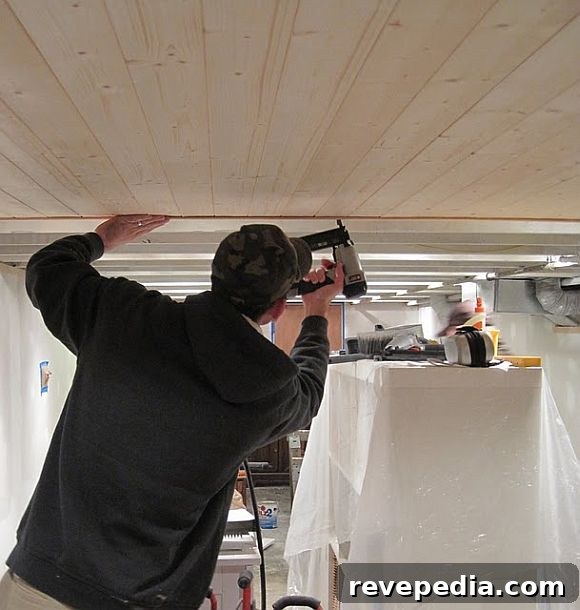
One common decision during a basement remodel is what to do with the ceiling. Many basements leave the ceiling open for an industrial, loft-like aesthetic, which can be striking if that’s the look you want. If you prefer a cleaner, more finished appearance, adding a secondary ceiling is a great option. For an attractive, approachable solution, the team at The Stucco Bungalow shared a successful DIY approach.
On their blog, “Handy Husband” documented a DIY installation of a pine plank ceiling. Pine planks are an excellent choice for several reasons:
- Pine is naturally light in color, which brightens the room and creates an airy atmosphere—especially useful in basements that often have lower ceiling heights.
- It introduces a warm, unexpected design element. Because pine is light-toned, it pairs easily with many color schemes and decor styles, from rustic to contemporary.
- Pine is versatile in finish: you can leave the planks unfinished for a natural look, stain them to enhance the grain, or paint them to match your palette. Smooth, sanded pine surfaces can be left exposed if you prefer their natural character.
Installing a pine plank ceiling can transform a basement from a utilitarian space into a comfortable, character-filled room. The wood adds texture and warmth that suspended ceilings or exposed joists often lack, and it can be installed over existing framing or a new, simple grid depending on your project’s needs.
When planning a pine plank ceiling, consider a few practical points: ensure proper moisture control and ventilation in the basement before installing wood; choose kiln-dried or properly acclimated boards to minimize later movement; and plan for lighting and access to utilities so fixtures and service panels can be integrated cleanly.
Overall, a pine plank ceiling is a relatively straightforward, high-impact upgrade for a basement remodel. It creates a finished, inviting look while offering flexibility in finish and style—making it a smart DIY option for homeowners who want to add warmth and visual interest below grade.
What do you think of the pine plank ceiling? Photo courtesy of The Stucco Bungalow