
The four most effective ways to double your usable garage space are: sort items by how often you use them, install heavy-duty wall systems, add sturdy ceiling racks, and convert attic space using a motorized platform.
Applying these strategies moves seasonal and infrequently used gear off the floor, instantly freeing space for vehicles and daily movement.
Nearly eight in 10 newer homes include garages, but many of us still wrestle with the familiar clutter. Storage bins encroach on parking spots, bikes tangle with sports equipment, and holiday decorations overrun the workbench.
The problem is rarely a true lack of square footage. Most garages treat the concrete floor as primary storage, which guarantees congestion and blocks access.
Reclaiming that floor space doesn’t require demolition or permits. A few focused weekend projects and purpose-built storage solutions can clear the floor completely.
For example, moving heavy seasonal totes into the rafters with a reliable steel lift frees large amounts of floor space while keeping items accessible when needed.
1. Sort by Frequency of Use
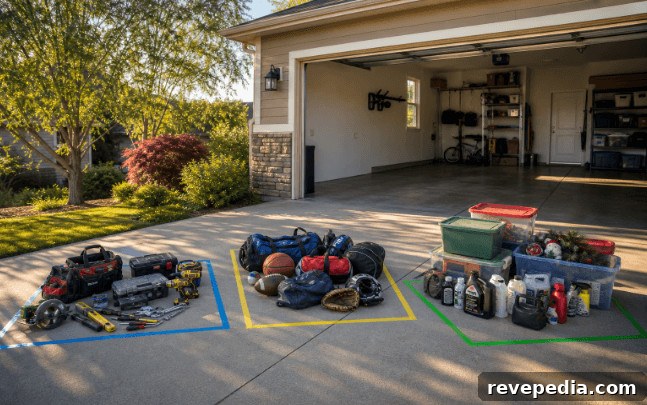
The core issue is that everything gets piled together because sorting felt like extra work at the time.
When planning garage organization, the instinct is often to buy racks and start mounting things. Installing storage before you sort guarantees you’ll be rearranging the same clutter months later.
Before you pick up a drill, establish a frequency-of-use system. This step is essential: it turns random accumulation into a functional layout. Divide your inventory into three tiers so the most-used items stay within easy reach.
This simple framework determines what hardware and layout you actually need.
- Daily access tier: Items you grab without thinking—keys, dog leashes, everyday hand tools, and charging cables—should be at eye level on hooks or in small labeled bins near the entry.
- Weekly use tier: Bikes, sports bags, brooms, and car cleaning supplies need to be off the floor but reachable without moving other items. Wall-mounted racks and dedicated stands are ideal here.
- Seasonal and annual tier: Holiday decorations, camping gear, spare tires, and heavy suitcases belong out of the way in overhead storage or the attic. They should never occupy floor or eye-level space.
Be ruthless when you sort: empty the garage, line items out in the driveway, and assign each item a frequency. Donate or dispose of anything untouched in two years. Sorting alone often frees a large portion of the floor before you spend a dollar or drill a hole.
| Key Insight: Don’t buy storage first. Sort by frequency: daily items at eye level, weekly gear on the walls, and seasonal items overhead. This keeps the floor clear, not just reorganized. |
2. Put Your Walls to Work for Tools
Homeowners often treat garage walls like decorative surfaces instead of functional storage. That vertical real estate can be turned into a powerful organizational asset.
Think of your walls as a vertical truck bed with solid mounting points designed to bear weight. Activate them with systems that match the items you need to store.
Here are three effective wall-storage approaches, each suited to different needs from the weekly use tier.
- Slatwall panels: Quality slatwall systems use horizontal grooves that accept interchangeable hooks, shelves, and bins. They’re flexible for oddly shaped items and reconfigure easily by season. Panels must be attached to studs at regular intervals for strength.
- Track and rail systems: Heavy-duty steel tracks with adjustable arms are excellent for bikes and larger tools. They offer higher load capacity per mounting point and are suited for heavier individual items.
- Lockable steel wall cabinets: Mounted above a workbench, these protect power tools and supplies from dust and keep dangerous items out of reach of children.
Always check professional load ratings when planning your layout. The mounting rules are consistent: locate studs before drilling, use lag screws into framing, and avoid relying on drywall anchors for heavy, live loads. Use a level so installations are straight—tilted panels or racks become a persistent annoyance.
Once the walls carry the weekly items, the floor opens up enough to park comfortably. Then look up to the ceiling for even more space.
3. Hoist Bulky Seasonal Items onto Racks
The ceiling is the most overlooked storage area in most garages. It’s a large, flat surface with structural framing nearby—perfect for storing seasonal tubs and bulky items out of the traffic pattern.
Proper overhead storage requires careful planning and strong hardware so the system handles weight safely and without sagging.
Keep these critical considerations in mind when selecting and installing ceiling racks.
- Choose the right platform: Use all-steel racks with a powder-coated finish to resist corrosion. Pick platforms rated for heavy loads and look for adjustable hanging rods to fit different ceiling heights.
- Check joist spacing: Ceiling joists often run perpendicular to the garage door. Confirm locations with a stud finder and verify by probing with a small nail at the joist edge before drilling.
- Fasten with appropriate hardware: Drive lag bolts into the center of joists for maximum hold. Never attach to drywall, thin strapping, or insulation alone. Distribute load across at least four joists for heavily loaded platforms.
- Confirm clearance: Allow at least 12 inches of drop from the ceiling surface to clear garage door opener rails and trolleys. Measure the opener height first to determine the proper platform drop.
Understanding these points helps you choose a safe, durable solution before purchasing. For moderate loads, spans between supports are typically limited—plan accordingly. A careful afternoon of measuring and mounting delivers immediate floor relief.

4. Turn the Attic into a Safe Storage Bay
Ceiling racks are ideal for medium-frequency seasonal items. For heavy, rarely used gear, the attic above the garage is the best place—but many homeowners avoid it because access is risky.
Carrying heavy bins up a ladder is a common cause of injuries. A safer, far more convenient option is a motorized attic lift that brings the platform down to a comfortable loading height and raises it into the rafters.
A properly rated steel lift handles large weights and includes self-locking safety mechanisms that prevent unintended movement. When planning an attic lift, prioritize safety and structural integrity:
- Measure joist dimensions and spacing before ordering equipment.
- Check whether the garage door opener rail interferes with the intended hatch opening.
- Plan for a dedicated electrical circuit to power the motor safely, and hire a licensed electrician for wiring.
Because a loaded platform places forces on the ceiling structure while moving, consulting a structural contractor may be prudent. An attic lift, combined with overhead racks and wall systems, completes a tiered storage ecosystem: daily items on the floor in bins, weekly items on walls, seasonal gear on ceiling racks, and deep-storage items up in the attic.
| Warning/Important: Never carry heavy totes up a ladder. A motorized attic lift with self-locking safety mechanisms and a proper electrical circuit eliminates fall risk and can safely handle large loads when installed correctly. |
Making It Happen
Turning a cluttered garage into a functional space requires a realistic, sequenced plan rather than bursts of motivation. Treat it as a weekend project and follow a clear timeline:
- Saturday morning: Empty the garage, sort items into frequency piles, and remove anything that fails the two-year rule. This purge makes everything else faster.
- Saturday afternoon: Install wall systems—locate studs, mount slatwall or rails, and move weekly-use items into place.
- Sunday morning: Bolt ceiling racks into joists and hoist seasonal items overhead, verifying all hardware against load ratings.
- Sunday afternoon: Measure attic joists and hatch dimensions. If an attic lift and electrician are scheduled, prepare for lift installation.
For long-term maintenance, adopt one strict rule: every new item brought into the garage gets an assigned home immediately. If it doesn’t fit the system, something old must go. Enforcing that boundary keeps your cleared space functional for years.
| Author Profile: Inventive Garage is a retailer specializing in garage and workshop storage systems and space-optimization products designed to help homeowners organize and reclaim usable square footage. |