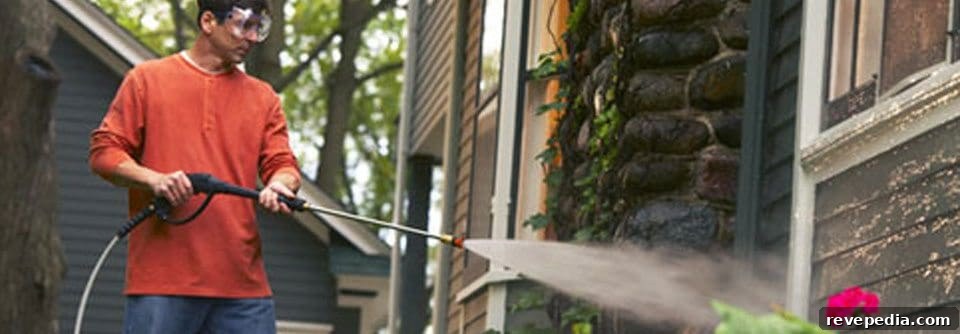
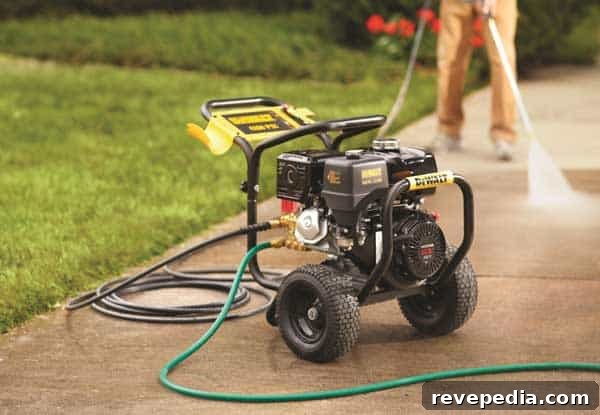
Living in Southern California is wonderful—no snow to shovel and little rain to worry about—but that also means our backyard gets dusty and dirty quickly, and the cool side of the house has developed a moss problem.
We sweep regularly and can keep things tidy for the most part, but we’ve been wanting a true deep clean. A pressure washer is ideal for that. I used to think pressure washers wasted water, since I often saw them used on commercial sidewalks and common areas, but after researching I learned they actually use less water than a garden hose with a spray nozzle.
Pressure washers clean more efficiently by concentrating water and force where it’s needed, often using less water overall than a hose. With a pressure washer we can deep-clean our entire backyard—paving, walls, and outdoor furniture—in under an hour.
The big question was whether to buy one. Cheap pressure washers often underperform and don’t last, while quality models are expensive. Since this is a tool we’d use only occasionally, renting seemed the best option.
I’d previously rented a tiller when re-sodding the lawn, which worked well and reminded me that many tools are best rented for occasional tasks. Finding a rental location for a pressure washer took a bit more searching, but RentalHQ listed several nearby shops and provided useful guidance on how to use a pressure washer.
Below are practical pressure-washing tips drawn from RentalHQ’s recommendations.
- Versatile cleaning. A rented pressure washer can clean many exterior surfaces: sidewalks, patios, steps, parking areas, siding, and masonry. It can refresh wooden decks and fences, strip paint, and remove graffiti. At lower pressures, you can safely wash windows, gutters, boats, campers, trailers, vehicles, and outdoor equipment.
- Saves time. Pressure washers let you accomplish the same cleaning tasks much faster than a hose and scrub brush, reducing the time you spend on chores.
- Water-efficient. A pressure washer typically uses between 2 and 5 gallons per minute (gpm), while a garden hose can use up to 10 gpm—meaning a pressure washer can use significantly less water for the same job.
- Environmentally friendlier options. Many cleaning jobs can be handled with just water, avoiding solvents. When a mild cleaning agent is needed, many pressure washers can work with eco-friendly detergents.
- Protects surfaces and equipment. Regular pressure washing removes damaging dirt, salt, grease, oils, and sediment, helping extend the life of decks, siding, walkways, and outdoor equipment.
- Less physical effort. Pressure washers do much of the work for you, so cleaning tasks require less manual scrubbing and leave you less fatigued.
- Cost-effective for occasional use. Renting a quality pressure washer is usually cheaper than buying one you’ll rarely use. For most homeowners who need the tool only a few times a year, renting provides better value.
Beyond general outdoor cleaning, a pressure washer is handy for washing garbage cans, cleaning under eaves, and rinsing a car—tasks that benefit from concentrated water pressure.
Ultimately, renting makes sense for most homeowners: it’s convenient, affordable, and frees up garage space that would otherwise be taken by an infrequently used machine. Renting also gives you access to a professional-grade unit when you need it, without the long-term commitment of ownership.
If you’re planning a DIY project, an event, or need commercial equipment temporarily, search for local rental stores through RentalHQ to compare available machines and find advice on safe operation.
Disclosure: This article is sponsored by RentalHQ. RentalHQ did not dictate content or wording. Their policies align with standard disclosure and advertising ethics.