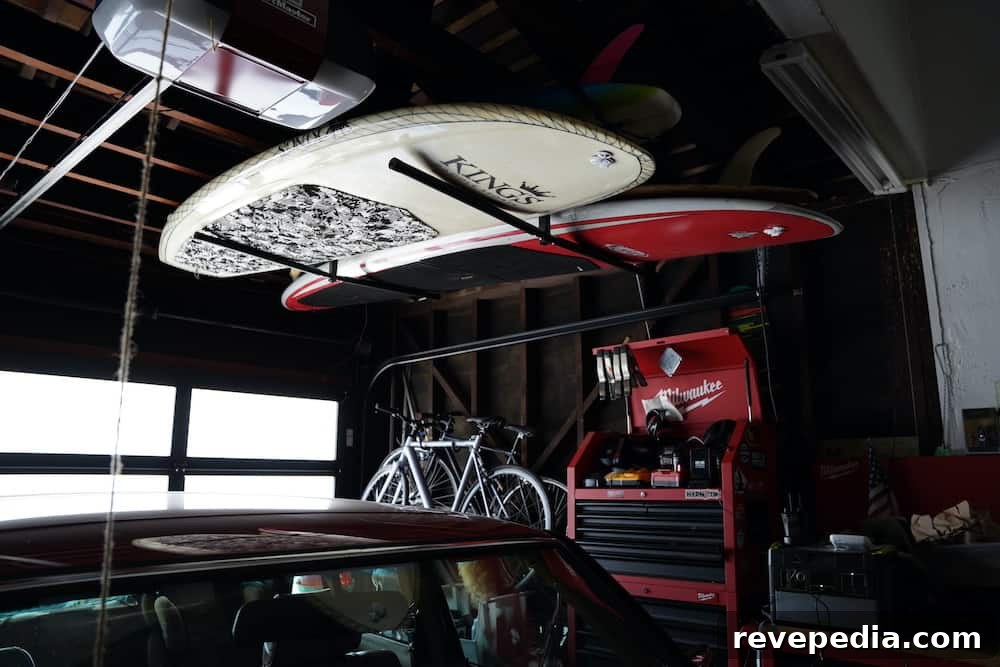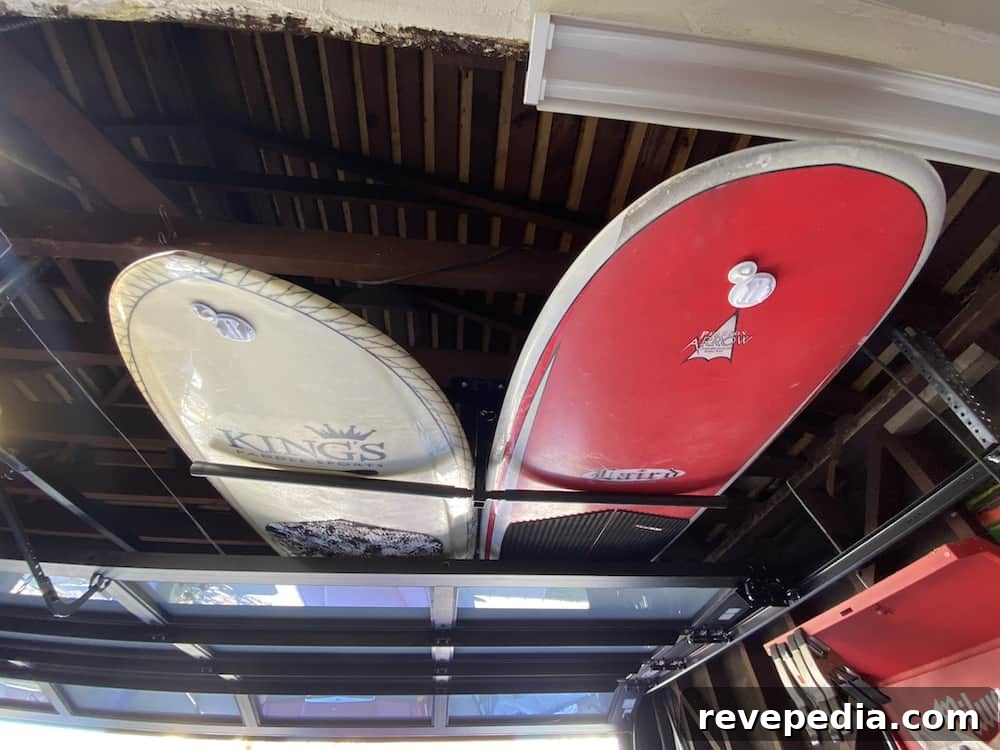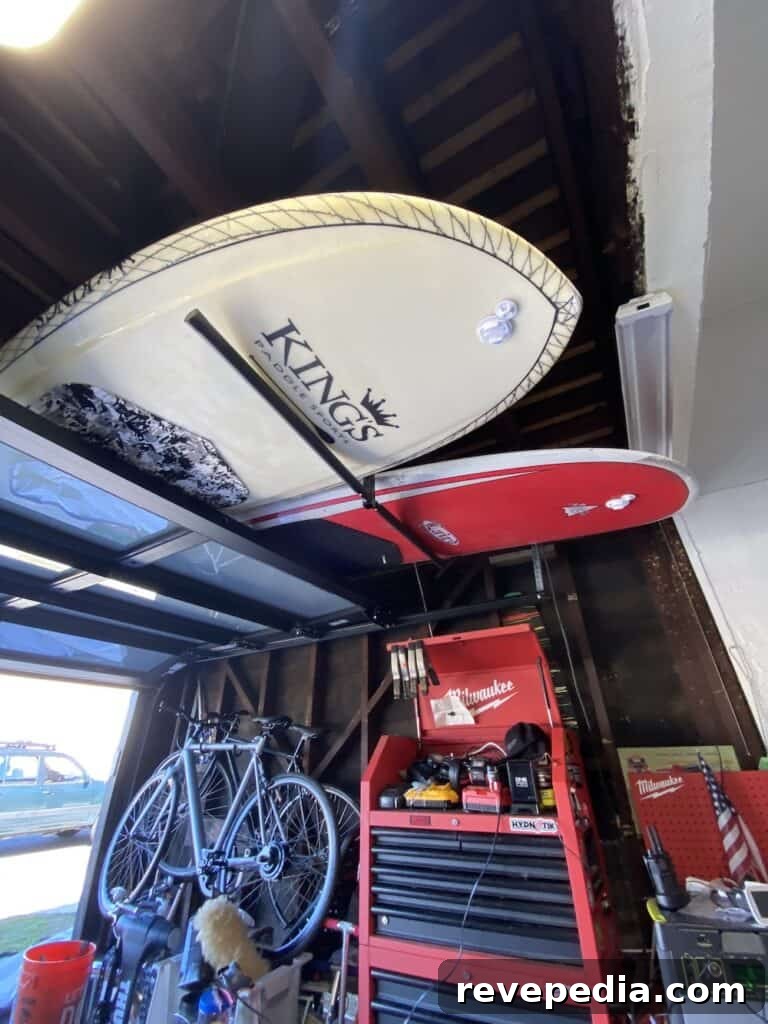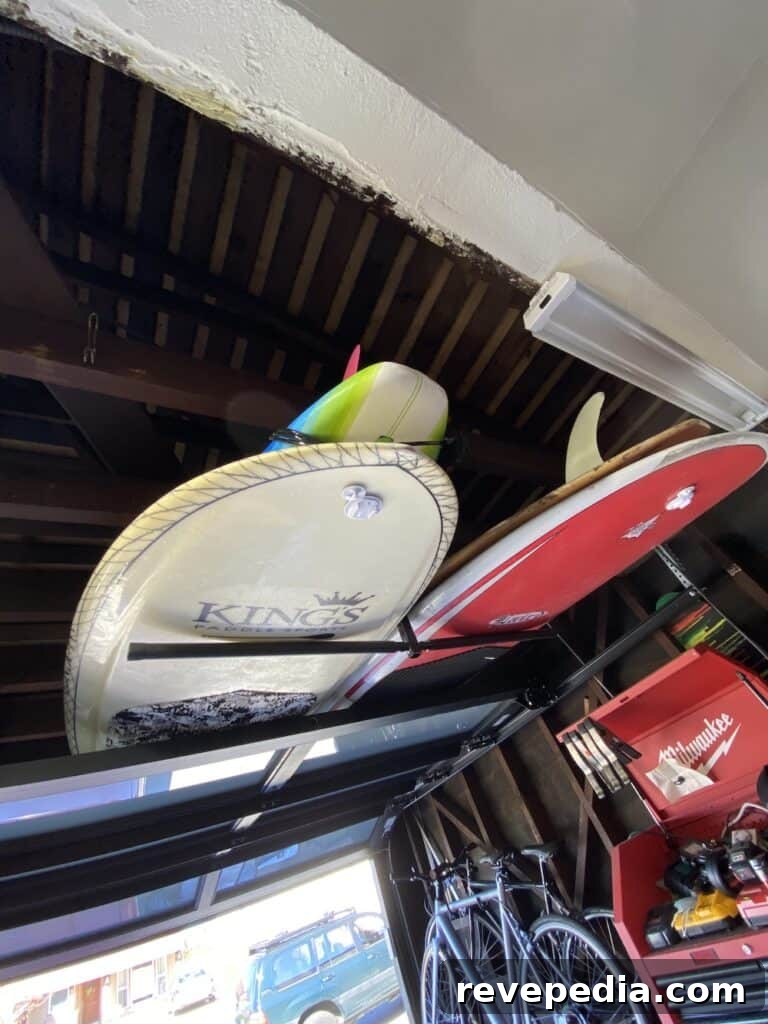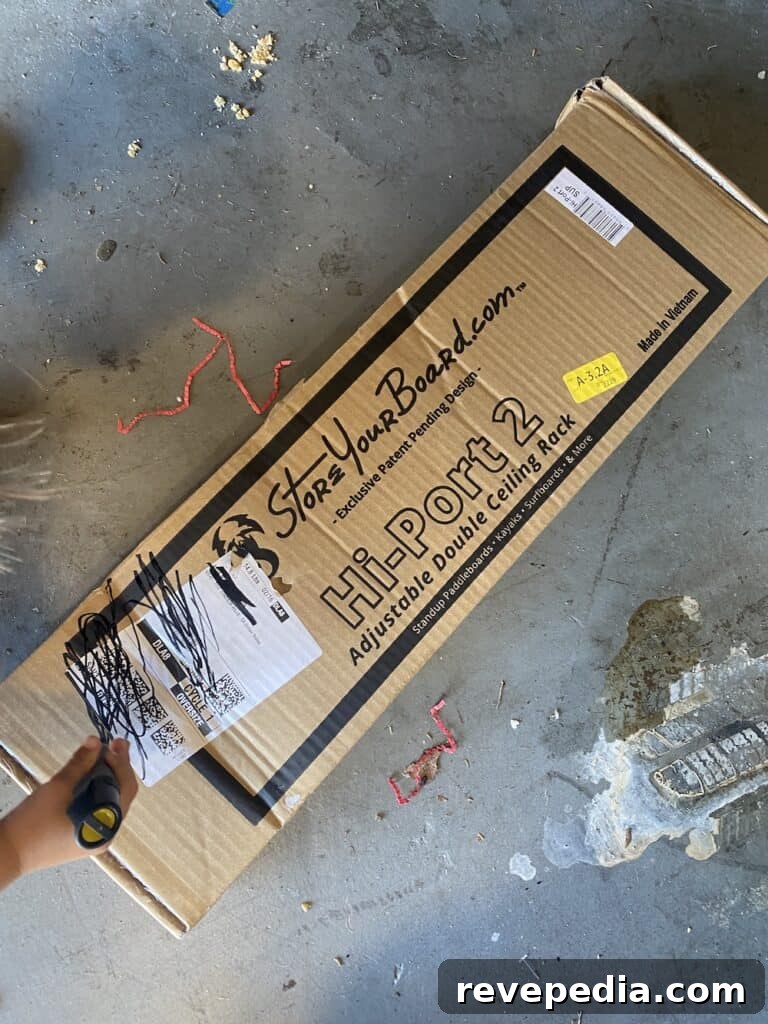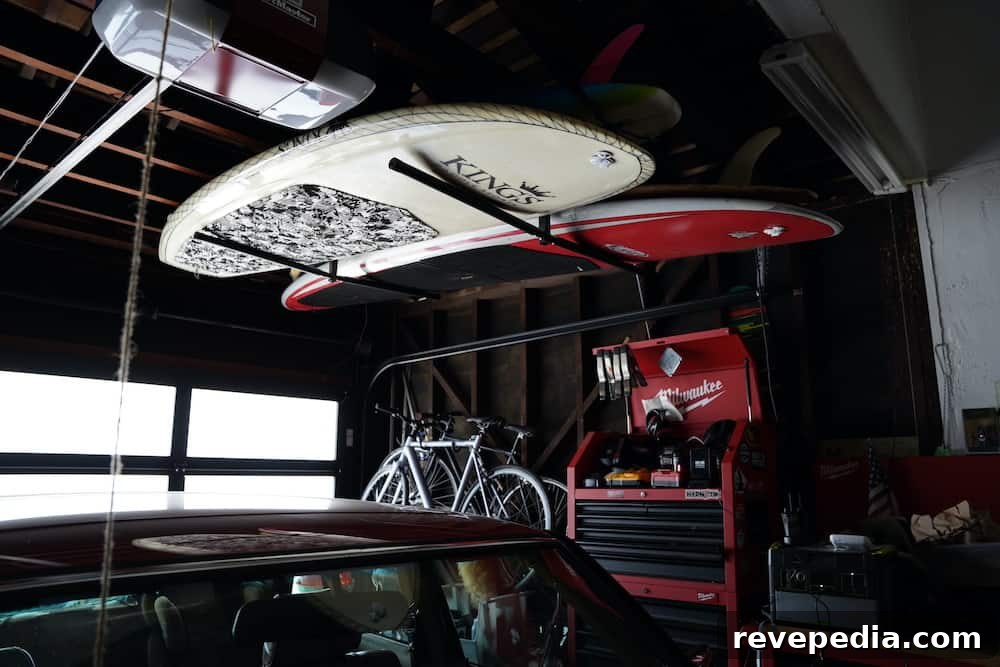
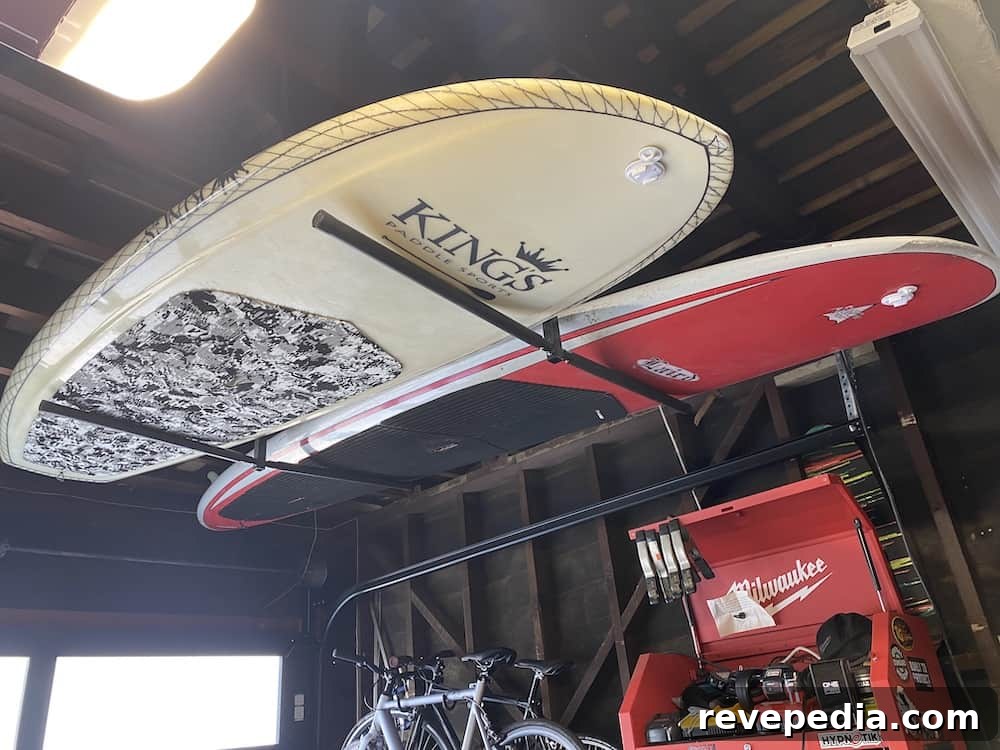
After years of leaving my surfboards outdoors, I finally decided to give them proper protection by installing a hanging garage surfboard rack.
My core quiver includes an 11-foot Surftech Laird standup paddleboard (SUP), an 8-foot Kings SUP, a 9-foot Becker longboard, and an 8-foot Wavestorm. I cycle other boards in and out over time, but those four are the ones I use most often.
Shortboards are simple to store because they’re small and light, but SUPs and longboards need more room. At my previous house I kept boards in board bags and leaned them against the garage exterior. That worked, but the bags degraded quickly in sun and heat.
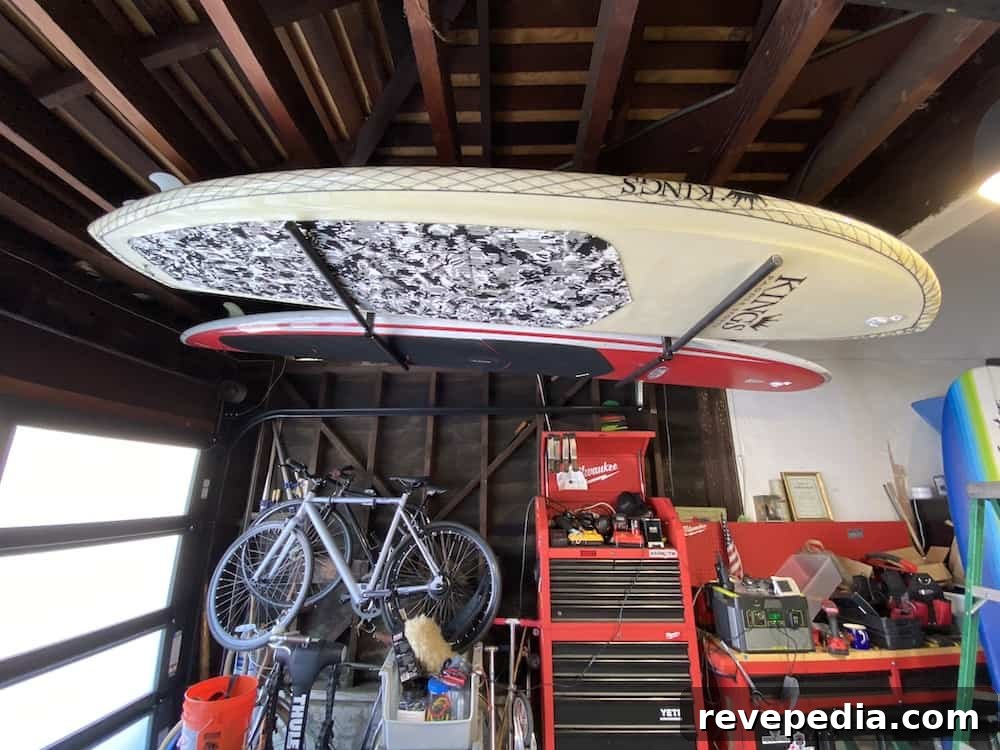
Outdoor Surfboard Storage
At our new house I could stand the boards vertically at the base of the stairs, but they still needed board bags and were exposed to weather. Over time I replaced several bags as they deteriorated in strong sun, but they did help protect the foam and fiberglass.
Surfboard Racks and Surf Sheds
I considered building a dedicated backyard rack or a surf shed, but those options didn’t fully solve the need to protect boards while freeing up yard space. A wall-mounted rack was another option, but my garage walls are taken up by shelving and tool storage.
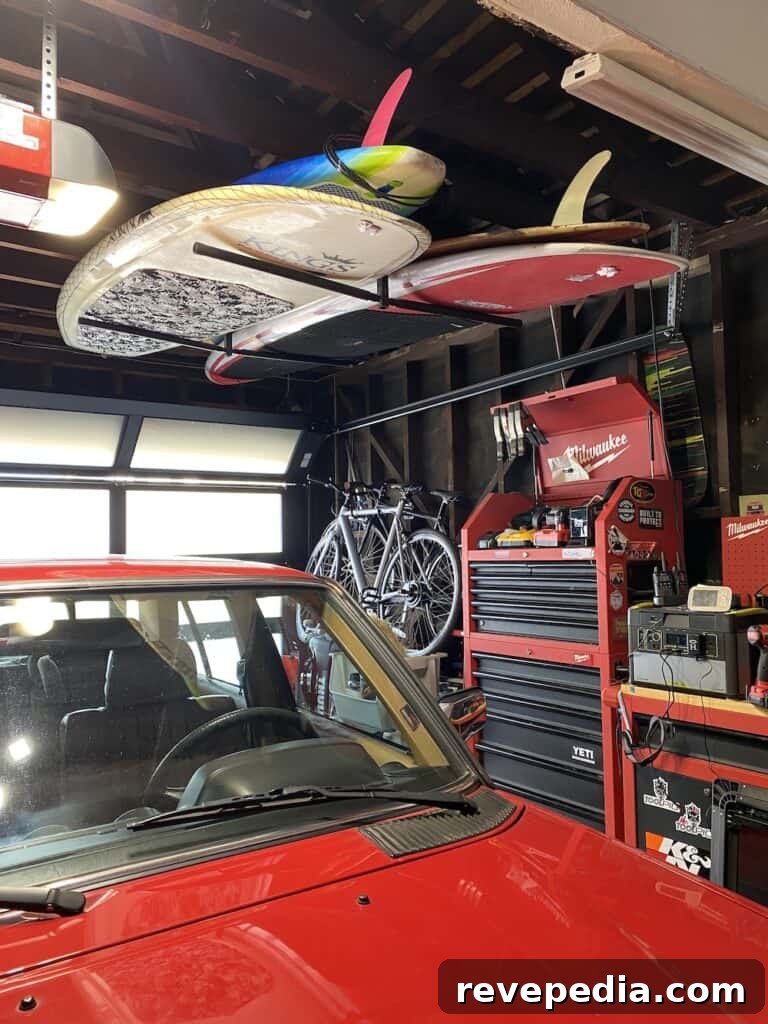
Hanging Garage Surfboard Rack
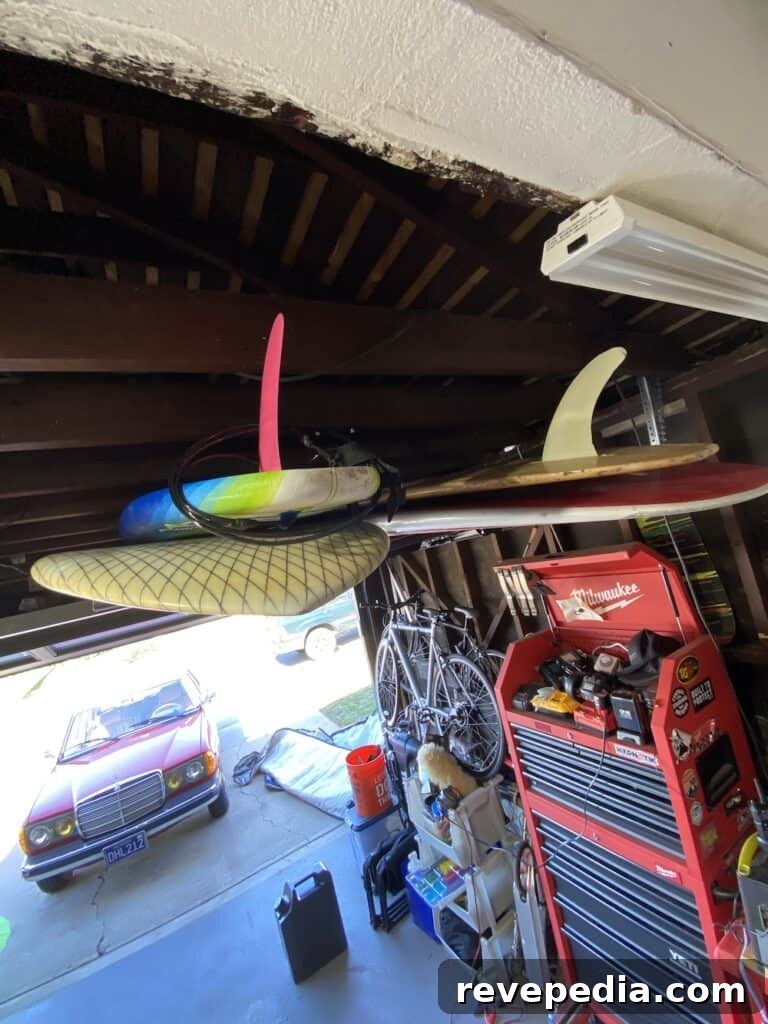
A hanging garage surfboard rack addresses many problems at once: it keeps boards off the ground, protects them from sun and weather, frees up space in the garage and yard, and keeps boards easy to access before heading out to surf.
I found affordable, easy-to-install hanging garage racks online. Because my garage has exposed ceiling beams, installation was straightforward and I felt confident the boards would be secure.
Below are the steps I followed to install the rack safely and get my boards off the floor.
- Spacing the rack arms
- Installing the lag bolts
- Attaching the support arms
- Adjusting the rack height
- Loading the surfboards
Spacing the Rack Arms
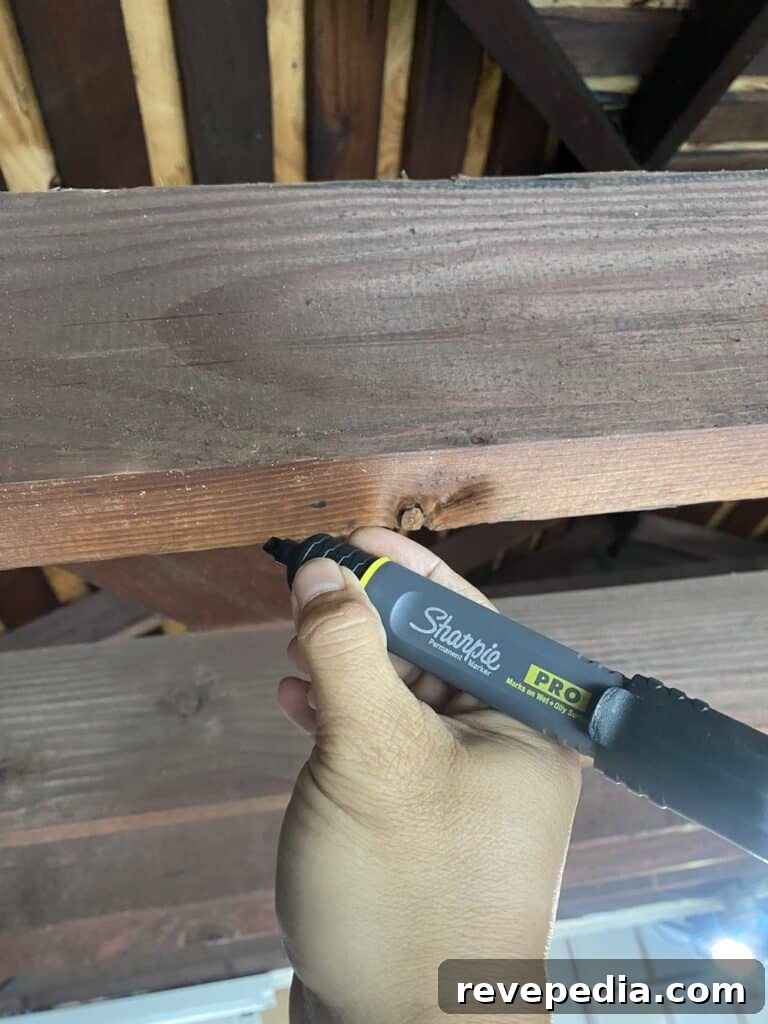
Start by measuring the length of your longest board and the available ceiling space. My 11-foot SUP is the largest and bulkiest, so if the rack can support that board, shorter boards will fit comfortably.
I positioned the support bar so the arms would sit 32 inches from the end of the 11-foot SUP. That spacing works well for long, wide boards like SUPs and longboards, though it’s much wider than what a shortboard requires.
Installing the Lag Bolts
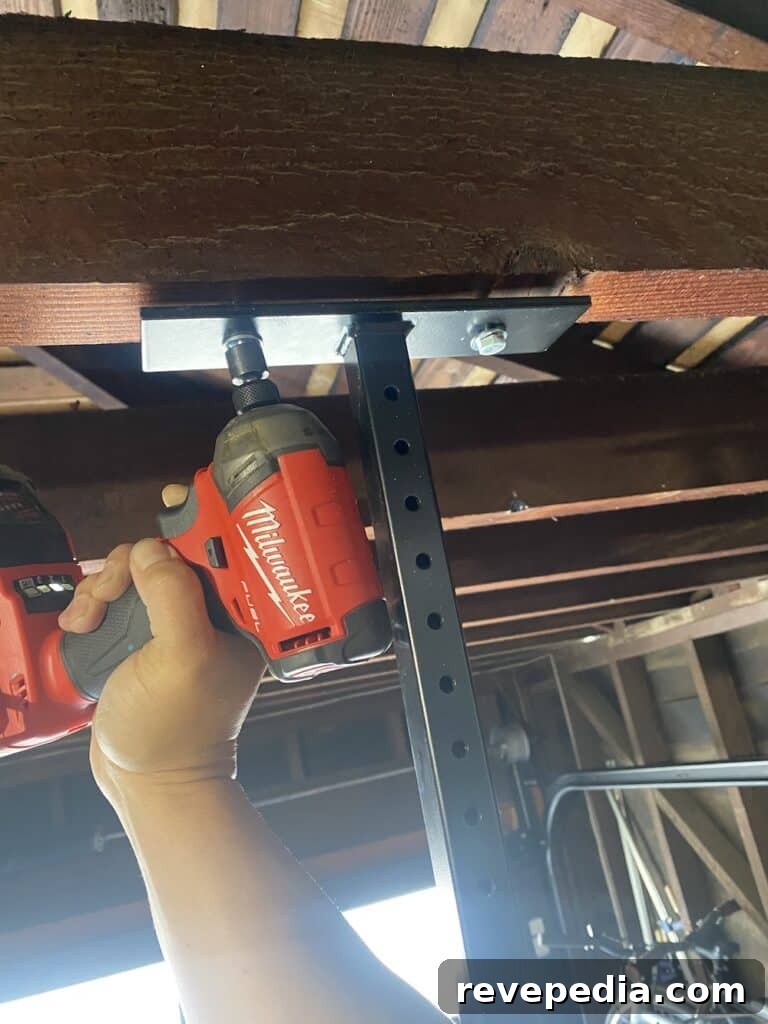
The rack kit included four lag bolts—two for each side. Some reviewers mentioned the hardware felt light-duty, but I found the bolts sturdy enough for my setup. They aren’t premium stainless steel, but they were solid when driven into the ceiling joists.
I used an impact driver to secure the bolts tightly and ensure the rack was firmly anchored to the beams.
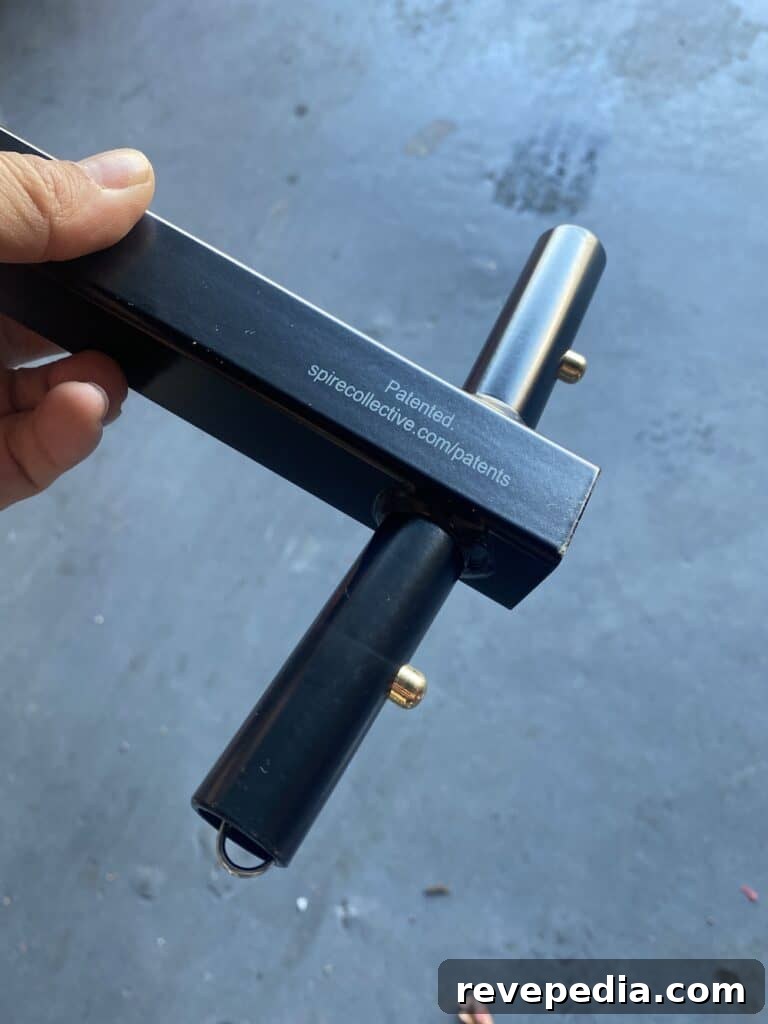
Attach the Support Arms
Support arms come in different lengths, commonly 25-inch and 30-inch options. Even with wide boards I chose the 25-inch arms because they make it easier to slide boards on and off the rack. The shorter arms still provide solid support for my SUPs and longboards.
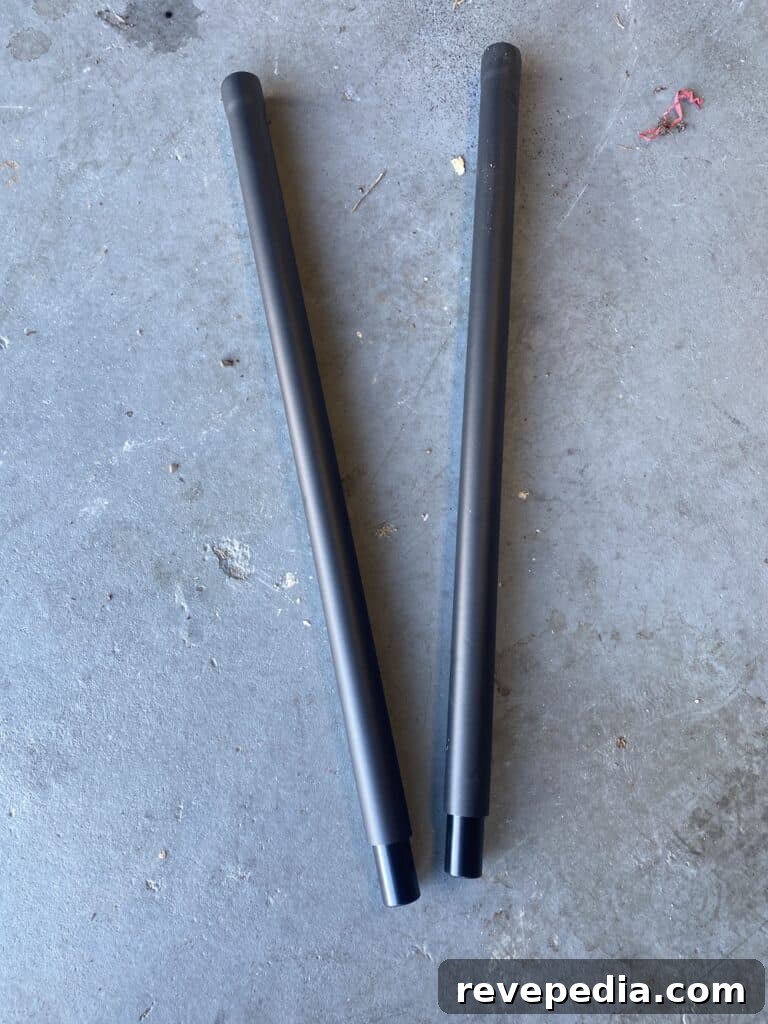
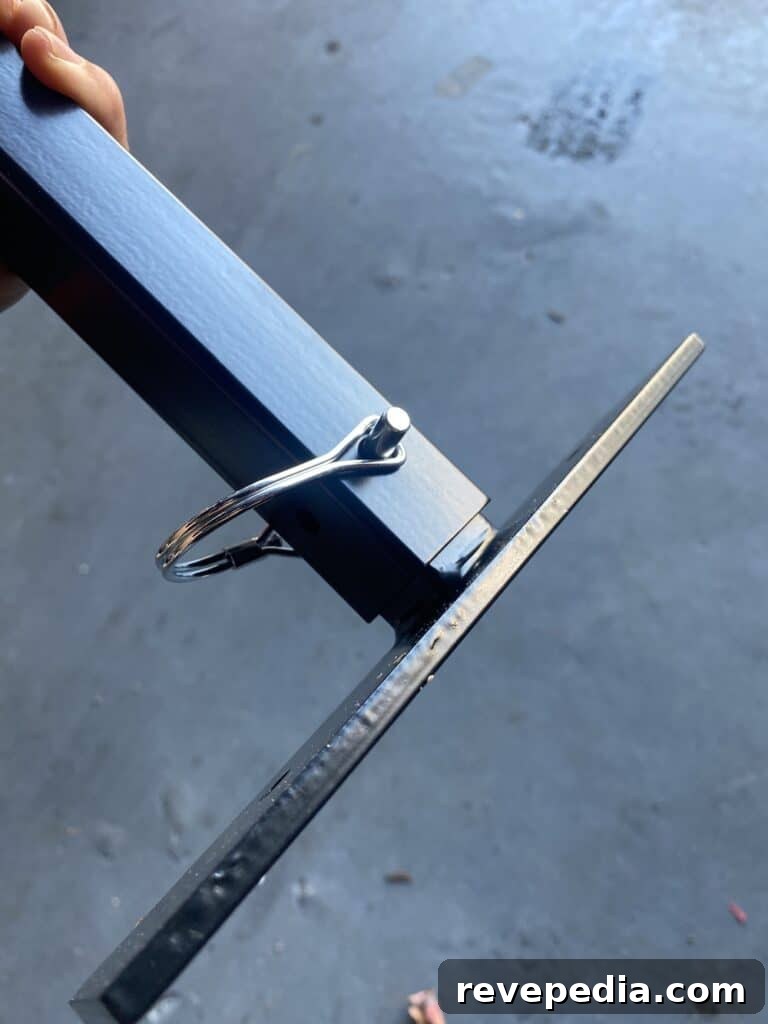
Attaching the arms is simple: slide each arm onto the support extension until the pop-up button clicks into place and locks it.
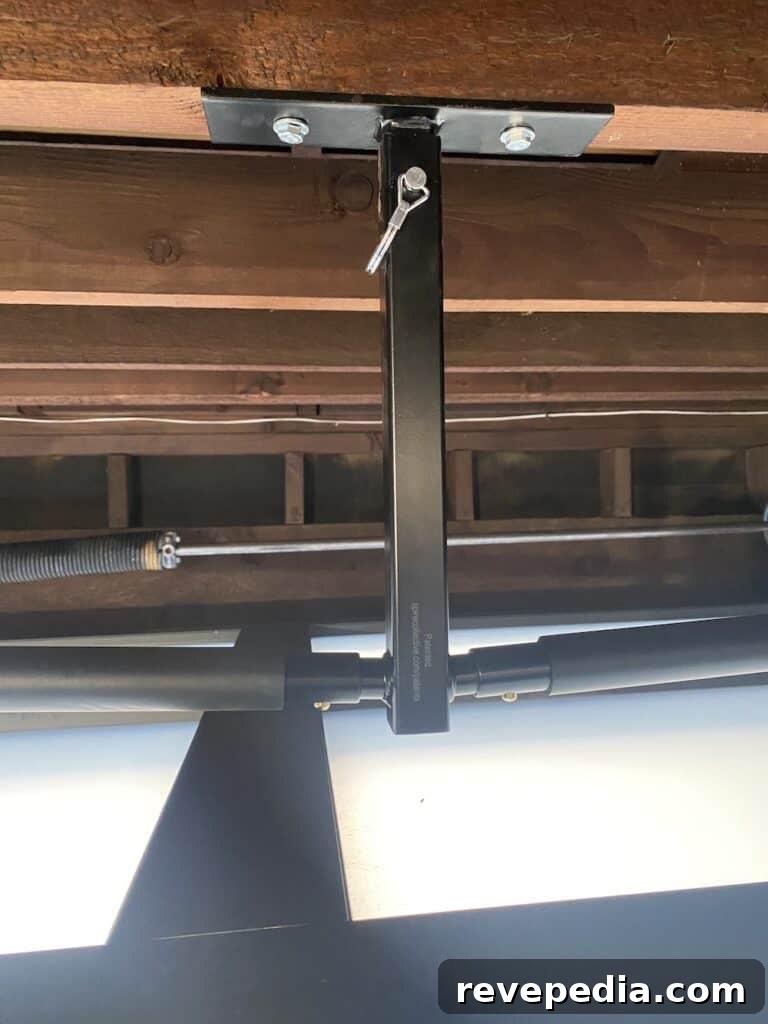
Adjust the Rack Height
Decide how low you want the rack to hang. Most racks allow adjustments; the minimum clearance I could set was 10 inches and the rack extends down to about 18 inches. Choose a height that clears any garage door or other obstacles when open.
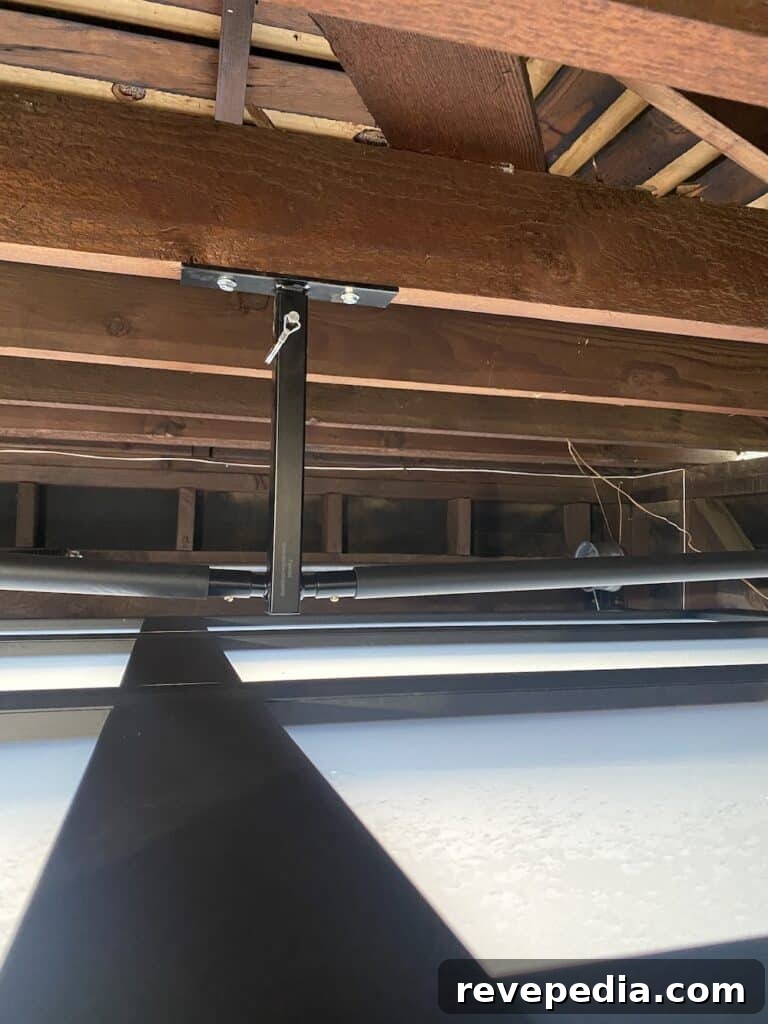
I set one side to about 11 inches to clear the garage door when it’s raised, and the other side to 14 inches so the rack slopes slightly downward. That mild angle helps when loading and unloading without risking the boards sliding off.
Load the Surfboards
With the rack secured and height adjusted, load your boards. The shorter 25-inch arms made handling easier for me, and lowering the front arm a couple of notches simplified sliding the boards into place.
I’m very happy with the rack’s build and performance. I wish I’d installed it sooner. I’m considering adding another hanging rack to store paddles, lumber, or other gear—each side supports up to 75 pounds, so they hold a surprising amount of weight and clear valuable floor space.