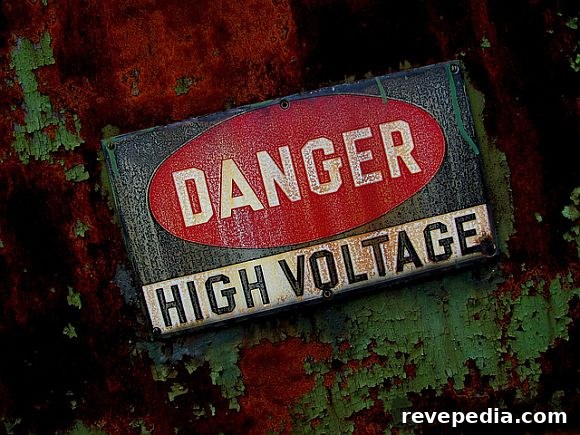
Working with electricity demands care and respect. Whenever possible, turn off the power at the breaker box before starting a project so you eliminate the risk of live current causing injury.
Two key properties describe electrical danger: voltage and amperage. Voltage, measured in volts, is the electrical potential that drives current through a circuit. Amperage, measured in amperes (amps), is the amount of current flowing through that circuit.
Which of the two is more dangerous?
A clear explanation comes from One Project Closer. The author, Fred, compares electricity to a river:
“If an electrical circuit is a river, voltage is the steepness of the river, while amperage is the amount of water that flows across a section of the river over time.”
The analogy isn’t perfect, but it helps illustrate the relationship. High voltage with low amperage resembles a narrow, powerful waterfall; low voltage with high amperage is like a broad, slowly moving river. Alone, each scenario might not cause severe harm. But combine high voltage and high amperage, and the result can be extremely dangerous.
Fred also reminds readers that Ohm’s law links voltage and current: the current that passes through the body is proportional to the voltage applied. Even small currents can be harmful—around 6 milliamps can cause severe pain, while currents near 100 milliamps can induce ventricular fibrillation, a life‑threatening heart rhythm disturbance.
In short, both voltage and amperage matter: voltage determines the potential to push current through the body, and amperage determines how much current actually flows. The most hazardous situations involve high values of both.
If you’re working on appliances, outlets, or wiring, use a voltmeter to verify the circuit is de-energized before you touch anything. A reliable meter helps confirm no residual voltage remains so you can proceed safely with repairs or installations.
Photo: Flickr.com/rhysasplundh