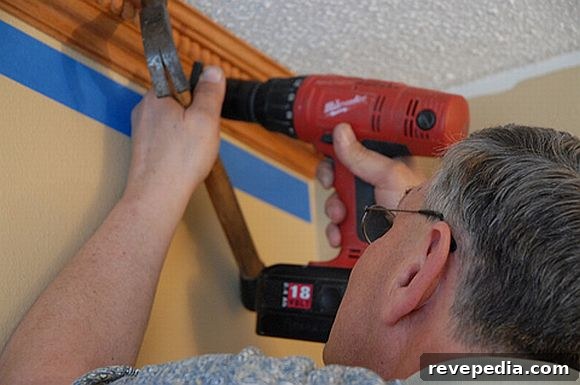
Watching home improvement and real estate shows with my boyfriend often sparks a debate: he finds it funny when people get excited about crown molding because, in his view as a woodworker and contractor, anyone can install it over a weekend and on a budget. After asking for his tips, I compiled his practical advice for adding crown molding to your home.
1. Plan and consult
Before buying materials, take accurate room measurements and visit a home center or local hardware store. Discuss your project with an experienced employee who can recommend the right profile, material, and quantity of molding. Bringing measurements helps them cut recommendations to size and suggest the right trim and fasteners.
2. Finish before installation
Whenever possible, stain or paint molding before installing it. Applying the finish and letting it dry overnight prevents hard-to-reach touch-ups later. If needed, apply a second coat after the initial drying to ensure even coverage and a durable finish.
3. Use the right tools and materials
Success depends on having proper tools and quality molding. Essential tools include a miter saw for accurate angle cuts and a coping saw for inside corners. A nail gun or finish nails and a hammer, a tape measure, caulk, wood filler, sandpaper, and a level are also important. Using high-quality molding stock reduces warping and makes fitting joints easier.
4. Choose a logical starting point
Start by installing the first piece of molding on the wall opposite the main entry door and nail it into studs. Leaving the first piece square on both ends and securing it firmly creates a reference that helps align the rest of the room. Pre-drilling nail holes in the molding prevents splitting, especially with hardwoods or narrow trim profiles.
5. Cope inside corners for a tight fit
Inside corners are best joined using coping rather than two mitered pieces. Cut along the profile of the molding with a coping saw to remove the back of one piece so it fits snugly over the face of the adjoining piece. Dry-fit the joint and make small adjustments with a file or sandpaper; many walls and corners are not perfectly plumb, so a bit of fitting is normal. Coping creates a cleaner, longer-lasting joint that handles settling and seasonal movement better than simple butt joints.
6. Miter exterior corners and handle long runs correctly
Exterior corners are typically handled with two miter cuts at complementary angles using a miter saw. For the final wall in a room, the last piece will usually need both ends coped or mitered to slip into place neatly. When joining boards in long runs, miter each board at 45 degrees and avoid butting two square ends together. This overlapping miter technique produces a continuous visual line and reduces gaps as wood expands or contracts. Once all pieces are nailed, fill nail holes and seams with wood filler or caulk, sand smooth, and touch up paint or stain for a professional finish.
Following these steps—planning, painting or staining beforehand, using proper tools, starting on a key wall, coping inside corners, and mitering exterior corners—will help you achieve professional-looking crown molding without hiring a pro. With patience and the right approach, a weekend of work can transform a room and add noticeable architectural detail.
Photo by https://www.flickr.com/photos/cedwardmoran/2365561832/