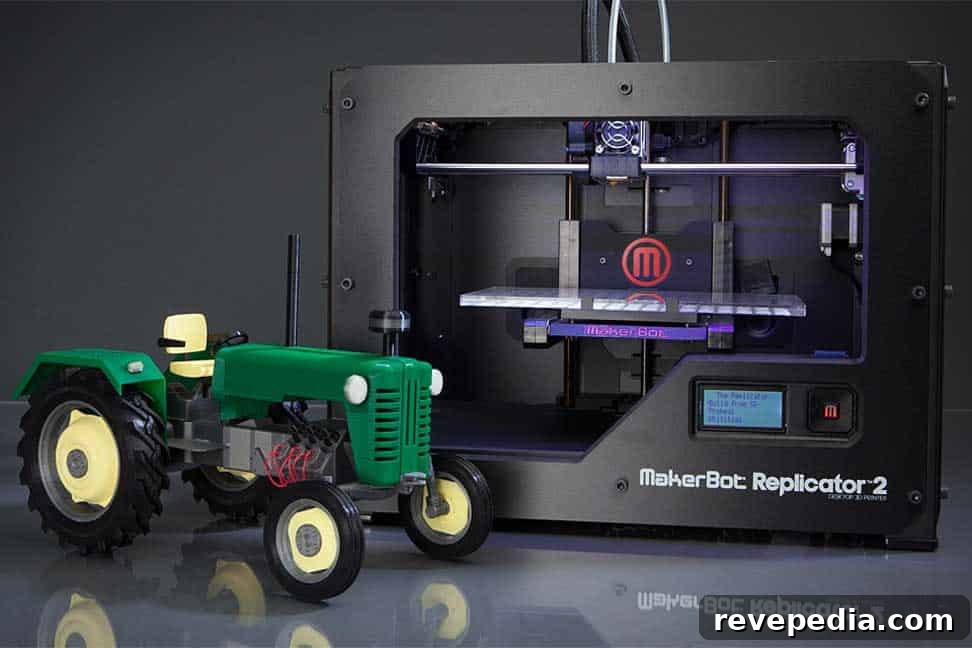
3D printing continues to advance rapidly, opening up new possibilities for makers, designers, and hobbyists. But what practical benefits can a 3D printer bring to your home or workshop?
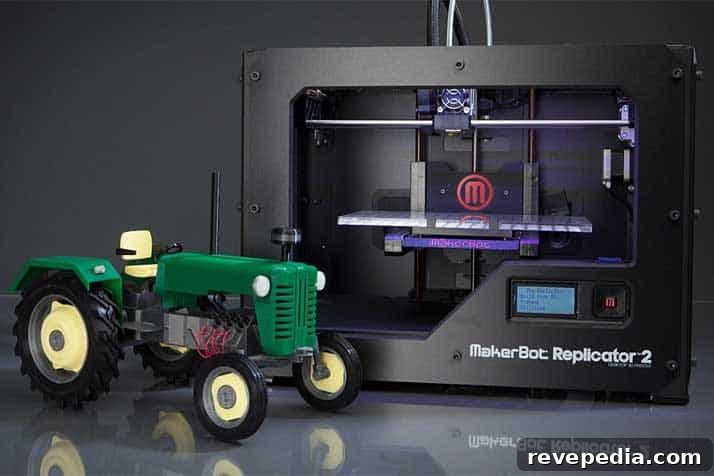
Many early adopters buy 3D printers to experiment with the latest technology and to bring their ideas to life. While prices have historically been high, they have been falling steadily, making desktop 3D printing increasingly accessible. One well-known consumer model is the MakerBot Replicator 2, a premium machine that sells for around $2,199. For that investment you get a sturdy, powder-coated steel chassis and the ability to print at a 100-micron layer resolution, enabling detailed parts and smooth finishes.
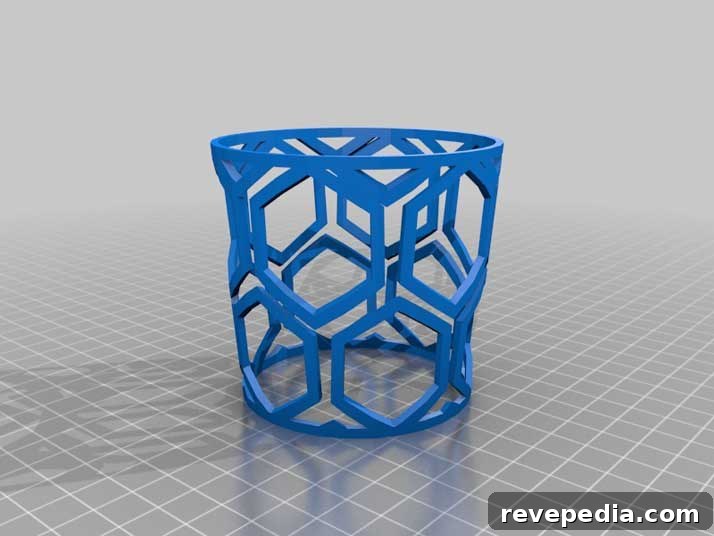
The Replicator 2 is among the larger desktop printers, offering about 410 cubic inches of build volume. That extra space makes it possible to produce larger objects or print multiple smaller pieces in a single run. What can you make with that capacity? The range is wide: from functional prototypes and household tools to decorative items and replacement parts.
One major advantage for beginners and advanced users alike is the availability of ready-made 3D designs. MakerBot supports Thingiverse, a vast repository of user-submitted models that serves as a valuable resource for inspiration and practical projects. Thingiverse’s evolving design and search features make it easy to find printable models, modify existing designs, or share your own creations. Instead of starting every project from scratch, you can learn by adapting someone else’s files or simply printing existing models.
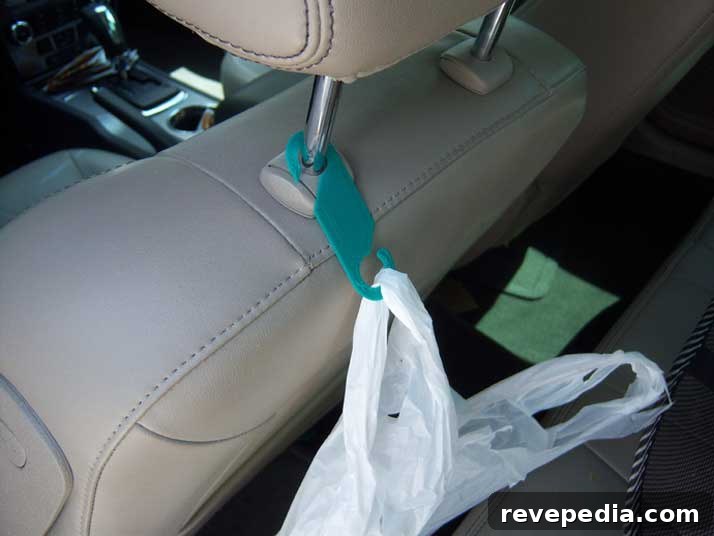
The only real limit with a home 3D printer is your imagination. Common consumer prints include toys, jewelry, household organizers, phone stands, and custom-fit accessories. Hobbyists often develop practical solutions—like custom hooks, mounts, or replacement knobs—that solve everyday problems. As design libraries grow and printers become easier to use, younger generations will increasingly download toy or project files and print them at home.
If you’re contemplating a product idea or a custom part, a 3D printer can be a practical tool for rapid prototyping and small-scale production. It allows you to iterate quickly, test fit and form, and produce parts on demand without long lead times or minimum order quantities.
Do you already own a 3D printer? If so, what projects have you tackled and which prints have been most useful?
[box]We’re so enthusiastic about 3D printing that we launched a dedicated site covering the latest developments in digital fabrication. Visit MechaMakers.com for more news, tutorials, and project ideas.[/box]