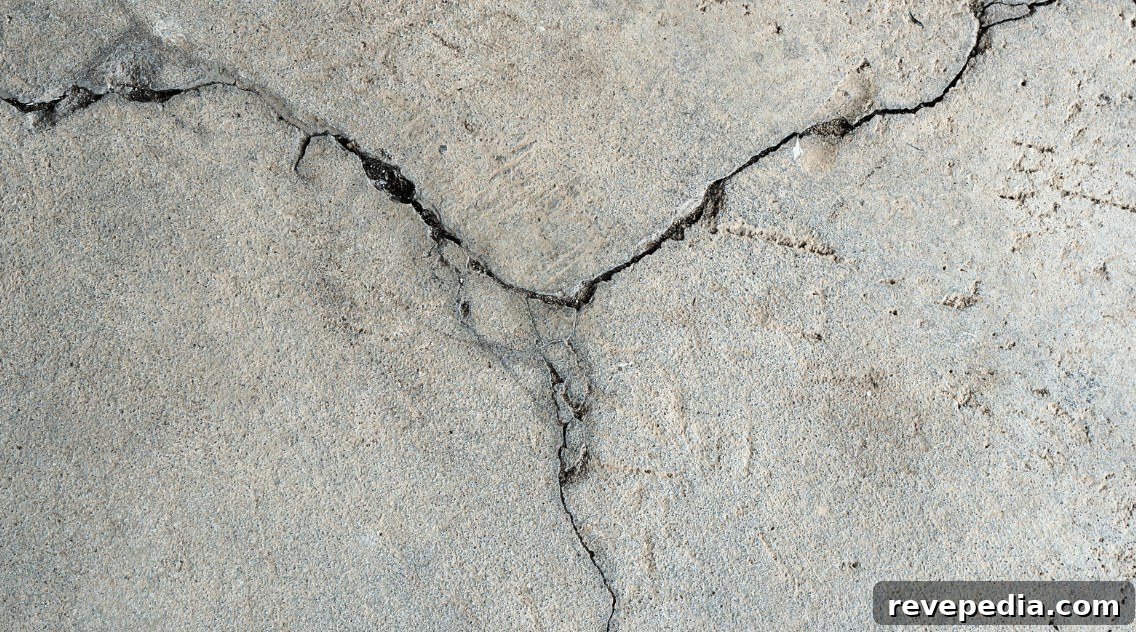
A crack in a driveway or patio does not always mean the concrete must be replaced. Fine hairline cracks often remain stable for years without reducing performance. But a crack that keeps widening, develops a raised edge, or appears beside a sinking section usually signals a deeper problem.
Understanding what caused the damage—what is happening beneath and around the slab—is essential before deciding how to repair it. In Upstate South Carolina, including Greenville and surrounding counties, clay soil that swells and shrinks with moisture, heavy seasonal rains, and poor drainage frequently contribute to concrete failure. The same principle applies wherever you live: determine the cause before choosing a fix.
Sometimes the solution is a simple fill or a resurfacing. Other times the slab has moved or deteriorated enough that replacement is the more cost-effective option. Below is a clear guide to help you read cracks, evaluate causes, and choose repairs that last.
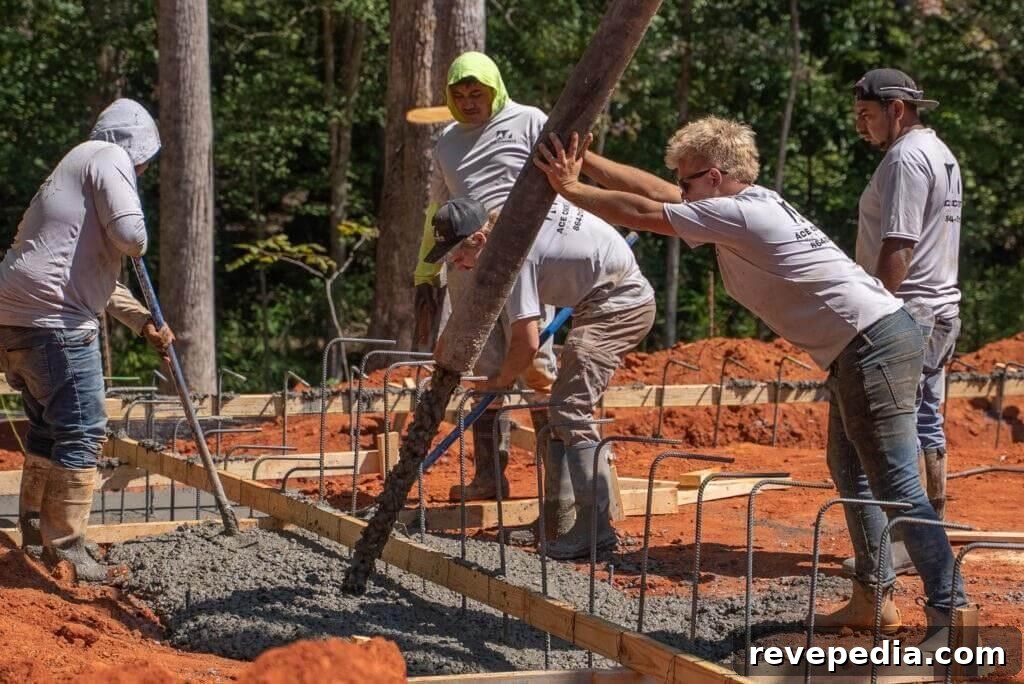
By the Ace Concrete Construction team
How to Read Concrete Cracks
Thin, shallow cracks that wiggle across the surface without becoming wide are usually shrinkage cracks from curing. They often look worse than they are and rarely affect the slab’s structural performance. These minor surface cracks can often be sealed to prevent water intrusion and to improve appearance.
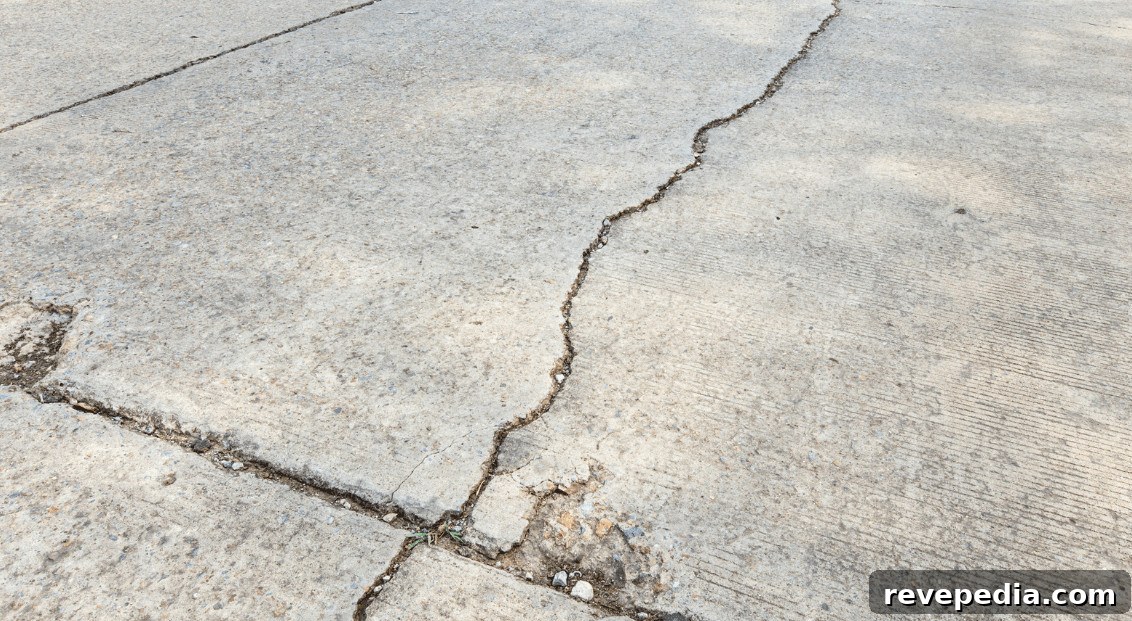
Cracks that deserve attention are those that continue to grow, develop a noticeable height difference from one side to the other, or trace a straight line where one section of the slab has dropped. A lip you can catch your toe on indicates one portion has settled below its neighbor, which typically points to a problem under the slab—often a washed-out or poorly compacted base.
Common Causes of Slab Damage in Upstate South Carolina
Red clay soil across Greenville and nearby areas expands and contracts as moisture levels change, and that movement places stress on anything built on top of it. Drainage problems are the most frequent contributors to serious slab issues.
When downspouts discharge water right next to a slab, when the ground slopes toward the concrete, or when low spots hold water, the soil supporting the slab can erode or soften. Over time this undermines even a well-poured surface. Initial construction matters as well: slabs poured on loose fill, or poured too thin for expected loads, begin to fail sooner.
Another frequent issue is spalling—the flaking, pitting, or scaling of the concrete surface—often caused by a weak finish, de-icing salts, or water that entered the mix and froze. Spalling and extensive surface deterioration make repair more difficult and can indicate a need for full replacement if the damage is widespread.
Repair Options When the Slab Is Still Sound
If the concrete slab remains solid and the visible damage is limited to a crack, joint separation, or worn surface, full replacement is usually unnecessary. Small cracks can be cleaned and filled with a flexible sealant or a polymer-modified patch compound that accommodates normal expansion and contraction.
A spalled or pitted surface may be restored with a properly bonded overlay, giving the slab renewed strength and a fresh appearance. If an individual section has dropped but the concrete itself remains intact, slab lifting or mudjacking—pumping a stabilizing material beneath the slab—can often raise and stabilize the concrete without removing it.
When pursuing concrete repair in the Greenville area or elsewhere, address the root cause as part of the work plan. Filling a crack without correcting poor drainage or an unstable base is usually a temporary fix. If water is washing soil away under the slab, that soil and drainage issue must be corrected or the repair will likely fail.
When Replacement Is the Right Choice
There are situations where patching is false economy. If a slab is broken into several pieces that rock independently, if the base has washed out over a large area, or if the concrete is crumbling rather than merely cracked, repairs usually won’t hold and you’ll be back to replace it within a season.
In these cases the durable solution is to remove the failed concrete, correct the base material and drainage that caused the failure, and pour new concrete to proper thickness and reinforcement standards. Neglecting to fix the base or drainage is the common mistake that turns one replacement into multiple projects. The new concrete performs only as well as the work done beneath it.
Preventing Further Damage
Detecting and repairing cracked concrete early makes repairs simpler and less expensive. Inspect problem areas after heavy rain, watch for sections that begin to sink or lift, and check where downspouts discharge. Often the visible crack is only part of the story; the real issue may be soil movement or water management.
This is especially true in regions with expansive clay soils, like Greenville and Asheville, but applies anywhere: fix the cause, not just the visible crack. A sound slab with limited damage can often be restored with targeted repairs. Conversely, a badly settled or crumbling slab typically needs replacement.
Choosing the correct approach the first time—repairing small damage or replacing a fundamentally failed slab—saves money and time in the long run. Proper evaluation, addressing drainage and base preparation, and using appropriate repair techniques will extend the life of your driveway, patio, or other concrete surfaces.