
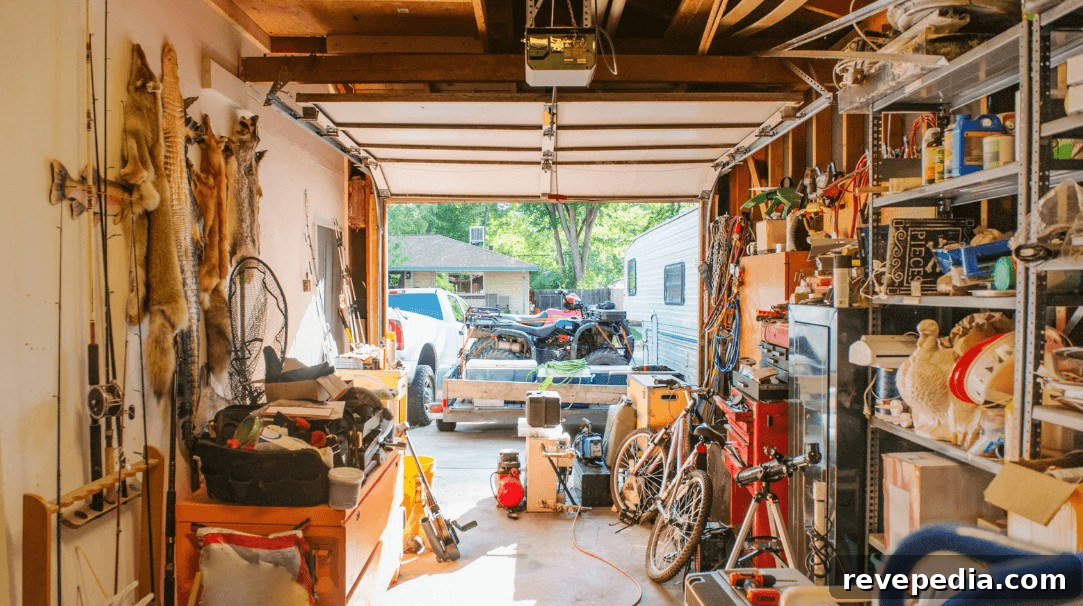
I’ve spent more weekends than I can count in the garage, and if there’s one thing every DIYer shares, it’s that the workshop fills up faster than you expect. A shelf of stain and lacquer here, a battery charger there, an extension cord snaking under the table saw — all of that gear represents real money and time. It also sits in one of the most fire-prone areas of the home.
Most fire-safety advice is general: check smoke alarms, don’t leave the stove unattended, keep space heaters away from curtains. That guidance is useful, but it misses the specific hazards that live in garages and home workshops. This article explains what actually starts fires in a workshop, the daily habits that protect your tools and your home, and what to do — and who to call — if prevention fails.
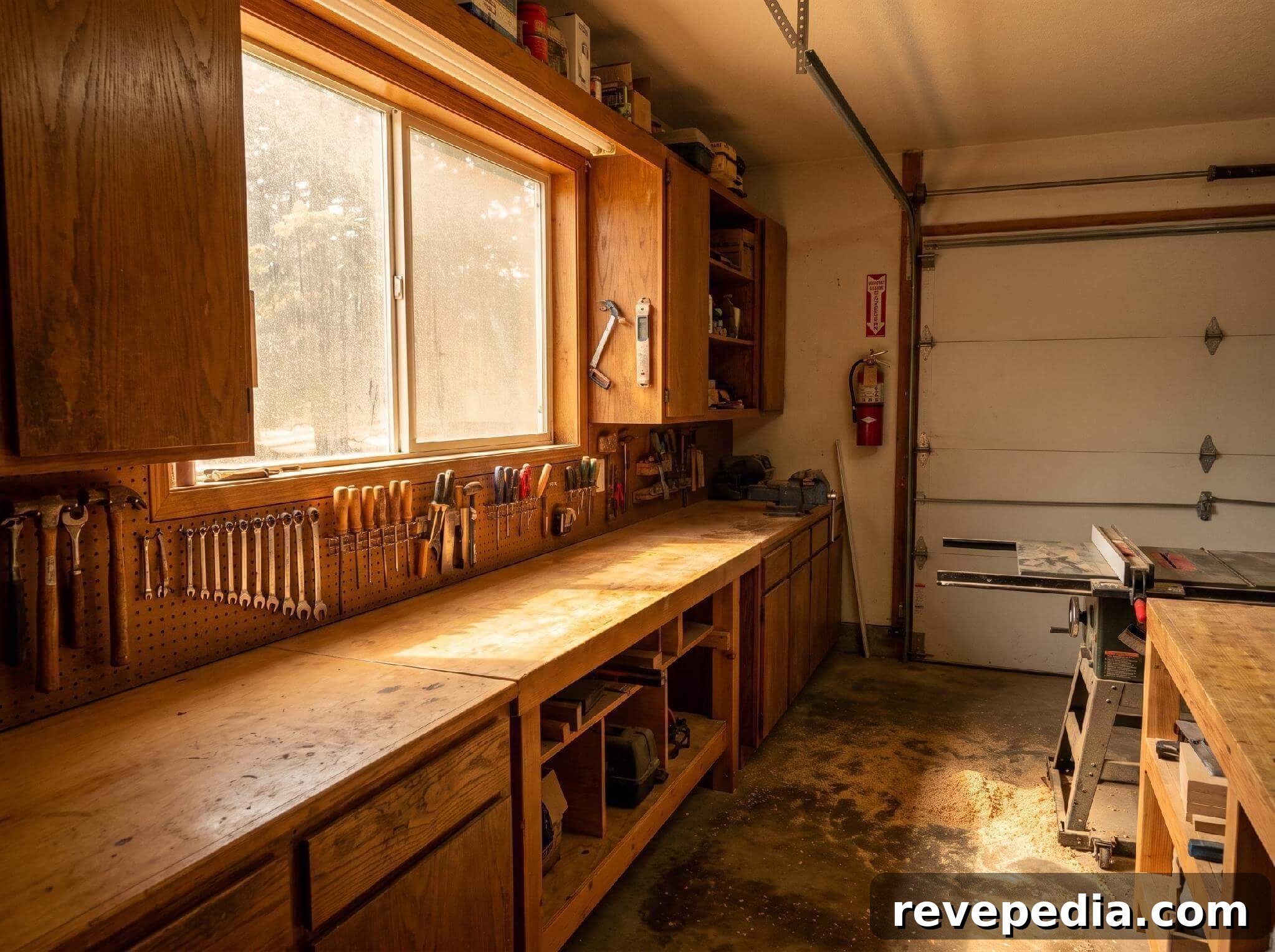
A well-organized workshop with tools stored safely and a fire extinguisher within easy reach.
Why the Garage or Workshop Is a Fire Risk Waiting to Happen
A workshop concentrates more fire triggers into one room than almost anywhere else in a house. Power tools pull heavy current, lithium-ion batteries are often charged unattended, sawdust drifts into every corner, and rags soaked with stain or linseed oil can self-ignite without any external spark. These conditions make garages and workshops uniquely vulnerable.
Official fire-prevention guidance frequently calls out garages and basements for common hazards: flammable liquid storage, oily rags, and overloaded circuits are recurring causes behind many workshop fires. Electrical problems alone account for a large share of incidents; it’s a familiar scene — a shop vac, compressor, heater, and battery charger all fighting for the same outlet strip. That setup is not unusual; it’s the default in too many garages.
A fast-moving shop fire can destroy years of tools and projects in minutes. After the fire department secures the site, property owners often call professionals for cleanup and restoration to prevent additional damage from water, mold, and corrosion. It’s worth knowing in advance what level of cleanup a true fire loss requires, because a household sponge and elbow grease are rarely enough to restore electronics, insulation, or porous building materials that have soaked up smoke.
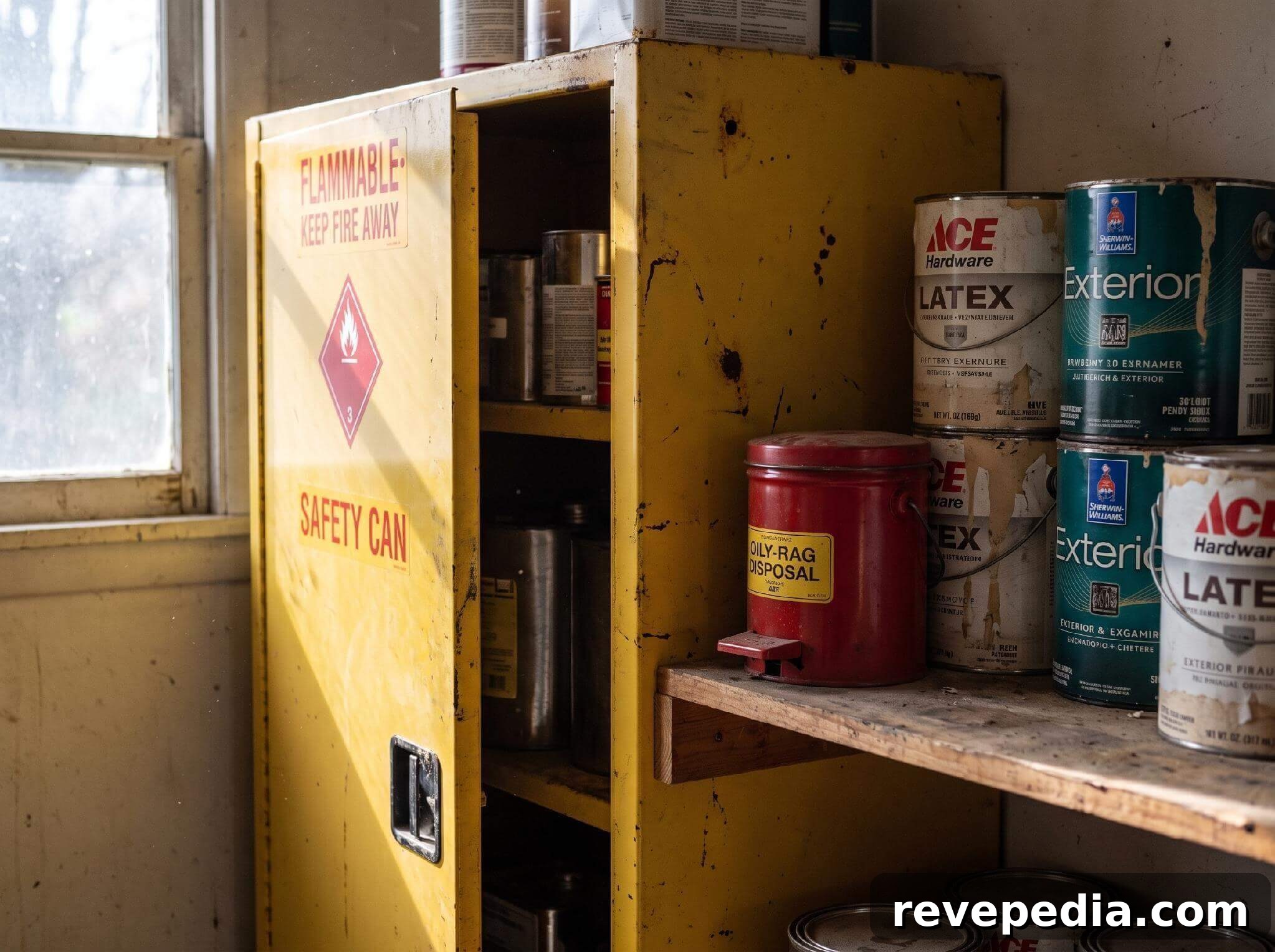
Storing flammable liquids and oily rags in approved metal containers reduces one of the most common workshop fire risks.
Understanding why garages catch fire more often helps you focus prevention where it matters. Overloaded outlet strips, unattended chargers, and poor storage choices are the usual culprits. That doesn’t mean giving up power tools; it means treating your workshop’s electrical load and storage practices with the same seriousness you give to tool safety guards.
Prevention Habits That Actually Work in a Home Shop
Most workshop fires trace back to a few preventable habits rather than freak accidents. Store flammable liquids such as stain, paint thinner, and gasoline in an approved metal cabinet instead of on an open shelf. Place oily rags in a sealed metal can rather than a cardboard box or trash bag; spontaneous combustion from oil-soaked rags is a well-documented and preventable risk.
Give items that generate heat — bench grinders, soldering stations, space heaters — at least 18 inches of clearance from anything flammable. Small flames can grow quickly; many authorities note that a fire can escalate from a small flame to a fully involved room in a very short time. That leaves little margin for improvisation, so preplanning and clear access to firefighting tools matter.
Other routine practices that significantly reduce risk:
- Mount an ABC-rated fire extinguisher near the exit so it’s immediately accessible.
- Install interconnected smoke alarms so a fire in the garage triggers alarms throughout the house.
- Charge lithium-ion tool batteries on a non-combustible surface, in view and away from clutter; avoid charging them overnight unattended.
These steps are low cost and quick to implement, and what they buy you is time — the one thing you won’t have once a fire spreads.
Building a habit of daily tidy-up and safe storage is critical: clear sawdust from around equipment, store solvents in labeled containers, and keep cords off walkways. These small routines compound into real protection over time.
If a Fire Does Happen: Salvaging Tools and Equipment
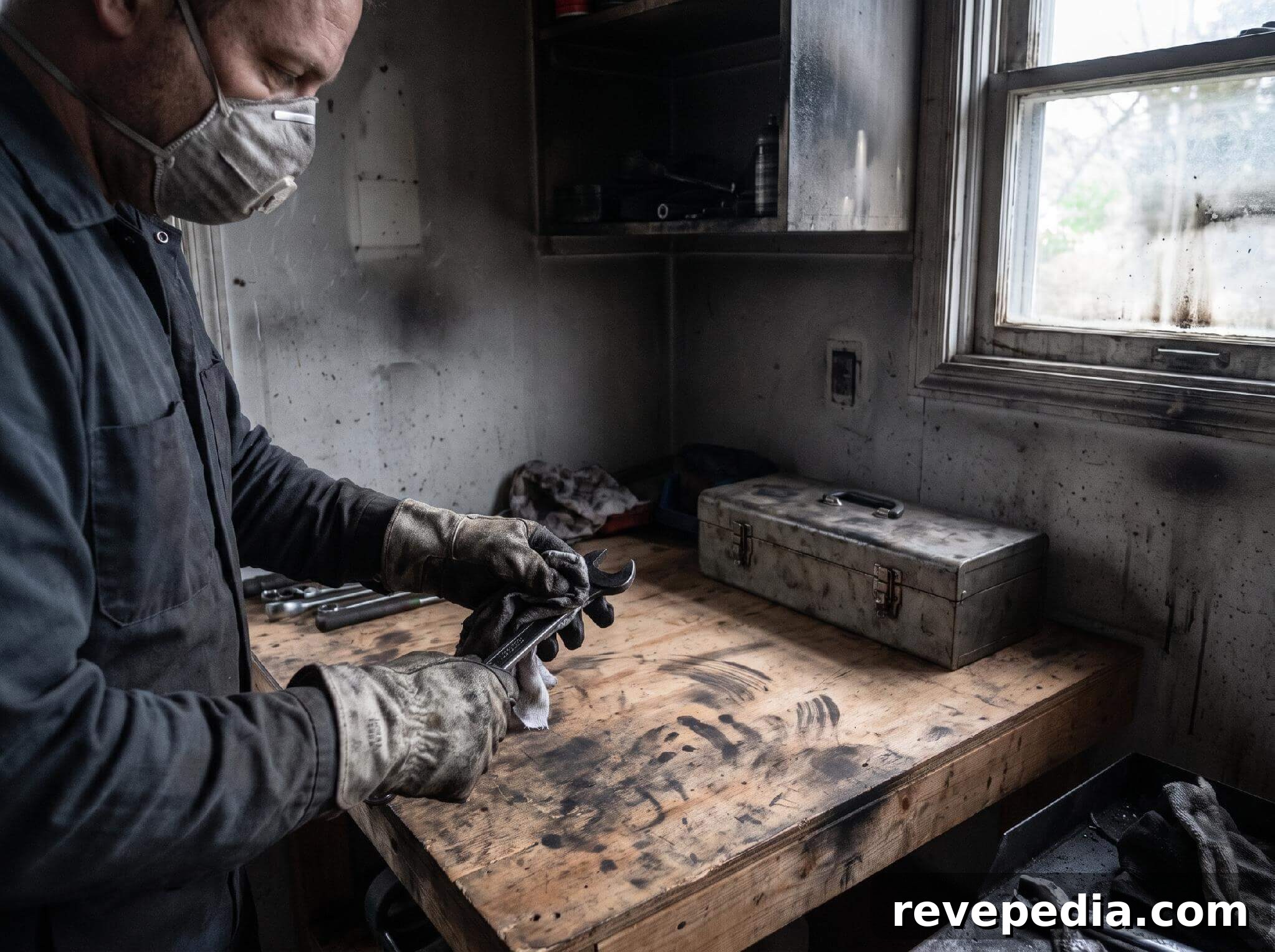
Cleaning soot from metal tools right away helps prevent long-term corrosion after a fire.
Many metal hand tools survive a fire better than you might expect. Soot often wipes off, and a light coat of oil after cleaning prevents rust on blades and cast-iron surfaces. You can handle that cleanup yourself with gloves, a mask, and patience.
However, porous materials and electronic devices need professional attention. Smoke odor penetrates drywall, wood, and insulation, and it doesn’t come out with simple washing. Power tools and devices with circuit boards can appear intact while corrosive soot and acid residues are already damaging internal components. Professional restoration services use specialized techniques — deep cleaning, HEPA filtration, thermal fogging, and controlled drying — to stabilize and, where possible, salvage affected items.
Importantly: do not re-enter a fire-damaged building until the fire department has declared it safe. Structural damage is not always visible; floors and ceilings can fail under load even if they look intact.
Rebuilding a Safer Workshop After the Fact
Rebuilding after a fire is difficult, but it’s also a chance to correct layout and storage mistakes that contributed to the damage. Maintain at least 36 inches of clear pathway to every exit and keep that pathway free of cords, lumber, and clutter. Clearly mark exit routes so you can get out quickly if you need to.
If your shop includes welding, grinding, or other spark-producing work, set those activities in a dedicated, fire-safe zone with appropriate flooring, ventilation, and clearance. Separating hot work from woodworking and solvent storage reduces the chance that a stray spark will reach a flammable material.
A rebuild will cost time and money, but it also prevents repeating the same dangerous setup. Updating electrical circuits, adding dedicated outlets for high-draw tools, and improving ventilation are investments that reduce long-term risk.
Conclusion
Your tools and the hours you’ve invested in your workshop are worth protecting. Most workshop fires can be prevented by a short list of practical habits: proper storage for flammable liquids and oily rags, sufficient clearance around heat sources, an accessible extinguisher near the exit, and functioning smoke alarms that cover the garage. Follow these steps and you’ll avoid the majority of workshop fires.
If a fire does occur, know the difference between what you can clean yourself and what requires professional restoration. That distinction protects the rest of your home and helps the next version of your workshop come back safer once the smoke clears.