
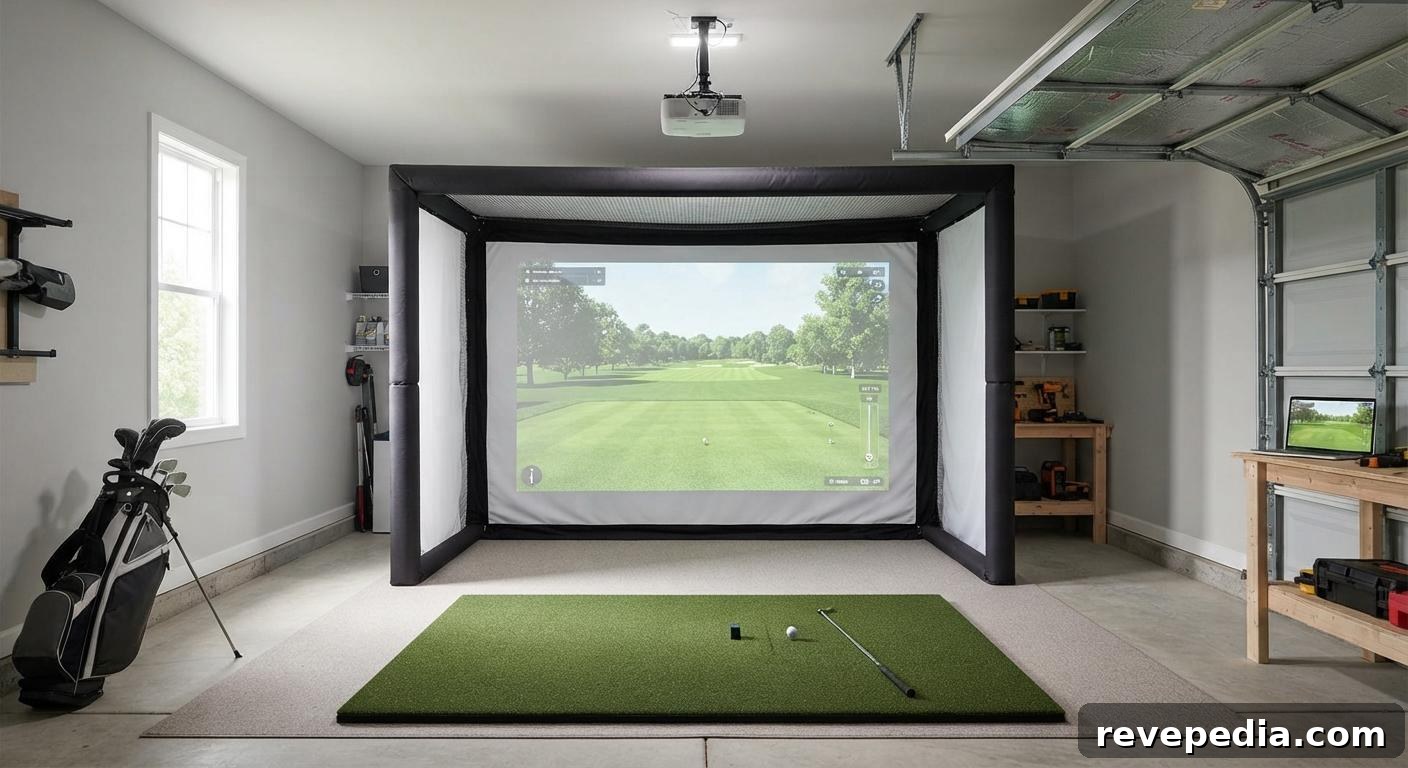
Most garages and spare rooms weren’t designed for a full golf swing. Ceilings are typically 8–9 feet, a car or workbench occupies half the floor, and the wrong simulator enclosure can leave you ducking every drive or patching drywall after a mis-hit. The right enclosure fits the space you actually have. Below are eight enclosures suited for garages and small rooms, plus a practical guide on how to measure before you buy.

Why Small-Space Enclosures Are Much Better Now
Early home simulators were heavy, permanent frames that dominated a room. Demand has changed that: more golfers want year-round practice at home, and manufacturers responded with shallower frames, tool-free assembly and retractable designs that roll up when the space is needed for other uses. Today, a single-car bay or a basement with a 9-foot ceiling can realistically host a simulator—if you choose an enclosure built for those limits.
| Enclosure | Type | Footprint / Sizes | Best For | Starting Price* |
| GolfBays SimBox | Fixed, folding frame | 7 sizes, from 8’6″ W x 8’2″ H x 4’11” D | Flexible garage setups | ~$1,700 |
| SportScreen Vanish | Retractable, wall/ceiling mounted | 5 widths, custom up to 16′ | Multi-use rooms | ~$3,000 |
| Carl’s Place DIY | Fixed, DIY pipe frame | 6 sizes from 8×8 to 9×12, 5′ deep | Odd-shaped rooms | ~$1,000 + pipe |
| SIG8 (The Indoor Golf Shop) | Fixed | 8’4″ W x 8’4″ H x 5′ D | Narrow single-car bays | ~$1,800 |
| Rain or Shine SwingBay | Fixed | 8×10 or 9×12, 4’2″ deep | Fast solo assembly | ~$2,000 |
| G-TRAK | Retractable, door-track mounted | Screens 7′ to 14′ wide | Garages that still park cars | ~$2,000 |
| HomeCourse ProScreen 180 | Retractable, wall/ceiling mounted | 8′ x 8′ screen | Shallow and shared spaces | ~$2,300 |
| GoSports 10′ x 8′ | Fixed | 10’7″ W x 8′ H x 6′ D | Tight budgets | ~$1,000 |
*List prices at the time of writing. Sales and bundles change often.
1. GolfBays SimBox
The SimBox stands out because it addresses two major small-space issues: multiple size options to fit awkward rooms, and a fold-down design so the space can revert to normal use. The aluminum frame clicks together without tools in under an hour, and a black velvet surround reduces stray light so projected images retain good contrast in a garage that can’t be fully darkened.
Seven configurations range from a compact 8’6″ wide by 8’2″ high frame just under 5 feet deep to a larger room-scale build. The lower-height option helps where door tracks or openers reduce overhead clearance. It works with any launch monitor, from budget camera units to premium radar systems, and ships with a multi-layer impact screen and side nets rated for high ball speeds. Optional add-ons include a projector arm, foam backing and blackout screens for brighter rooms.
- Sizes: Seven, from 8’6″ W x 8’2″ H x 4’11” D to 13’2″ W x 9’10” H x 9’10” D
- Frame: Aluminum, tool-free click assembly
- Note: Assembly directions are sometimes terse; use the video guide if included.
2. SportScreen Vanish Series
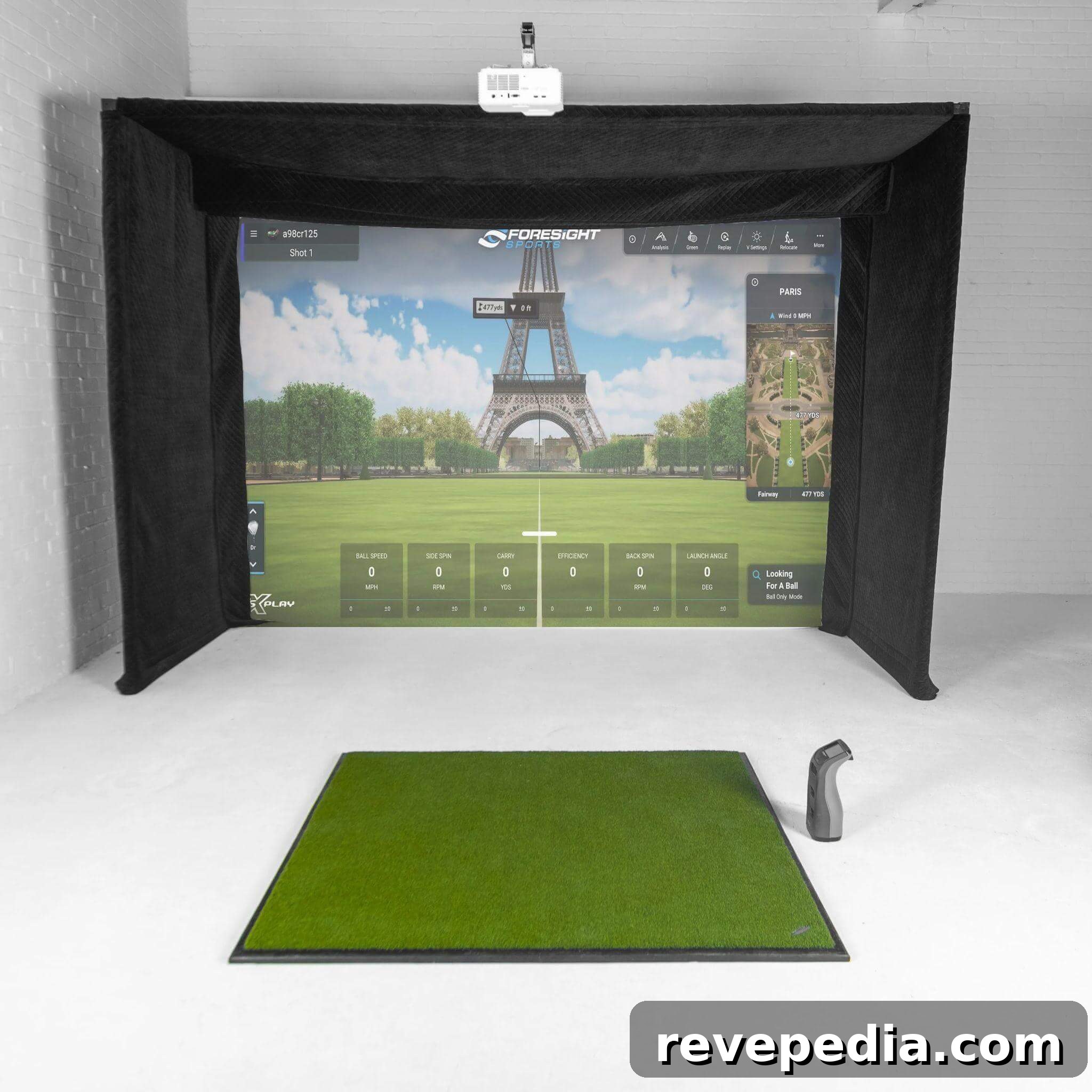
The Vanish Series is a comprehensive roll-up system for multi-use basements or garages you want to keep looking like a garage. Impact, side and ceiling panels retract into a wall- or ceiling-mounted housing via hand crank or remote, leaving no floor track to trip over. It includes 5-foot-deep side screens, a ceiling panel, baffles and a rear support membrane behind the multi-ply screen to reduce bounce-back. Available in several standard widths and custom sizes up to 16 feet, it carries a limited warranty and is intended for more permanent installs where aesthetics matter.
- Sizes: Multiple standard sizes plus custom options
- Retraction: Hand crank or remote control
- Note: Higher cost and more involved installation than fixed kits.
3. Carl’s Place DIY Enclosure
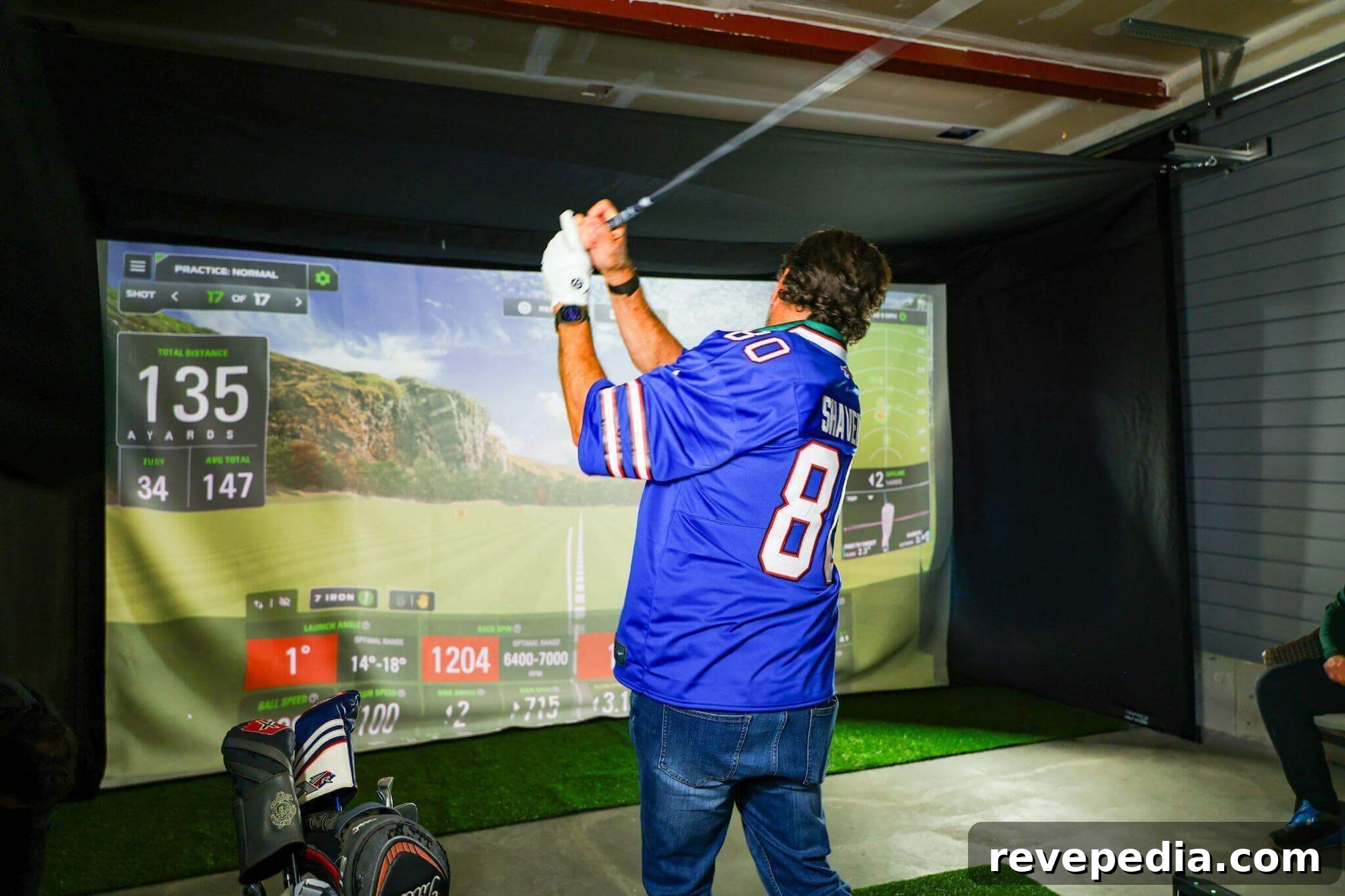
For irregular garages with obstructions like water heaters or soffits, a fixed-size kit can be restrictive. The Carl’s Place DIY kit offers six standard sizes from 8×8 to 9×12 and custom dimensions to the inch. The kit includes the screen, black nylon surround and steel corner fittings; you supply 1-inch EMT conduit locally or add a pre-cut pipe kit. Screen options range from standard polyester to premium multi-layer and high-contrast gray fabrics. The screen extends to the turf with no bottom border for a clean look from address.
- Sizes: Six standard sizes, all 5 feet deep, plus custom
- Frame: 1-inch EMT conduit (sourced separately or as a kit)
- Note: Not designed to hang a projector directly; build takes more time than click-together kits.
4. SIG8 by The Indoor Golf Shop
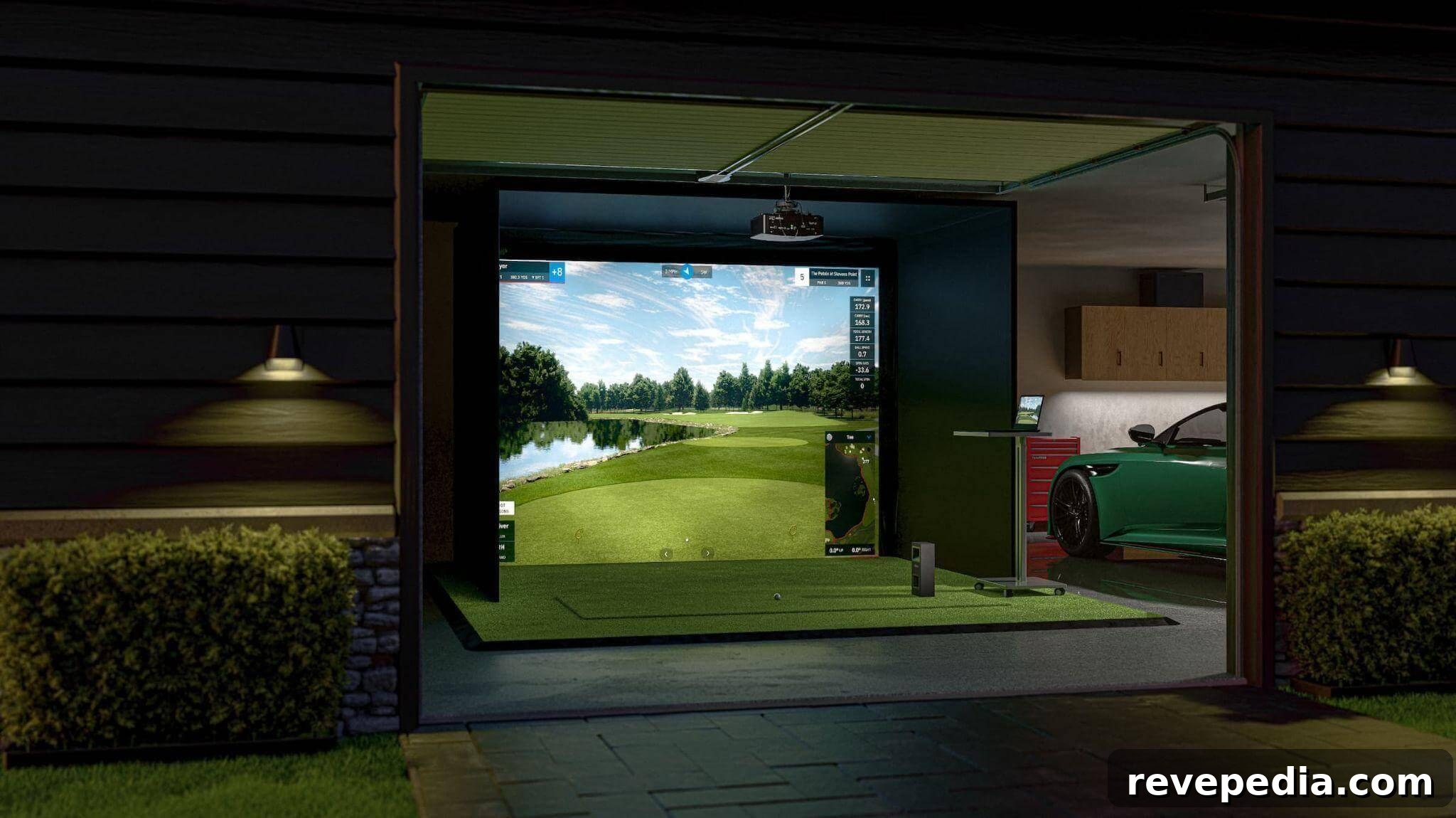
SIG8 is one of the smallest full-screen enclosures, made for rooms where width is the limiting factor. The frame is 8’4″ wide by 8’4″ high and 5 feet deep, with a 7’7″ square screen that fits inside a single-car bay without pressing into walls. The premium screen handles high-speed strikes, and the kit includes foam padding, a vinyl surround and simple color-coded push-pin poles for straightforward assembly.
- Sizes: One compact size (larger SIG10 and SIG12 models available)
- Frame: Color-coded push-pin poles
- Note: Taller players may need more than 9 feet of ceiling; the square screen yields a smaller projected image than widescreen formats.
5. Rain or Shine Golf SwingBay
SwingBay is aimed at fast, solo assembly. Its powder-coated aluminum frame uses push-button connectors so most builds finish quickly. At 4’2″ deep it’s the shallowest fixed frame on this list. Available in two sizes, it includes a high-strength polyester screen, blackout curtains, triangular side nets with sandbags and frame padding. The frame and screen carry limited warranties.
- Sizes: 8×10 and 9×12, both 4’2″ deep
- Screen options: Single or triple-layer (triple layer reduces bounce-back)
- Note: Recommended overall footprint for the 8×10 is larger than the frame alone, so allow extra floor space.
6. G-TRAK Retractable Impact Screen
G-TRAK is made for garages that still need to park a car. Brackets clamp around existing garage door tracks so the door continues to operate normally; a motor lowers the screen for a session and raises it afterward. Screen widths match common door sizes, and the viewable height is roughly 87 inches with modest side and ceiling nets.
- Sizes: Matched to door widths from 8′ to 16′
- Clearance: Floor to bottom of garage rail generally needs to be about 96″–103″
- Note: Side netting is limited, so shank protection is less than a full-depth enclosure.
7. HomeCourse ProScreen 180
The ProScreen 180 is an 8′ x 8′ retractable screen that mounts to a wall, ceiling or freestanding rack and runs on a rechargeable battery. A wireless remote deploys the screen in seconds without cords across the floor. Side arms angle out into nets or extend a projectable area for widescreen projectors. It’s suited to shallow, shared rooms and requires less overall footprint than many fixed enclosures.
- Mounting: Wall, ceiling or freestanding rack
- Screen: 8′ x 8′ ballistic-grade material
- Note: Add side netting or padding in tight rooms; it isn’t a full surround.
8. GoSports 10′ x 8′ Golf Simulator Enclosure
GoSports offers a budget-friendly enclosure that includes a steel frame, impact screen, side and top covers and foam padding. Assembly takes about 30 minutes. The 10’7″ W x 8′ H x 6′ D footprint is larger in depth than some compact frames, and reviewers note initial bounce-back that generally improves after screen-tension adjustments.
- Sizes: 8×8, 10×8 and 12×9
- Frame: Snap-together steel
- Note: Expect to tension the screen bungees for optimal feel and reduced bounce-back.
How to Choose a Golf Simulator Enclosure for a Garage or Small Room
Start With the Ceiling, Not the Screen
Ceiling height eliminates more options than anything else. Most manufacturers recommend 9–10 feet for a comfortable driver swing. Before comparing screen sizes, stand where the hitting mat will go and make slow, full swings with your driver to note where the club peaks. Measure to the lowest obstruction—door tracks or openers often hang below the drywall—rather than to the highest point of the ceiling.
Measure Depth Based on Launch Monitor Type
Depth depends on the launch monitor. Camera-based systems typically need about 13–15 feet of total length, while radar units behind the golfer often require 16 feet or more. Many setups place the ball roughly 10 feet from the screen; garage builds closer to 8–9 feet benefit from multi-layer screens to reduce energy return and noise.
Leave Room on the Sides
Allow a few inches of buffer around the frame. If the room is narrow, decide mat placement before fixing the enclosure. Shared households often center the mat; single players can offset it to give the backswing more room.
Choose Fixed, Retractable or Door-Mounted
- Fixed enclosures provide the best shank protection and light control but occupy floor space full-time. Folding frames reduce storage issues.
- Wall- or ceiling-mounted retractables clear the room quickly but need solid attachment points and typically cost more.
- Door-track-mounted screens are the go-to option for preserving a parking bay.
Plan for Temperature and Humidity
Unconditioned garages experience temperature swings and higher moisture, which stress projectors, PCs and launch monitors. Insulating walls and garage doors improves year-round usability. Keep humidity below 60 percent—ideally 30–50 percent—to protect fabric, turf and electronics; a small dehumidifier is inexpensive insurance.
Don’t Ignore the Floor
A hitting mat on concrete works, but dusty, cracked or oil-stained slabs are harder to maintain and can contaminate screens and lenses. Many owners seal garage floors before installing a simulator—surface coatings stop dust and make cleanup easier.
Think About Noise
Impact screens are loud, especially when the simulator shares walls with living spaces. Triple-layer screens, foam backing and acoustic panels can cut noise and are worth including when the room is near bedrooms or living areas.
Matching an Enclosure to Three Common Spaces
Single-Car Garage That Still Parks a Car
This is the toughest scenario because the enclosure must disappear daily. Door-track-mounted systems that roll up are the most practical choice if your rail height fits. Folding frames are an alternative if you can break them down and store them. Always confirm enough depth remains for your launch monitor once the car is out.
Two-Car Garage With One Bay to Spare
A fixed enclosure 10–12 feet wide delivers full shank protection without touching the parked car. Mid-size SimBox models, SwingBay 8×10, or Carl’s Place 8×10.5 work well. Keep a clear walkway and consider side nets on the vehicle side to protect mirrors and paint from mishits.
Basement or Spare Room With a 9-Foot Ceiling
With about 9 feet of headroom, compact frames like SIG8, the smallest SimBox or SwingBay 8×10 can fit. Test your driver swing before ordering—if your ceiling is nearer 8 feet, these setups are better for irons and short-game practice. Wall-mounted retractables also shine in shallow, shared rooms.
Frequently Asked Questions
Minimum ceiling height?
Most golfers need about 9 feet to swing a driver comfortably; 10 feet reduces concern. Test a slow driver swing at the mat location to confirm.
Can you fit a simulator in a one-car garage?
Yes, if the bay is roughly 10 feet wide and the ceiling allows a full swing. Compact enclosures and retractable options help save space.
How deep should the room be?
Plan 13–15 feet for camera-based systems and 16 feet or more for radar units behind the golfer. Shallower rooms can work with multi-layer screens and shorter ball-to-screen distances.
Can I still park my car?
With the right setup—door-track-mounted screens, folding frames or wall-mounted retractables—you can. Permanent fixed enclosures usually require dedicating the bay.
Retractable or fixed for small spaces?
Fixed enclosures give better protection and image control for dedicated rooms. Retractable systems cost more but free the space for other uses. Folding fixed frames are a middle ground.
Do enclosures include impact screens?
Most complete kits include an impact screen; some DIY kits require you to source frame pipe. Confirm whether side nets, foam padding and blackout material are included before buying.
How much do enclosures cost?
Expect roughly $1,000–$3,500 for home enclosures before add-ons. Budget kits sit at the low end; retractables and larger sizes approach the top. Factor in projector, launch monitor, mat and software.
Will a cold or humid garage damage my simulator?
Electronics are most at risk. Insulate the space, control humidity, and store sensitive gear indoors between sessions when possible.
How close can I stand to the impact screen?
Many setups position the ball about 10 feet from the screen; garage builds sometimes use 8–9 feet. Closer distances increase bounce-back and noise, so use multi-layer screens and proper tensioning.
Need a professional to install?
Freestanding kits are generally DIY-friendly. Retractable systems that mount to structure, projector installs and electrical work may warrant professional help—leave wiring to a licensed electrician.
Final Thoughts
A small garage or spare room can host an excellent golf simulator if you match the enclosure to the space. Measure the lowest overhead obstruction, align depth with your launch monitor type, and decide whether the bay must remain usable for parking. With those answers in hand, any enclosure on this list can give you a simulator bay you’ll actually use through the season.