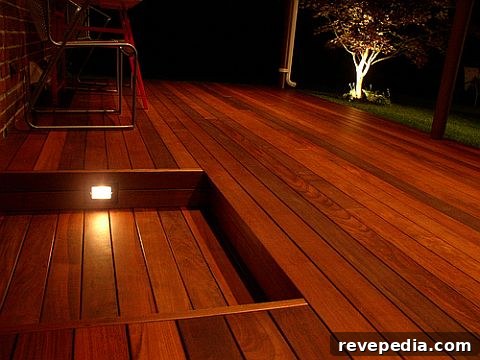
Ipe wood decking has rapidly captured attention in the outdoor construction and decking market. Once homeowners and builders experienced its benefits, demand surged—and remains strong. Although relatively new compared with some traditional decking materials, Ipe has proven itself season after season. But what makes this hardwood so popular, and is the enthusiasm justified?
The Basics
Pronounced “ee-pay,” Ipe refers to lumber from trees of the Brazilian walnut family (Lapacho species), native to the tropical regions of Central and South America. These trees have long been valued for their exceptional properties.
Ipe is prized for its remarkable durability. According to assessments by the U.S. Forest Products Laboratory, it rates as “very durable” with an expected service life of more than 25 years. Other sources suggest that untreated Ipe can last 40 years or more, and with proper oil finishing, it can endure up to a century. Its Janka hardness rating exceeds 3,000, making it roughly three times harder than cedar, a commonly used exterior wood. That hardness translates to strong resistance against wear and impact.
Because of these qualities, Ipe commands a higher price than many alternatives. However, this cost reflects a long-lasting hardwood that resists termites and decay naturally, often eliminating the need for chemical treatments.
How and Where to Use It
Ipe’s density and hardness change how it’s worked. Fasteners and hardware should be chosen for exterior use, and pre-drilling is generally required to avoid splitting. Expect slightly higher labor costs when hiring professionals, and a do-it-yourself project will take more time and effort. The increased installation time is a worthwhile trade-off for a deck that endures.
Beyond decking, Ipe is an excellent choice for Adirondack chairs, benches, docks, boat flooring, and other high-wear outdoor furniture. Kiln-dried Ipe is suitable for interior applications such as cabinetry and flooring, though most exterior boards are air-dried.
Quick Comparison With Treated Lumber
Pressure-treated lumber is a cost-effective, widely used option for outdoor projects and remains a practical choice. Ipe, however, offers distinct advantages: it’s naturally resistant to rot and insects without chemical preservatives, frequently sourced from responsibly managed forests, and provides a long service life that reduces replacement needs. This makes Ipe an environmentally attractive option for homeowners seeking longevity.
Appearance is another strong point: Ipe’s rich brown tones and fine grain give a luxurious look without requiring stain. Over time, if left unstained, it will weather to a silver-gray patina many find appealing.
The very hardness that delivers long-term durability can also increase installation difficulty and cost—cutting, fastening, and drilling take more effort and may require specialized tools. Still, for many homeowners the benefits—extreme longevity, low maintenance, natural resistance to pests and rot, and attractive appearance—outweigh the higher initial investment. Given these advantages, interest in Ipe decking continues to grow and shows no sign of fading.
Photo courtesy of