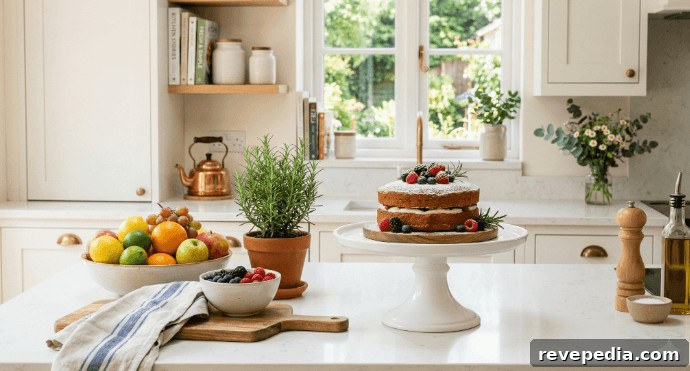
The kitchen counter is the most-used surface in your home, yet it often receives the least design attention. Many people treat it as a catch-all: a landing spot for mail, chargers, random fruit, and appliances that never quite make it back into cabinets. With a few deliberate choices, your counter can look polished every day, not only when company comes over.
The secret is not buying more things. It is editing what you already own and giving each item a clear purpose—both functional and visual. This guide outlines a practical approach to counter styling that actually works in real kitchens, not just in magazine shoots.
Start with a Clear Surface and Work Backwards
Many homeowners choose light counter finishes to create a timeless backdrop that suits both contemporary and farmhouse kitchens.
Before you style anything, remove everything from the counter. All of it. This forces you to decide deliberately what deserves a permanent spot on the surface instead of letting items default to wherever they’ve always been.
With a blank slate, evaluate each item you consider returning by asking three questions: Is it used at least once a week? Does it have a proper home elsewhere if it doesn’t need to be out? Does it contribute visually through color, texture, or form? If an item fails two of these three questions, it probably belongs in a drawer or cabinet.
It may seem harsh, but this is the most effective step you can take before spending money. A counter with five purposeful objects looks far better than one with fifteen items competing for attention.
Group Items in Odd Numbers and Vary the Height
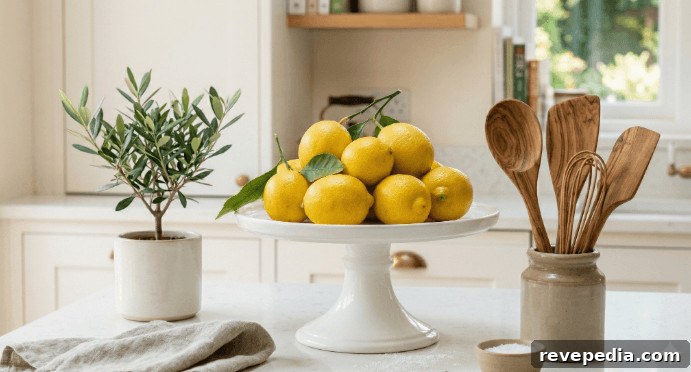
Designers favor odd-number groupings because they create dynamic visual tension. Two objects can feel static; three objects, especially at different heights, form a natural focal point and encourage the eye to move around the grouping.
Most people skip height variation. When everything sits at the same level, a counter can look cluttered even when it’s tidy. Introduce a taller element—such as a propped cutting board, a small plant, or a pedestal piece—to add dimension immediately.
A white cake stand is extremely versatile. It elevates smaller items like a fruit bowl, a candle, or a stack of napkins and creates the height contrast the arrangement needs. The white finish reflects light instead of absorbing it, helping the space feel open even when the counter is being used.
Use the Triangle Rule to Anchor Your Layout
The triangle rule, borrowed from floral arranging and photography, works perfectly for counter styling. Place three anchor items so they form a loose triangle rather than a straight line. The tallest piece goes at the back or to one side, a medium-height item sits opposite, and the smallest element fills the front.
This principle scales well: it’s about spatial relationships, not absolute size. A tall olive oil bottle, a medium wooden salt cellar, and a small ramekin of sea salt follow the rule. So do a propped cutting board, a cake stand with fruit, and a small herb pot in front.
Once the triangle is in place, adding secondary items becomes easier because they fit into the negative space without needing their own strict visual logic—the triangle anchors the whole composition.
Bring in One Natural Element
Kitchens are full of hard, manufactured surfaces: stone, metal, glass, ceramic. Adding a single organic element breaks that monotony and makes the space feel lived-in instead of staged. It doesn’t take much.
Fresh fruit is the simplest option and doubles as something useful. A bowl of lemons or a cluster of figs on a cake stand serves as decor until you need them for cooking. Herbs in small pots add both color and scent, and they’re genuinely functional. Even a single stem in a bud vase next to the coffee station adds enough warmth to change the room’s feel.
Treat the natural element as an intentional part of the composition. If you use fruit, stick to one variety or a single color family. A mixed bowl of apples, bananas, and oranges reads like groceries; a bowl of only green apples or mixed citrus feels purposeful.
Edit Seasonally, Not Constantly
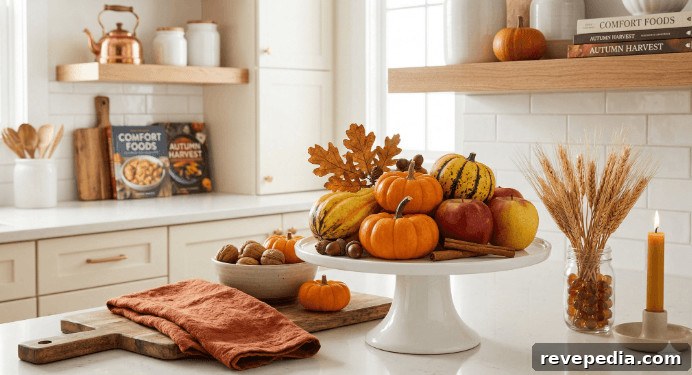
Keep a styled counter fresh by treating it like a seasonal wardrobe. You’re not redesigning every week, but swapping a few key elements two or three times a year prevents the look from becoming stale.
In spring and summer, favor lighter colors, fresh greenery, and bright fruit. In autumn and winter, bring in warmer tones through a wooden board, seasonal produce, or a small grouping of candles. The base layout—your triangle, height variation, and neutral anchors—stays consistent. Only the accents change.
A white cake stand is ideal for seasonal updates because it’s neutral and doesn’t compete with what you place on it. Swap the items on it and you get a fresh look without buying new pieces.
The One Rule That Ties Everything Together
Every well-styled counter shares one trait: a clear surface surrounding the arrangement. Not a pristine expanse for miles, but a visible breathing space between the styled grouping and the rest of the countertop. That negative space is what lets the eye read the display as intentional rather than as organized clutter.
If your items are well chosen, heights are varied, and a natural element is included but the arrangement still feels off, it’s usually because there’s no breathing room. Pull the grouping slightly tighter and clear a few inches around it—the improvement is immediate.
Counter styling rewards restraint: fewer items and a little effort produce better results. The goal isn’t a perfectly curated showroom; it’s a kitchen that feels welcoming, functional, and genuinely yours every time you walk in.
Ready to upgrade your kitchen space? Read more practical home and kitchen ideas at charlesandhudson.com/kitchen/