Our son is now four months old, and one of the best preparations we made for parenthood was updating our laundry room. We rent and are lucky to have a dedicated laundry area. After years in New York City, having our own washer and dryer mattered, and with a baby it became even more important for convenience and comfort.
Old Utility/Laundry Room
The old laundry room worked, but it was unattractive and the washer and dryer were at least 10–15 years old. We appreciate durable appliances, but we also try to conserve water and energy. The older machines offered none of the modern efficiency features—just basic cycle settings. Knowing we would be doing a lot more laundry once the baby arrived made upgrading the appliances an obvious choice.
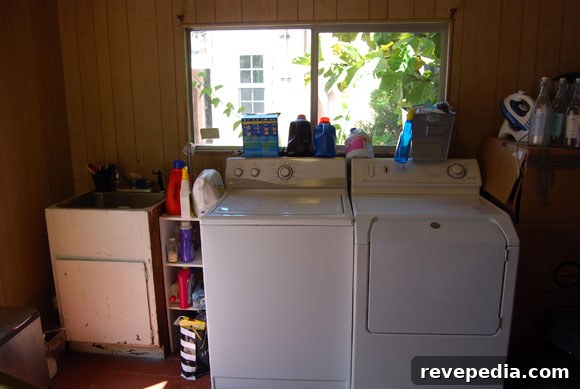
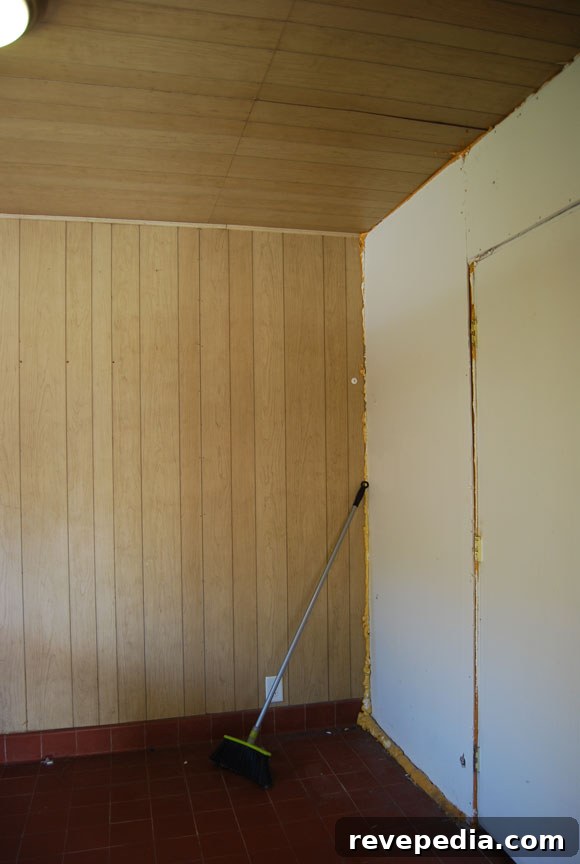
The red tile and faux-wood wall covering had to go—they were dated and unattractive.
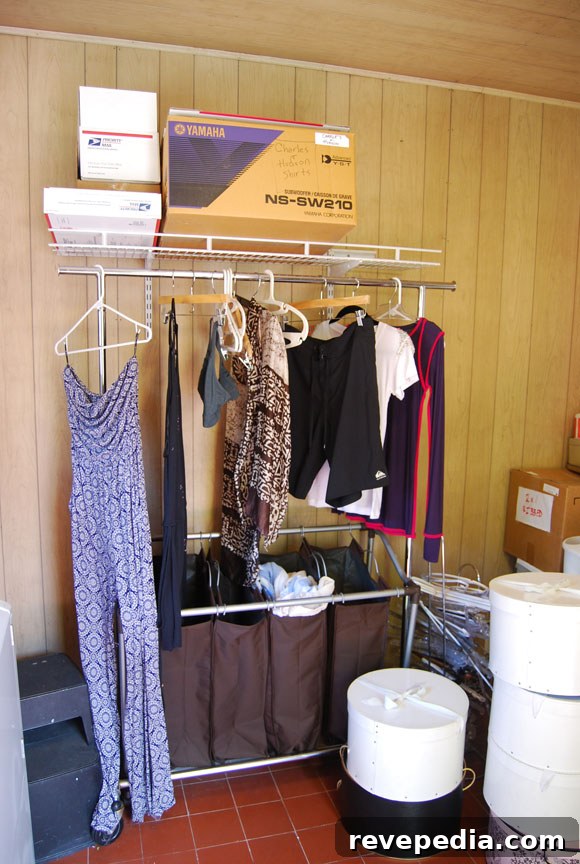
Over time, the room had become a catch-all storage area for things without a better home. With baby items coming in, we needed to reorganize and reclaim the space to make it functional.
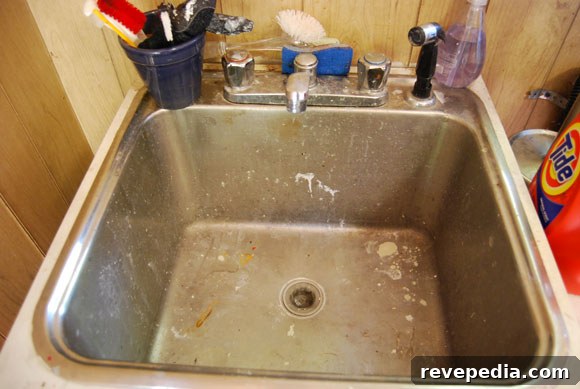
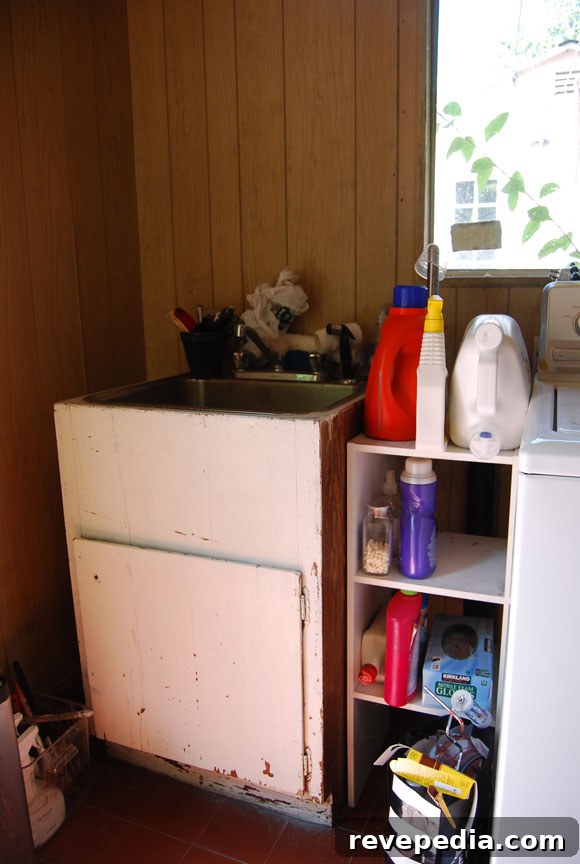
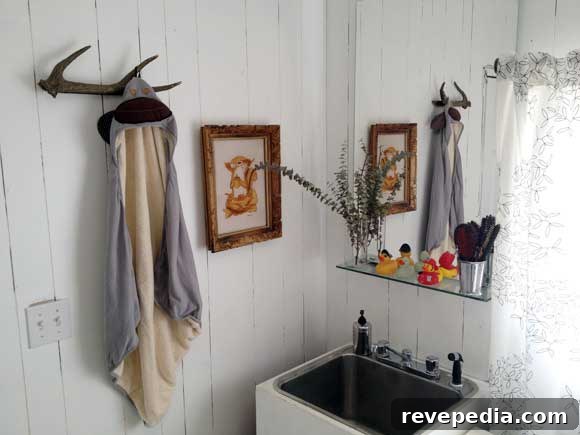
The utility sink is deep and handy for washing hands, rinsing brushes, and cleaning up after projects. We also wanted to use it to bathe the baby, but its dirty condition made that impractical until we cleaned it thoroughly.
We also wanted to add a toilet. Our home is about 900 square feet with only one small bathroom, and with more guests expected after the baby arrived, a second toilet would be very useful.
What We Did
Adding a toilet proved more difficult than anticipated. The utility room’s plumbing was sized only for a washer and sink. Installing a standard toilet would have required digging up the yard to run a proper sewer line. After talking with plumbers, the cost would have been at least $5,000. A shower would have increased that cost further, so we had to abandon the full bathroom idea for now.
We considered a macerating toilet, which grinds waste and can work with smaller drain lines, but we weren’t fully convinced and decided to hold off. It remains an option we may explore later.
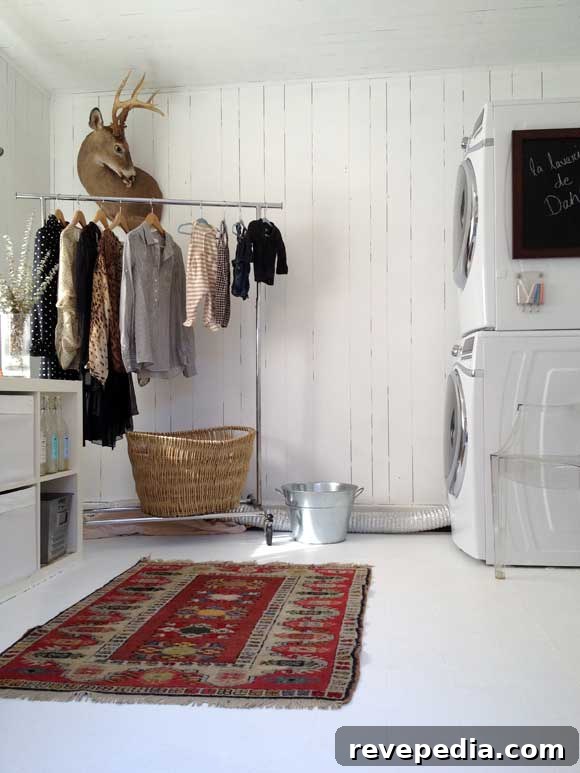
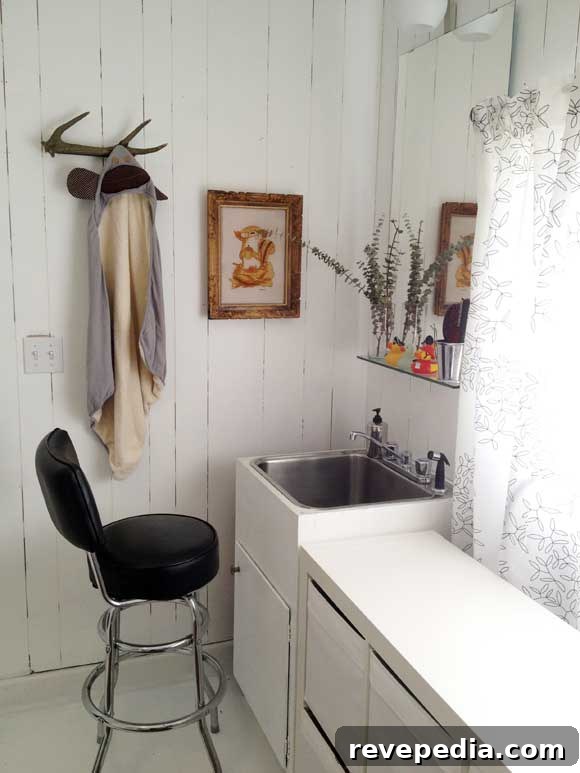
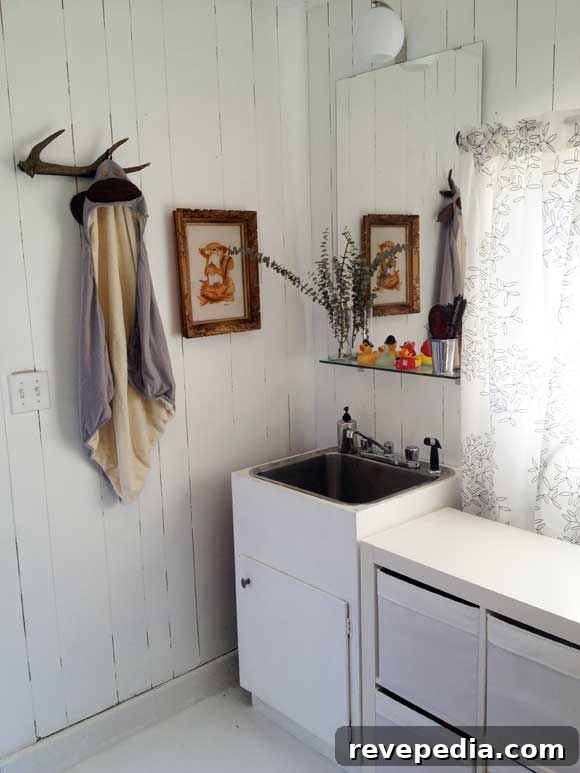
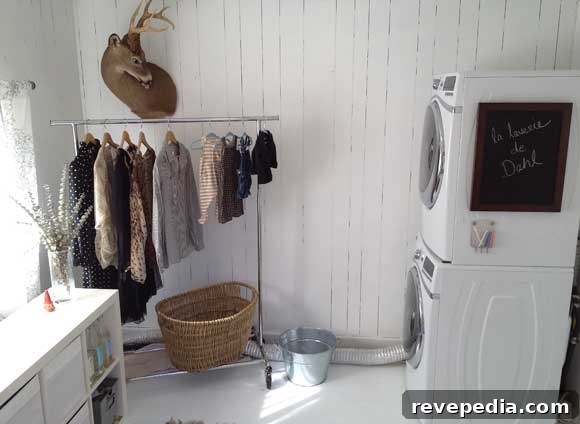
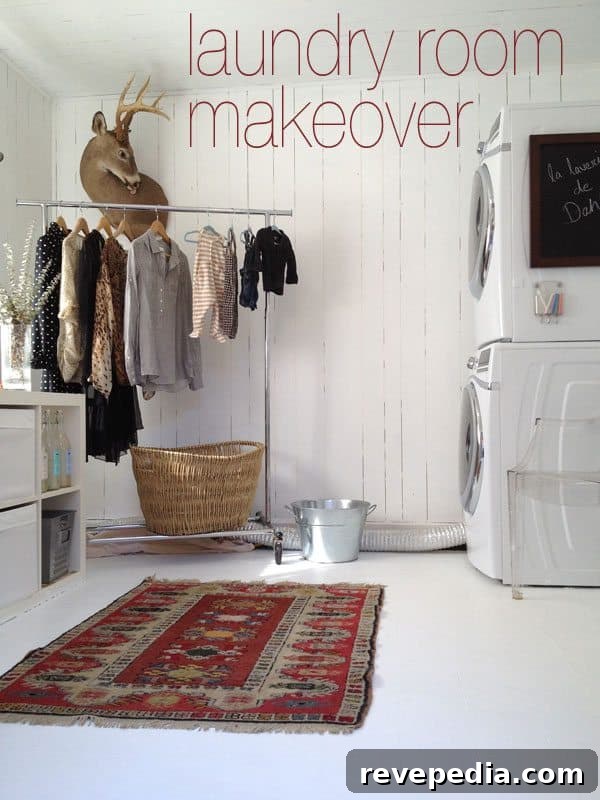
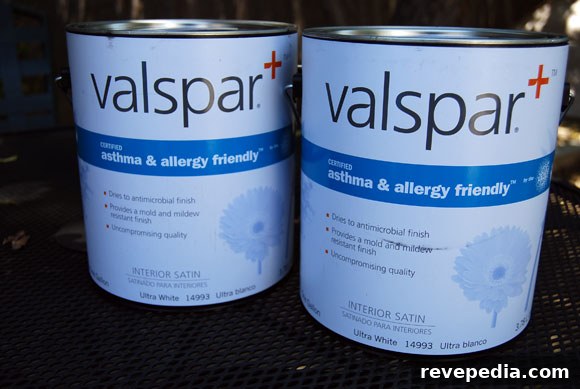
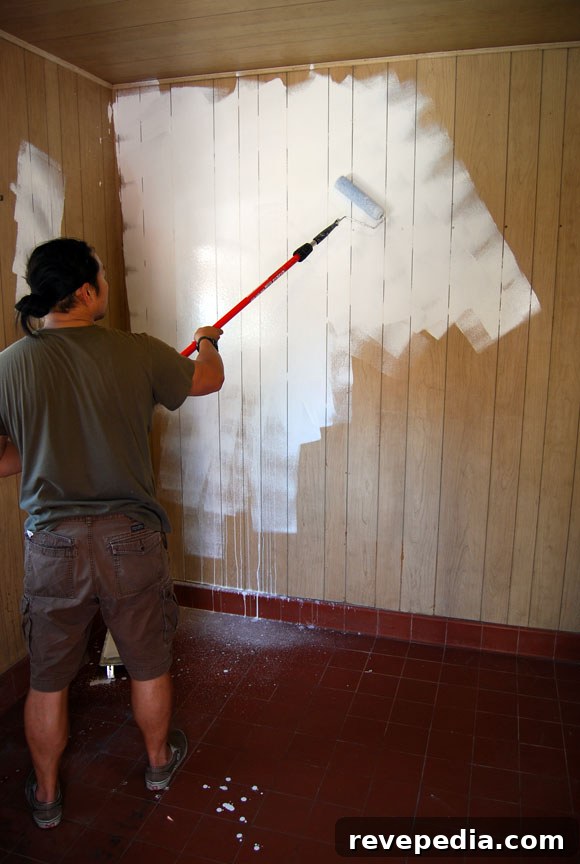
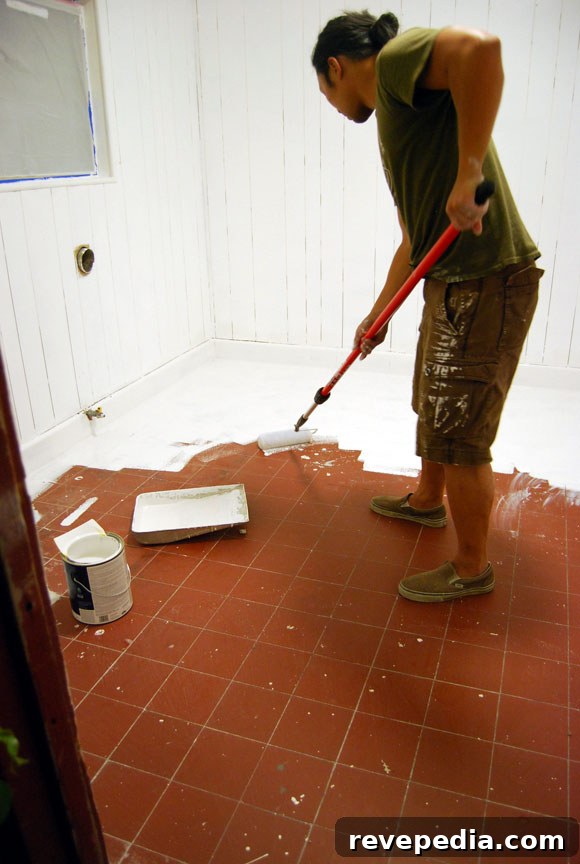
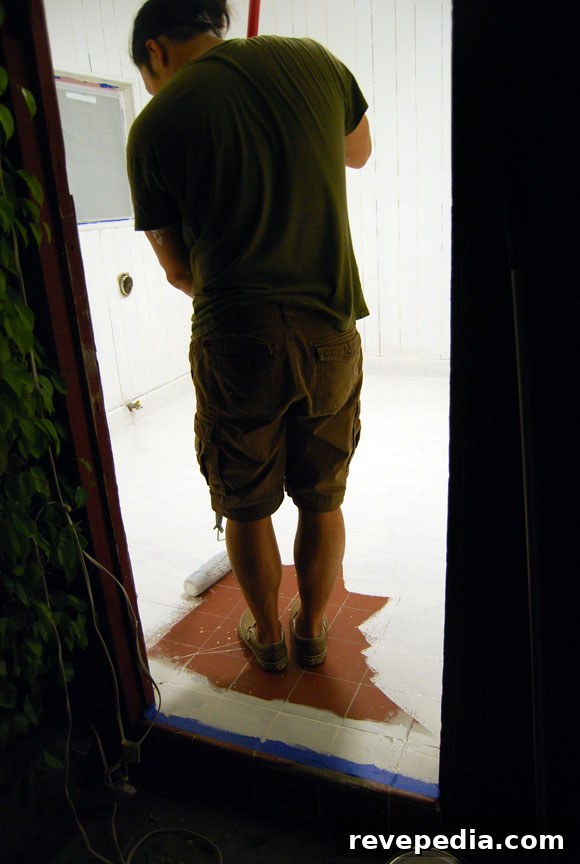
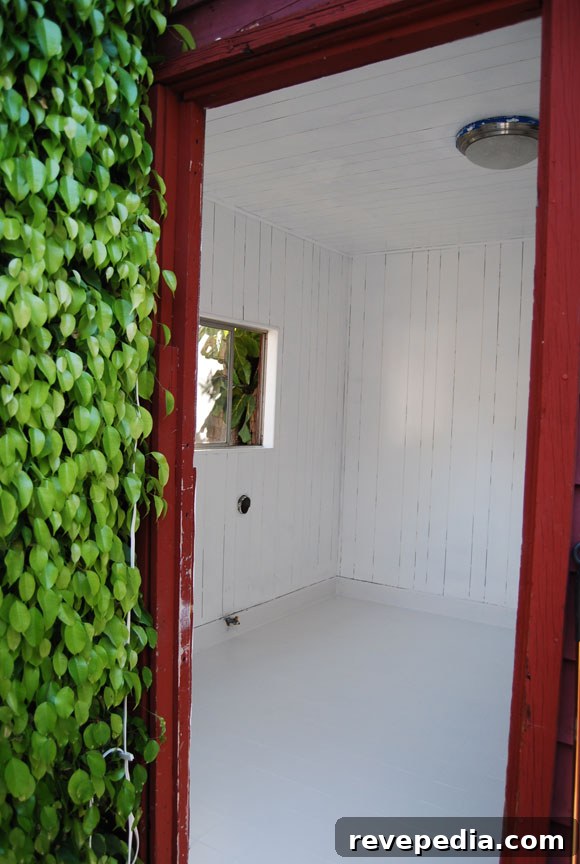
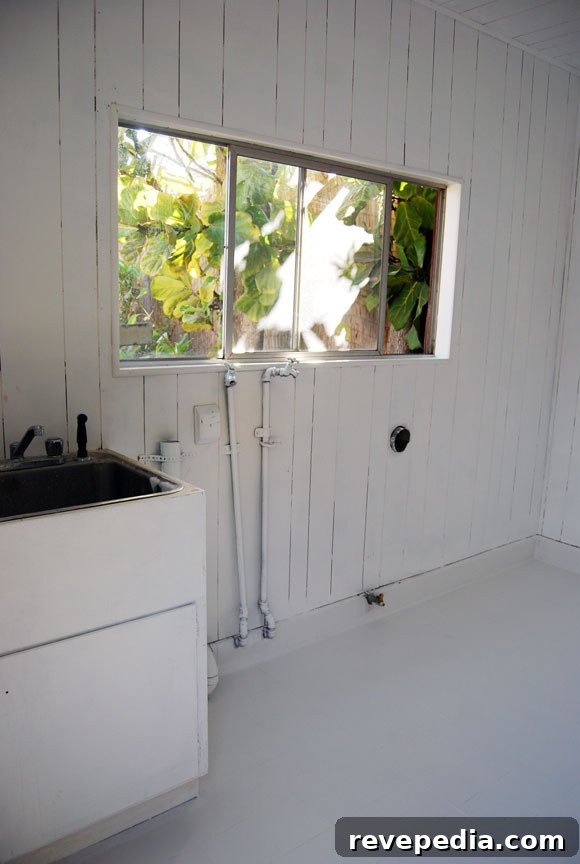
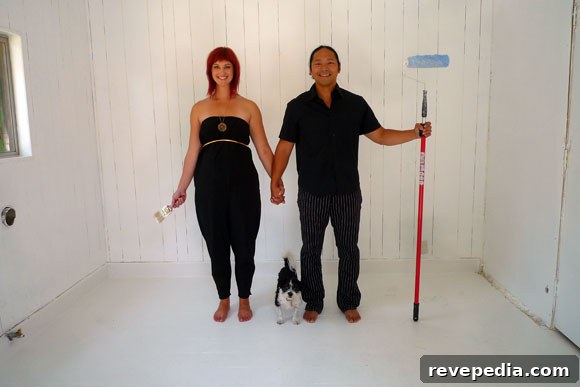
Painting the room made the biggest immediate impact. We whitewashed the walls, ceiling, and floor to open up the space. For walls and ceiling we used a Valspar paint labeled as asthma and allergy friendly from Lowe’s. It’s Zero-VOC, low odor, and dries to an antimicrobial finish that resists mold and mildew—qualities that appealed to us now that we have a baby.
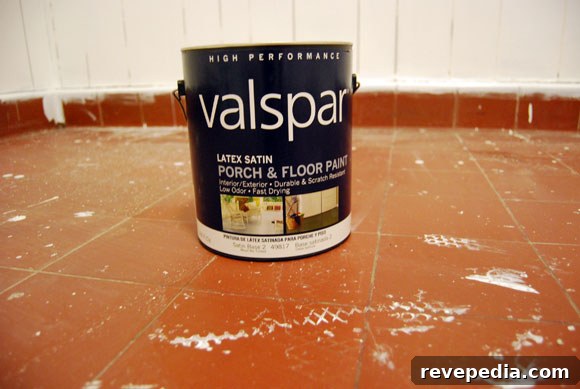
For the floors we chose Valspar’s floor and porch paint, also low-VOC and low-odor. We let the paint cure for a couple of days, and the room felt noticeably brighter and larger. White also makes decorating simpler, which is a practical benefit.
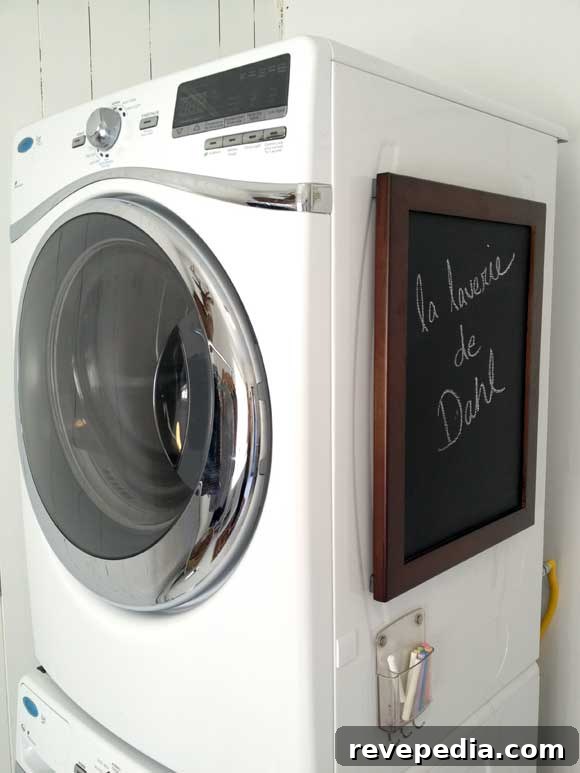
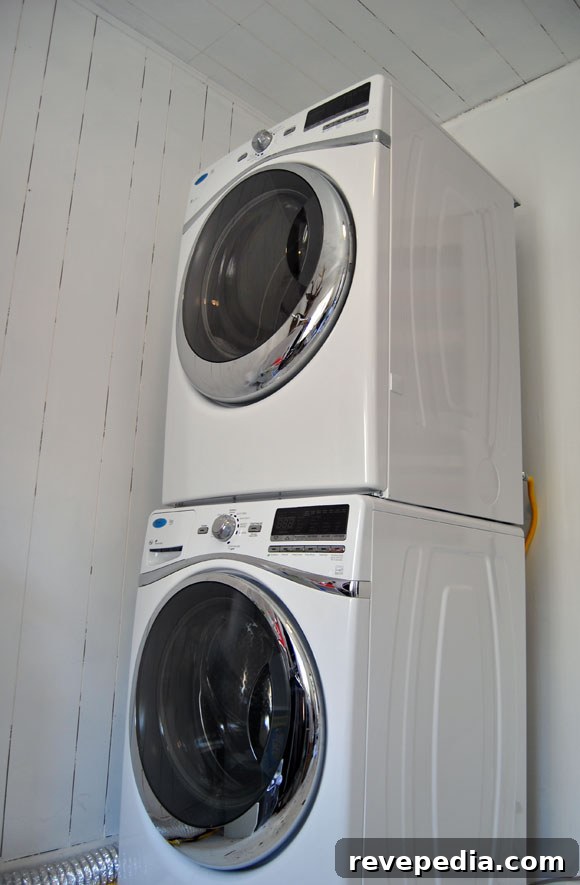
The final major change was replacing the washer and dryer. We wanted energy-efficient, front-loading units that could be stacked to save space. We settled on a modern set that met our efficiency goals and fit the compact laundry area.
We kept the deep utility sink after a thorough deep clean. For now, Laura bathes the baby in the sink, which has become a sweet bonding ritual.
Final Touches
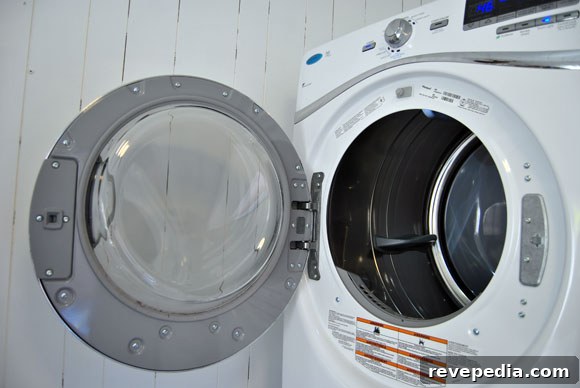
A few small tasks completed the makeover. The dryer door needed to be reversed so it opened in the same direction as the washer. Following basic online instructions, I switched the hinge in about 20 minutes with common tools—now it seals properly and looks factory-finished.
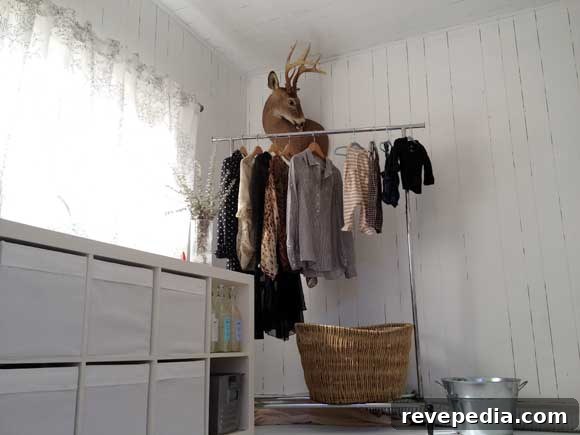
We added storage by picking up a white IKEA bookcase and laying it on its side. It’s the same style we already use in our son’s nursery and is surprisingly sturdy for the price. A clothing rack and hampers we already owned fit the space well.
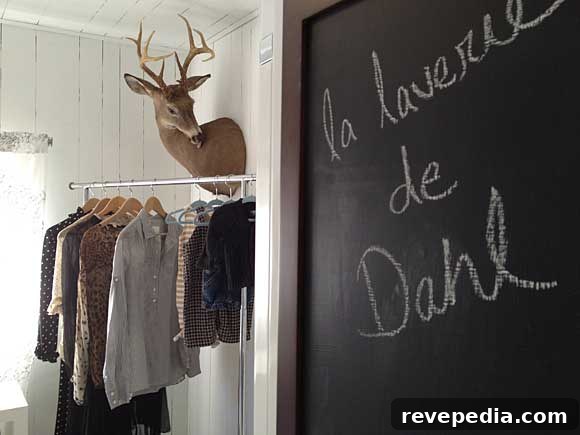
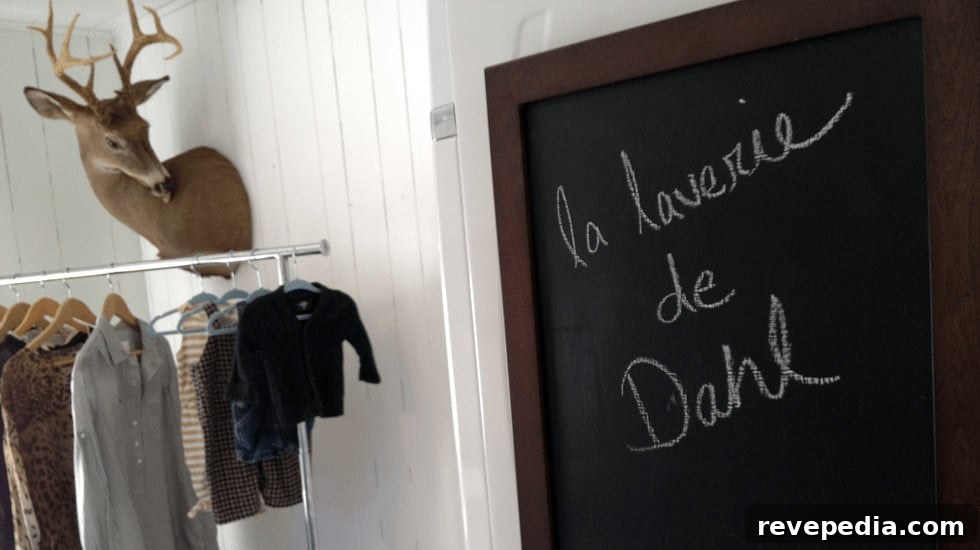
We also made a chalkboard with Valspar chalkboard paint applied to a framed board. It’s mounted on the side of the dryer and serves as a handy message board for reminders.
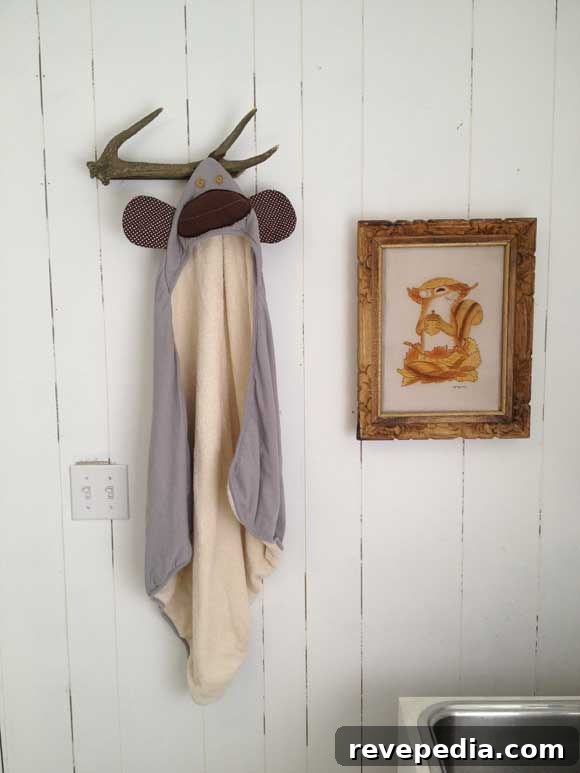
For a quirky touch, we mounted a 10-point deer head over the holidays. With little art in the house, the taxidermy piece adds personality and a conversational element to the room.
We are very pleased with the updated laundry room. The improvements—new paint, organized storage, and energy-efficient appliances—made the space more functional and pleasant. While adding a half-bath would be ideal, the expense and disruption didn’t match our current priorities. For now, we focused on practical upgrades that improve daily life and provide a safer, cleaner environment for our baby.