
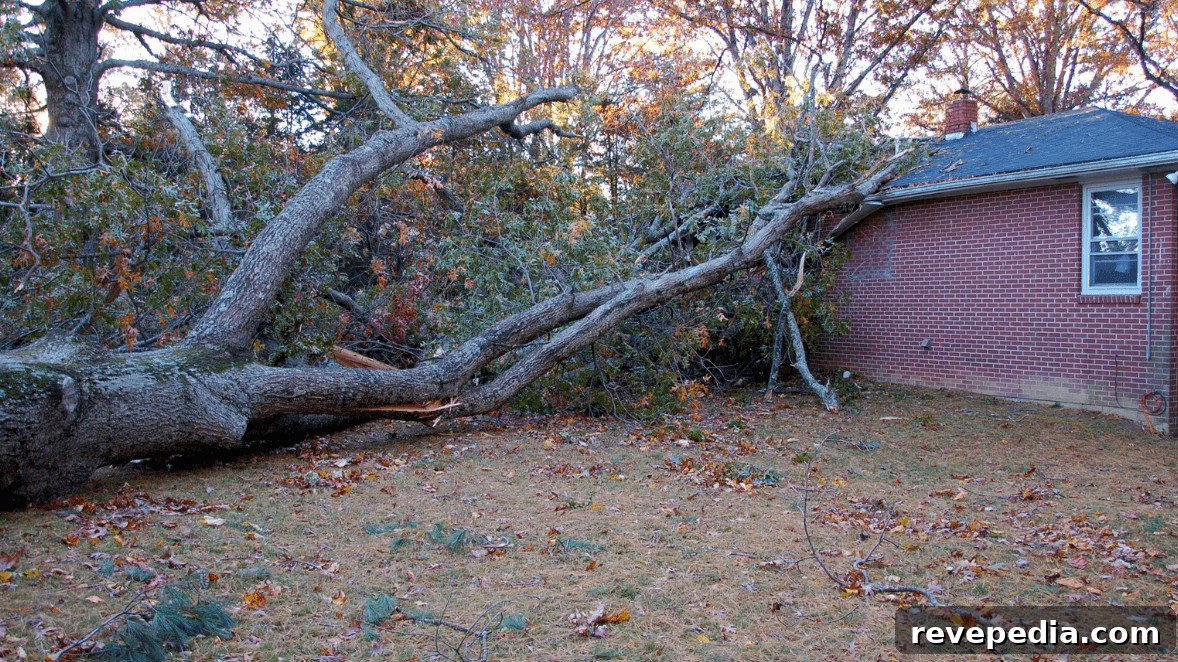
Mature trees are among a property’s most valuable features. They provide shade, improve curb appeal, and create a sense of permanence. Yet as trees age, they can develop problems that aren’t always obvious from the ground—issues that may pose safety risks to people and property.
A tree does not need to be dead to be dangerous. Storm damage, disease, root weakening, internal decay, and structural defects can all increase the chance that branches or entire trees will fail. This is particularly relevant for homeowners in Delaware and southeastern Pennsylvania, where large, established trees are common and seasonal storms bring strong winds, heavy rain, ice, and saturated soil.
Knowing what to look for helps homeowners spot potential hazards early and decide when to seek professional help. These ground-level signs are meant to guide observation only—do not attempt to climb or cut large limbs yourself. Pruning or removing heavy, storm-damaged limbs is hazardous. If a tree or branch is in contact with or near a power line, keep a safe distance and contact the utility company immediately.
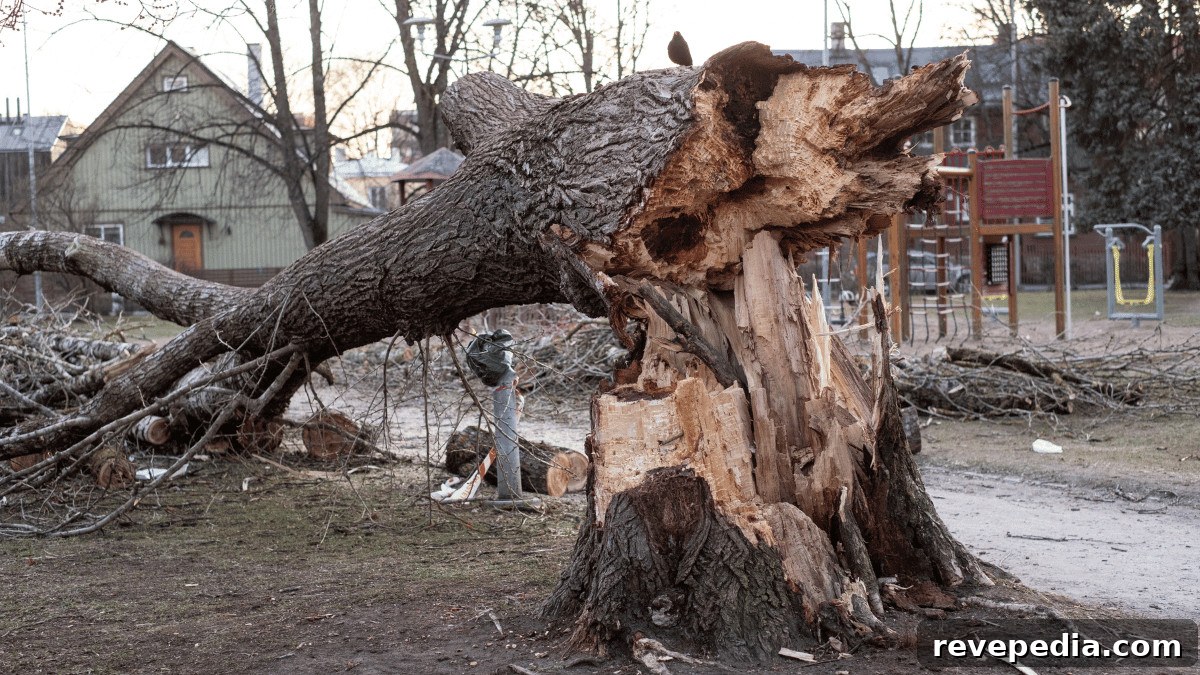
1. The tree has started leaning
Some species naturally grow at an angle, but a new or increasing lean is a warning sign. If a tree that once stood straight now tilts toward a house, driveway, road, or another structure, the root system or soil support may have been compromised.
Check the base and surrounding soil for:
- lifted, cracked, or heaved soil
- exposed or uprooted roots
- roots pulling away from the ground
- recent excavation or grading near the tree
- soil erosion or washout
- a lean that appeared after a storm
Saturated soil after heavy rain reduces root anchorage and can make a weakened tree more likely to shift. A tree that suddenly develops a noticeable lean should be inspected promptly.
2. Large branches are dead or falling
Dead branches are one of the easiest and most visible warning signs. Look for limbs that have no leaves in season, peeling or missing bark, dry or brittle wood, lack of new growth, or many smaller dead twigs attached to a larger limb.
Large dead branches, especially those over roofs, patios, driveways, sidewalks, play areas, or parking spaces, present a higher risk if they fall. Also be alert for “hangers” or broken limbs caught in the canopy after a storm—these can fall later without warning.
Routine pruning reduces the buildup of deadwood, decreasing the likelihood of future failures.
3. Cracks or splits in the trunk
Large trees carry enormous weight, and cracks or splits in the trunk or at major branch unions can compromise structural integrity.
Signs to watch for include vertical cracks, deep splits between large limbs, sections of the trunk separating, cracks that are growing wider, and openings that expose internal wood. Not every crack requires removal; some trees can be monitored, pruned, or supported. Determining whether a crack threatens the tree’s strength often requires a professional assessment.
4. Cavities, decay, or fungal growth
Decay can develop internally while the exterior appears healthy. Large cavities, hollow areas, soft or crumbling wood, persistent wounds that don’t heal, missing bark, and fungal fruiting bodies (mushrooms) near the trunk or roots are all indicators of internal decay.
Fungal growth at the base often signals decaying wood below ground. The presence of decay does not automatically mean removal is necessary—what matters is how much sound wood remains and where the decay is located. An arborist can evaluate the extent of decay and recommend options.
5. Root damage
Roots are easy to overlook but essential for stability. Construction, excavation, driveway installation, landscaping, trenching, grading, and repeated heavy equipment traffic can damage or compact soil around roots. Root damage may not be apparent immediately; a tree can remain standing and then show stress months or years later.
When planning construction or major landscaping near mature trees, protect roots in advance. Preventive measures are usually more effective than trying to repair serious root injury later.
6. The tree looks different after a storm
Severe weather often reveals or accelerates problems. After strong winds, heavy rain, snow, or ice, walk around mature trees and inspect them from multiple angles. Look for new leaning, broken or hanging limbs, fresh cracks, exposed roots, uneven canopy sections, branches resting on roofs, and changes at the tree’s base.
Storm damage does not always mean removal is necessary. In many cases, careful pruning can remove damaged limbs and preserve the tree, while in other cases the storm may reveal structural defects that make removal the safer choice. A full evaluation of the tree’s condition is required.
7. Decline from the top down
Canopy condition is a strong indicator of overall health. Significant dieback at the crown—fewer leaves than nearby trees, dead top branches, unusually small leaves, sections that fail to leaf out, or progressive thinning year after year—suggests underlying issues such as disease, insect infestation, drought stress, soil problems, root injury, or age-related decline.
Early assessment matters because removal is not always the only option. Treatments such as targeted pruning, plant-health care, soil management, or insect and disease control may revive or stabilize the tree.
When to call an arborist
You don’t have to wait for a tree to look ready to fall. Schedule an inspection when a mature tree:
- overhangs a house or other structure
- develops a new lean
- loses a large limb
- shows visible cracks or decay
- was affected by nearby construction
- changes significantly after a storm
- begins a major canopy decline
- raises concern even when the exact problem is hard to identify
For properties with many mature trees, periodic inspections can identify problems early and reduce emergency removals. When seeking a formal evaluation, look for an arborist with qualifications in tree risk assessment and plant health care—professionals trained to evaluate structural concerns, pruning needs, storm damage, and whether removal is necessary. Local experience is valuable since it brings familiarity with species, soils, and regional weather patterns.
Does a dangerous-looking tree always need removal?
No. A proper professional assessment determines what action, if any, is required. Depending on the issue, an arborist might recommend monitoring, selective pruning, removal of dead branches, structural pruning, plant health treatments, cabling or bracing, further testing, or full removal. Removal becomes more likely if structural defects pose a significant risk to people or property.
A healthy mature tree has significant ecological and aesthetic value. The goal of responsible tree care is to preserve trees where safe and remove them when the risk becomes unacceptable.
Seasonal and local considerations
Trees face different stresses through the year. Winter ice and snow add weight to branches, spring rains can saturate soil, summer storms bring strong winds, and drought adds chronic stress. Tree safety depends not only on current appearance but also on history, species, structure, location, health, and exposure to severe weather.
When having trees evaluated or serviced, prioritize qualified, experienced professionals who can assess risk and recommend appropriate, safe solutions. The best time to act is before a problem becomes an emergency—if you notice a new lean, dead limbs, cracks, root movement, decay, or major change after a storm, arrange for a qualified tree-care inspection promptly.