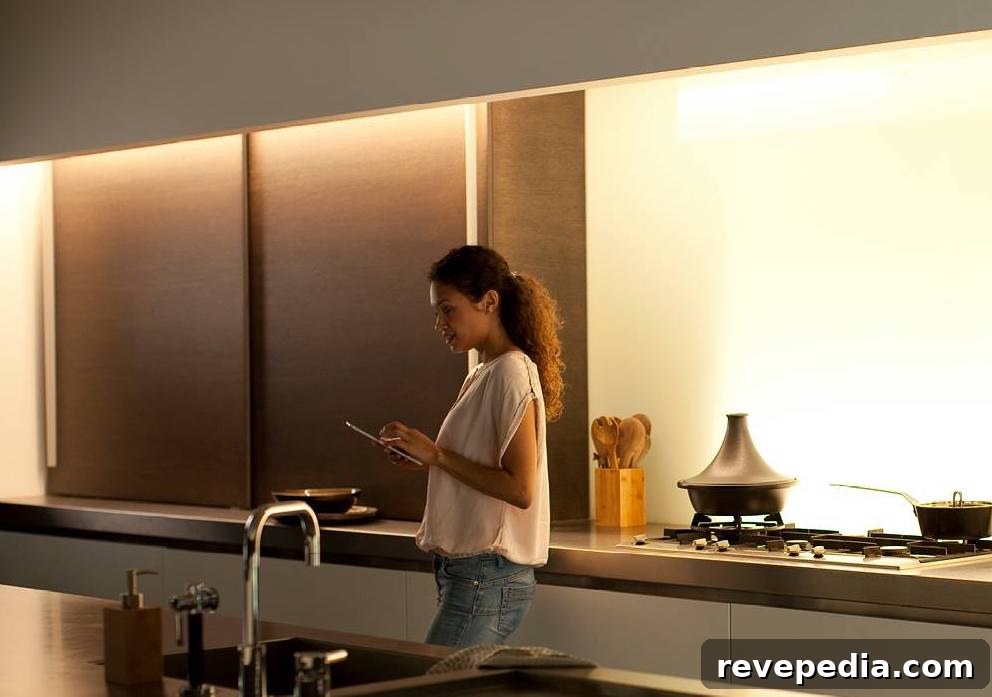
Beautiful pendant lights often steal the spotlight, but under cabinet kitchen lighting is one of the most valuable and underrated light sources in any kitchen. It eliminates shadows, enhances task visibility, and creates a warm, inviting atmosphere.
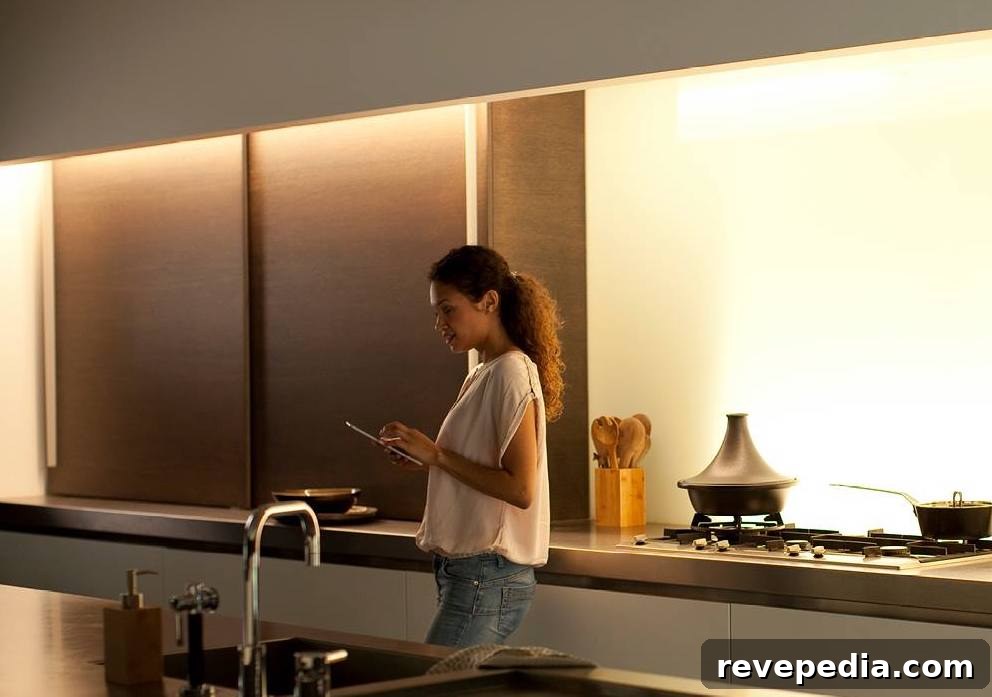
Photo: Philips
Thoughtful lighting can transform a good kitchen into an exceptional one. No matter how much you invest in cabinets, countertops, or tile, a poorly planned lighting scheme can leave your space feeling dark and unwelcoming.
Below are practical ideas and options for kitchen lighting that cover a range of styles and needs.
Kitchen Lighting Choices
Photo: LNC
Designing a kitchen requires clear decisions about lighting. Overhead lighting typically blends recessed fixtures, flush-mount lights, and pendants to provide balanced illumination and complement the room’s design. Combining these with under cabinet lighting delivers comprehensive coverage and enhances both function and ambiance.
Under cabinet lighting is frequently overlooked during design, but planning for it from the start yields a cleaner, more integrated installation. Wiring can be routed to wall switches, and fixtures and mounts can be positioned more discreetly for a seamless look.
Light Power Options
Under cabinet lighting is available in several power formats. Some fixtures connect with standard 110V plugs for use with a countertop or cabinet outlet, while others are designed to be hardwired to a wall switch. Some models offer both options, which increases installation flexibility.
When AC power access is limited, battery-powered LED under cabinet lights are an excellent alternative. LEDs consume very little energy, so battery life can last many hours, and there’s no need to route wiring through cabinets or walls—making battery units the least invasive option.
Photo: Nicor
Under Cabinet Lighting Installation
Under cabinet lighting works well in new builds, remodels, or as a simple retrofit. One of the biggest advantages of under cabinet lighting is its straightforward and cost-effective installation.
Many under cabinet fixtures include the necessary mounting hardware and can be installed with basic tools like a screwdriver or drill. For strip lights and bars, screws or clips are often all that’s required to secure the fixture beneath the cabinet.
Some models use strong adhesive backing for tool-free attachment. If you use adhesive-mounted lights, ensure the surface is thoroughly cleaned of grease and dirt so the light adheres reliably.
Under Cabinet Kitchen Lighting Recommendations
Retailers offer hundreds of under cabinet lighting options to suit different budgets and styles. Below are several types worth considering depending on your priorities.
Budget Under Cabinet Lights
Inexpensive puck-style lights are a practical choice when you want to add illumination without spending much. Packs of three often cost under $10 and provide about 35 lumens per puck—enough to brighten dark corners or provide pantry and shelf lighting. Many budget models include dimming or multiple brightness levels and work well in kitchens, closets, and utility spaces.
Brightest Under Cabinet Lights
If maximum task lighting is your goal, high-output LED light bars are ideal. Some models deliver over 1,300 lumens and include dimming and multiple color temperature settings, so you can adjust both brightness and warmth to suit cooking, prep, or entertaining. Sleek, low-profile designs make these bars easy to conceal beneath cabinets.
Most Customizable Under Cabinet Lights
Smart LED strips offer the greatest flexibility in color and brightness. They can be installed in many locations, trimmed to length, and extended to cover longer runs. Controlled via a smartphone app, these systems let you choose precise color temperatures and dynamic lighting scenes. Many are powered by standard outlets, though hardwired versions are available for a cleaner look.
Once you appreciate the practicality and atmosphere under cabinet lighting provides, you may want to add similar fixtures throughout your home. Popular spots include laundry rooms, home offices, pantries, and bathroom vanities—anywhere task lighting and reduced shadows improve daily routines.