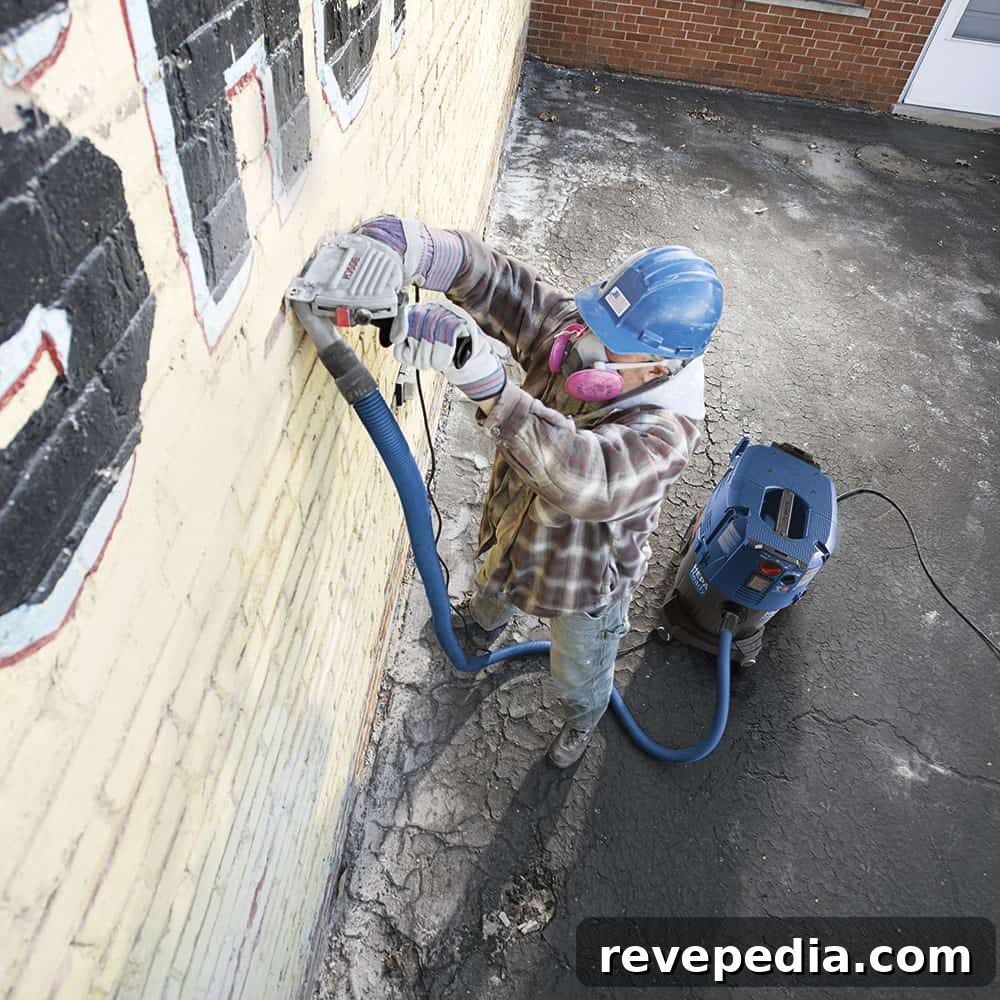
With just 45 days remaining until the U.S. Department of Labor begins enforcing new OSHA rules for handling concrete silica dust, contractors and tool manufacturers are racing to adopt compliant equipment and procedures. The enforcement date of September 23 is approaching quickly, and industry professionals must be prepared to meet the updated requirements.
Bosch Power Tools, together with industry authority Joe Nasvik, former editor of Concrete Construction magazine, has summarized the key points contractors and jobsite crews should understand before the deadline.
What is the new silica dust regulation and why is it happening?
OSHA updated its silica standard to better protect workers from respirable crystalline silica. The rule became effective on June 23, 2017, and enforcement begins September 23, 2017. The revised regulation drastically lowers the permissible exposure limit (PEL) for silica in the construction industry: allowable exposure over an eight-hour shift is reduced from 250 micrograms per cubic meter of air to 50 micrograms per cubic meter. The change is intended to reduce the incidence of silicosis and other silica-related illnesses among workers.
What exactly is silica and which form concerns OSHA?
Silicon is the planet’s second most abundant element and, when combined with oxygen, forms quartz (silicon dioxide, SiO2), commonly found in sand and many types of rock. Crystalline silica exists throughout Earth’s crust and is present in numerous construction materials. OSHA’s concern is with respirable crystalline silica—tiny particles created when materials like concrete, brick, or stone are cut, chipped, drilled, or ground.
Is respirable crystalline silica a threat to life?
Yes. Inhalation of respirable crystalline silica can cause serious, potentially fatal illnesses. These microscopic particles are generated by natural forces and most commonly by construction activities. OSHA estimates that about 2.3 million U.S. workers are exposed to respirable silica at work each year. Prolonged or high-level exposure can lead to silicosis, lung cancer, and other respiratory conditions.
Weren’t there already OSHA limits on silica exposure?
OSHA first set exposure limits for respirable crystalline silica in 1971, but those limits were based on older research and were expressed in formulas that were hard to interpret and enforce. The new rule provides clearer, stricter limits: 50 μg/m³ averaged over an eight-hour shift for covered industries—about one-twentieth the size of a grain of table salt in equivalent terms—intended to better protect workers’ long-term health.
What should contractors and jobsite personnel do to avoid silica exposure?
Employers must implement engineering controls—such as on-tool dust collection and wet methods—to limit worker exposure, and provide respirators where necessary. OSHA’s Table 1 lists specific exposure control methods tied to common construction tasks. Following the methods in Table 1 helps employers meet the standard without having to measure airborne silica concentrations for each task.
How do I know which tools and controls are appropriate for my task?
OSHA Table 1 pairs common construction tasks with effective dust control methods and the required respiratory protection. The table lists the task or equipment, the recommended dust control method (for example, vacuum or water delivery systems), and what level of respiratory protection is needed. By finding the activity in Table 1 and following its prescribed controls, crews can determine the necessary steps for compliance.
What are manufacturers doing to help meet the new rules?
Power tool makers have developed systems and accessories designed to control dust at the source. Bosch’s PRO+GUARD™ dust solutions, for example, focus on improved dust extractors, shrouds, and capture attachments that connect to vacuums to remove dust as it’s generated. These solutions help jobsite air quality align with OSHA requirements by capturing dust at the point of creation rather than relying solely on downstream mitigation.
How should concrete workers prevent dust from becoming airborne?
For most concrete work, the recommended approach is to use dust-confining attachments paired with appropriate vacuum systems. Examples include shrouds for angle grinders, dust-extraction attachments for chipping hammers and hammer drills, and specialized dust-extraction drill bits. Dust-extraction bits channel dust up through the center of the bit into a vacuum, reducing the amount of dust released into the air. Bosch Speed Clean™ bits feature an internal dust channel designed for lightweight concrete drilling and are approved for use with epoxy anchors. Employers must also establish procedures to minimize dust release during tool maintenance and when workers change clothing.
Can I connect these accessories to a regular shop vacuum?
No. Effective dust collection requires vacuums with high airflow (typically 150+ CFM), a reliable filter-cleaning system, and a certified HEPA filter for fine particulate capture. HEPA filters used in the U.S. must remove at least 99.97% of particles 0.3 microns in diameter or larger. Filters should explicitly state their particle retention capability to confirm they meet OSHA expectations. As filter efficiency increases, the vacuum’s airflow and power requirements rise to maintain proper suction.
How should specialty filters be maintained so the vacuum remains effective?
OSHA requires vacuum filtration systems to perform reliably. Many vacuums designed for concrete and fine dust use automatic filter cleaning features—reverse-air pulses every several seconds—to prevent clogging and sustain suction. Filters should never be washed when contaminated with concrete dust, as moisture will harden the dust within filter media and render it ineffective. Follow the manufacturer’s maintenance recommendations and replace filters when their performance declines.
Will these rules slow productivity on jobsites?
While the new enforcement date may cause concern for schedules, the rules are intended to protect worker health—there is no cure for silicosis, so prevention is critical. Although some see regulation as a productivity burden, these requirements rely on already established control methods. When implemented correctly, on-tool dust control systems can maintain or even improve overall productivity by reducing cleanup time, minimizing downtime for exposure-related issues, and creating a healthier work environment that supports sustained performance.