Do you assume your sliding windows and glass doors are securely locked? One simple, inexpensive measure can eliminate any doubt.
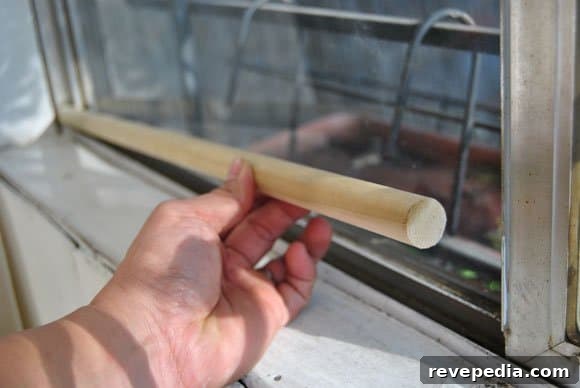
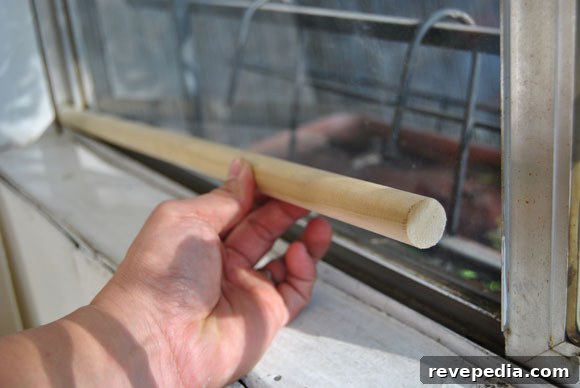
Measure the length of the exposed track when the window or sliding door is fully closed and cut a wooden dowel to that size. Place the dowel firmly into the track so it prevents the sash from being forced open. Even if the lock fails or hasn’t been engaged, the dowel acts as a physical stop, making the window or door immovable from the outside.
Wooden dowels are inexpensive—typically under $2—and available at any hardware store. They’re easy to install, require no tools beyond a saw for cutting, and can be removed quickly when you need to open the window or door. For best results, choose a dowel with a snug fit: trim incremental lengths until it sits tightly without bending the frame.
This simple precaution is particularly useful for ground-level openings, basement windows, or sliding patio doors where forced entry is a concern. While a dowel is not a substitute for a good locking mechanism or other layered security measures, it’s an effective, low-cost addition that increases resistance to casual intruders and provides extra peace of mind.
Tips for use:
- Measure twice and cut once to get a secure fit.
- Consider marking the dowel so you can quickly position it when closing the window or door.
- Store the dowel nearby so it’s always available; its low cost makes replacing it easy if lost.
- Combine the dowel with standard locks, sensors, or alarm systems for better overall security.
Using a wooden dowel is a quick, cost-effective way to enhance the security of sliding windows and doors without complex installation or expensive hardware.